
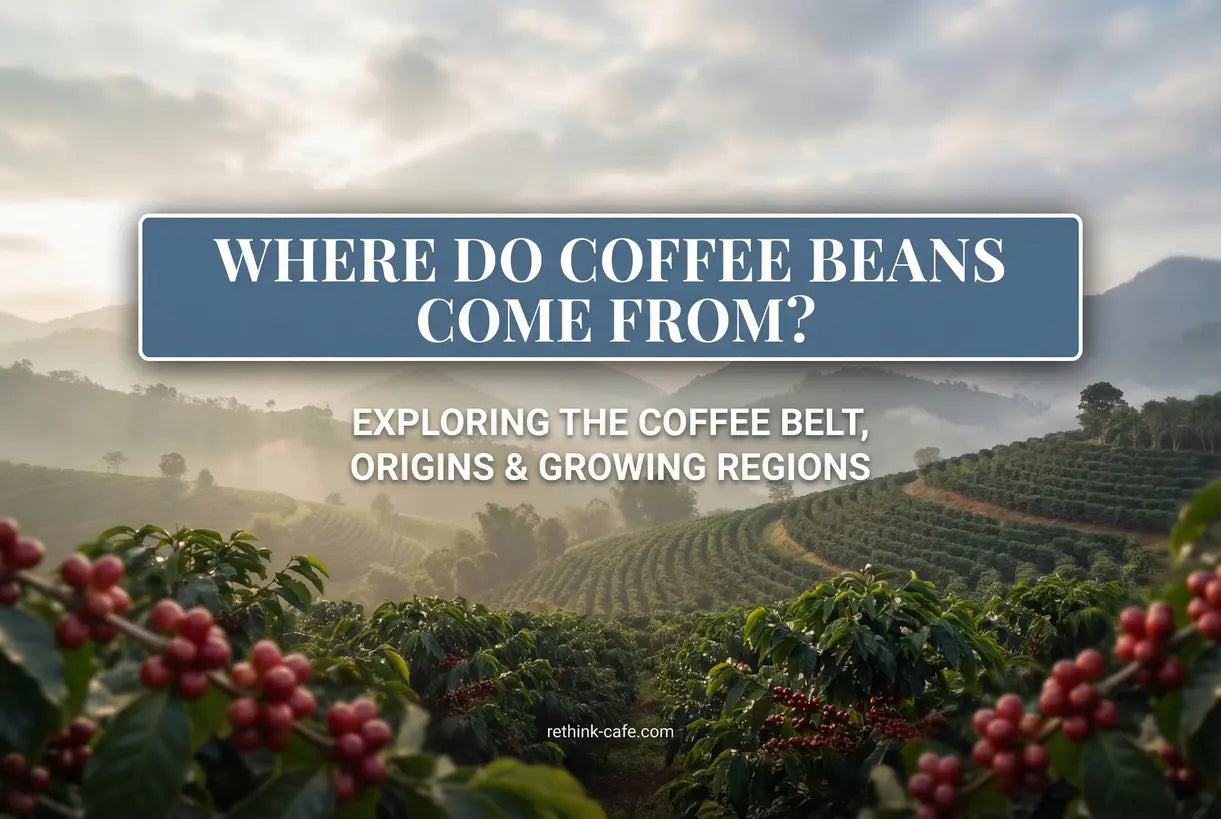
Every morning, millions of people around the world reach for their favorite brew without considering the remarkable journey those beans took to reach their cup. If you've ever wondered where do coffee beans come from, you're not alone—a growing community of home baristas and enthusiasts are tracing their coffee back to its roots, discovering that the story of coffee is as rich and complex as its flavor profiles. From the misty highlands of Ethiopia to the volcanic slopes of Central America, coffee's origins span the globe along a specific band known as the coffee belt.
Understanding coffee origins isn't just about geography—it's about appreciating the terroir, climate, and human hands that shape every sip. As you deepen your connection to specialty coffee, you'll want tools that preserve and highlight these unique origin characteristics. At Rethink Cafe, we believe that knowing your coffee's story enhances the brewing experience, which is why we've created this comprehensive guide to coffee origins while offering the equipment to truly honor each bean's heritage.
What Is the Coffee Belt?
The coffee belt is an imaginary band that wraps around the Earth between the Tropics of Cancer and Capricorn—roughly between latitudes 25° North and 30° South. This region provides the specific climate conditions that coffee plants need to thrive: consistent temperatures between 60°F and 70°F, ample rainfall, and rich, well-draining soil often found at higher altitudes.
Countries within the coffee belt share tropical climates, but subtle variations in elevation, soil composition, and microclimates create the diverse flavor profiles we associate with different coffee growing regions. Higher altitude generally means slower cherry development, leading to more complex sugars and nuanced acidity in the final cup.

Major Coffee Origins: Where the World's Best Beans Grow
When exploring coffee bean origins, three primary regions dominate global production: Africa, Latin America, and Asia-Pacific. Each region imparts distinct characteristics that shape your morning cup.
Africa: The Birthplace of Coffee
Ethiopia holds the distinction as coffee's ancestral home, where wild Arabica plants still grow in forested highlands. Ethiopian coffees typically exhibit bright, floral acidity with notes of jasmine, bergamot, and blueberry. Other notable African producers include Kenya, known for its wine-like acidity and blackcurrant notes, and Rwanda, which produces delicate, tea-like coffees with citrus undertones.
Latin America: The Powerhouse Producers
Brazil and Colombia consistently rank among the countries that produce the most coffee globally. Brazilian coffees often feature nutty, chocolate profiles with lower acidity, making them excellent for espresso blends. Colombian coffee tends to be well-balanced with caramel sweetness and medium body. Central American nations like Guatemala, Costa Rica, and Honduras contribute distinctive offerings—from the smoky, spicy profiles of Guatemalan Antigua to the clean, bright cups of Costa Rican honey-processed beans.
Asia-Pacific: Bold and Earthy Profiles
Indonesia, Vietnam, and Papua New Guinea represent significant coffee farming regions in the Asia-Pacific. Indonesian coffees, particularly Sumatran varieties, are famous for their full body, low acidity, and earthy, herbal complexity. Vietnam primarily produces Robusta coffee, contributing to the global instant coffee market while also developing a burgeoning specialty scene.

The Two Coffee Species: Arabica vs. Robusta
While hundreds of coffee varieties exist, virtually all commercial coffee falls into two main categories: Arabica and Robusta. Understanding their differences helps explain why specialty coffee origins matter so much to flavor.
Arabica coffee accounts for roughly 70% of global production and dominates the specialty market. Grown at higher elevations, Arabica plants produce beans with complex acidity, aromatic clarity, and diverse flavor ranging from fruity to floral. These plants are more delicate, requiring specific shade, altitude, and care.
Robusta, as its name suggests, is hardier—resistant to pests and capable of growing at lower elevations. It contains roughly double the caffeine of Arabica and produces a bolder, more bitter cup with grain-like or woody notes. While often dismissed by specialty enthusiasts, high-quality Robusta from careful coffee harvesting can contribute crema and body to espresso blends.
From Cherry to Bean: How Coffee Is Grown and Harvested
Coffee farming regions share one universal truth: great coffee requires patience. Coffee plants take three to four years to mature and produce fruit. The "beans" we roast are actually the seeds inside cherry-like fruits that ripen from green to vibrant red or yellow.
Harvesting methods dramatically impact final quality. Selective hand-picking, common in mountainous coffee origin countries like Colombia and Ethiopia, involves skilled laborers choosing only ripe cherries. This labor-intensive method ensures optimal sugar development but increases costs. Strip-picking, often used in Brazil's flatter terrain, mechanically removes all cherries simultaneously, requiring additional sorting but enabling efficient scale.

After harvesting, processing begins immediately to prevent spoilage. The three primary methods—washed (wet), natural (dry), and honey (pulped natural)—each create distinct flavor outcomes. Washed coffees typically show cleaner, brighter profiles that highlight origin characteristics, while natural processed beans develop intense fruitiness from drying with the cherry intact.
Preserving Origin Characteristics at Home
Once you start exploring single origin coffee, you'll want to preserve those unique terroir notes that distinguish Ethiopian yirgacheffe from Colombian Huila. Proper storage becomes essential for maintaining the delicate aromatic compounds that define great coffees.

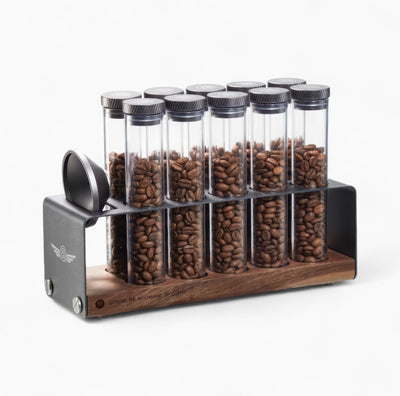
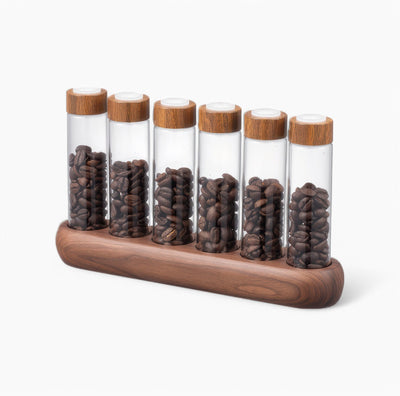
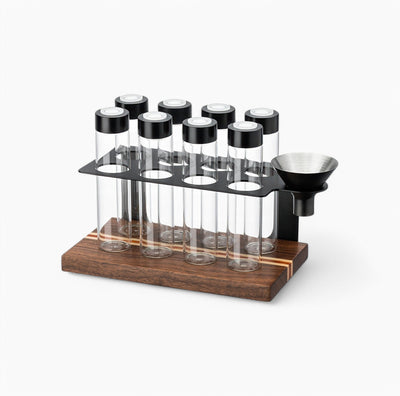
Coffee Bean Storage Tubes With Walnut Display Base
$34.90 $67.00
Display and preserve your single-origin beans in elegant glass tubes with a walnut base. Perfect for showcasing different coffee origins while keeping them fresh.
Explore ProductThe Coffee Bean Storage Tubes With Walnut Display Base offers an elegant solution for the discerning home barista. By displaying different coffee origin countries in sealed glass tubes, you not only protect beans from oxidation and light degradation but also create a visual narrative of your coffee journey. The walnut base complements any kitchen aesthetic while reminding you that each origin deserves respect and proper care.
Unlocking Regional Flavors Through Precision Brewing
Understanding where coffee grows is just the beginning—extracting those origin-specific notes requires precision equipment. Different regions demand different approaches: African coffees often shine with pour-over methods that highlight their delicate acidity, while full-bodied Indonesian beans may prefer immersion brewing to extract their earthy depths.
This fascinating exploration of coffee's global journey reminds us that every cup connects us to centuries of cultivation history across the coffee belt.
Precision Tools for Origin Exploration
To truly honor the distinctive characteristics of beans from specific coffee growing regions, you need equipment that offers control and consistency. Variables like water temperature, pour rate, and brew ratios significantly impact how origin flavors express themselves in the cup.
Essential Tools for Origin-Focused Brewing

Stainless Steel Gooseneck Kettle for Pour Over Coffee
$79.90
$150.00
Unlock the full flavor profile of your origin-specific beans with precise pour-over brewing. The narrow gooseneck spout delivers controlled flow for optimal extraction. Learn more ➔

Walnut Wood Precision Coffee Scale 0.1g Accuracy
$39.90
$93.00
Dial in your brewing ratios with 0.1g precision to highlight the unique characteristics of beans from different origins. Beautiful walnut wood design for any coffee station. Learn more ➔
The Stainless Steel Gooseneck Kettle for Pour Over Coffee provides the flow control necessary to highlight the tea-like qualities of Kenyan coffees or the caramel sweetness of Colombian beans. Meanwhile, the Walnut Wood Precision Coffee Scale 0.1g Accuracy ensures you hit the exact coffee-to-water ratios that bring out the best in each origin. Together, these tools transform your kitchen into a laboratory for exploring the world's specialty coffee origins.
For additional reading on coffee cultivation and varieties, the National Coffee Association provides excellent resources on global production statistics and regional characteristics.

Conclusion: Your Connection to the Coffee Belt
Understanding where do coffee beans come from transforms coffee from a simple caffeine delivery system into a genuine connection with global agriculture and human craftsmanship. From the high-altitude farms of Ethiopia to the mechanized operations of Brazil, each coffee origin country contributes unique flavors shaped by soil, climate, and tradition.
As you explore Arabica coffee from different coffee harvesting regions, remember that preserving and highlighting these origin characteristics starts with proper equipment. Whether you're displaying rare single origins in elegant storage tubes or dialing in pour-over parameters with precision scales and gooseneck kettles, Rethink Cafe provides the tools that honor the entire journey—from the cherry on the tree to the perfect extraction in your cup.
The coffee belt encircles our planet, but through thoughtful brewing and quality equipment, you can traverse its diverse landscapes from the comfort of your home. Start your origin exploration today, and taste the difference that knowledge—and the right tools—can make.
Frequently Asked Questions About Coffee Origins
Coffee beans originate from the seeds of cherry-like fruits that grow on Coffea plants within the coffee belt—a region between the Tropics of Cancer and Capricorn. Major growing regions include Ethiopia and Kenya in Africa, Colombia and Brazil in Latin America, and Indonesia and Vietnam in Asia-Pacific. Each region imparts distinct flavor characteristics to the beans based on altitude, soil composition, and local processing traditions.
Brazil consistently leads global production, supplying approximately one-third of the world's coffee. Vietnam ranks second, primarily producing Robusta beans for the instant coffee market. Colombia, Ethiopia, and Honduras round out the top five producers. These nations benefit from ideal climate conditions within the coffee belt, extensive agricultural infrastructure, and generations of cultivation expertise.
The coffee belt refers to the geographic band between 25° North and 30° South latitude where coffee plants thrive. This region provides the tropical climate, consistent temperatures between 60-70°F, adequate rainfall, and specific altitude requirements necessary for quality coffee cultivation. Countries outside this band lack the environmental conditions to support commercial coffee farming, making this specific geography essential to the global coffee industry.
Coffee plants require three to four years to mature before producing fruit. The cherries ripen from green to red or yellow over several months. Harvesting occurs through either selective hand-picking (choosing only ripe cherries) or strip-picking (removing all cherries simultaneously). After harvesting, processors immediately remove the fruit through wet, dry, or honey processing methods to reveal the green coffee seeds inside, which are then dried, milled, and prepared for roasting.
Arabica coffee grows at higher elevations, features complex acidity and diverse flavor profiles ranging from floral to fruity, and dominates the specialty coffee market. Robusta grows at lower elevations, contains roughly double the caffeine, produces fuller body with earthier, more bitter flavors, and resists pests better due to its natural chemical composition. While Arabica represents about 70% of global production, Robusta contributes crema and body to espresso blends and serves the instant coffee industry.


