Every satisfying cup of pour over coffee starts with a simple idea: you control the water, the timing, and the outcome. No automated guesswork, no hidden mechanics—just your hands, freshly ground beans, and a few deliberate pours that unlock flavors most brewing methods leave behind.
This collection brings together the pour over coffee makers, drippers, kettles, and filters we trust to deliver that level of precision. Whether you're pulling your first manual brew or refining a recipe you've dialed in over hundreds of cups, you'll find gear here that meets you exactly where you are.
Why Pour Over Coffee Rewards Patience and Precision
Hand brewed coffee has experienced a well-deserved resurgence, and it's not because of nostalgia. The pour over technique gives you direct influence over every variable that shapes flavor—water temperature, flow rate, agitation, brew time, and the coffee-to-water ratio. Adjusting any one of these shifts the cup in a meaningful direction.
What sets pour over apart from other manual coffee brewing methods is the interplay between gravity and contact time. Water passes through a bed of ground coffee at a pace you dictate, extracting soluble compounds in a sequence that produces remarkable clarity. Bright fruit acids emerge first, followed by sweetness and body, and if you time your pours well, bitterness stays in check.
This isn't about making coffee harder. It's about making it more transparent. When a bean has something interesting to say—origin character, processing nuance, roast development—pour over is the method that lets you hear it most clearly.
Choosing the Right Pour Over Coffee Maker for Your Brewing Style
The term "pour over coffee maker" covers a surprising range of designs, each with its own personality. Understanding the differences helps you pick the pour over device that matches your priorities, whether that's speed, body, visual drama, or travel-readiness.
Conical Drippers and the V60 Pour Over Approach
The Hario V60 brewer is arguably the most iconic conical dripper on the market. Its large single drain hole and spiral ribs encourage a fast, unrestricted flow that rewards skilled pouring technique. The result is a clean, bright cup with pronounced acidity and aromatic complexity.
V60 pour over brewing favors a medium-fine grind and a steady, controlled pour. Small adjustments to your spiral pattern or pulse timing shift the extraction noticeably, which is why competition baristas gravitate toward this format. It's simultaneously forgiving enough for beginners and deep enough for obsessives.
Conical drippers come in ceramic, glass, plastic, and metal versions. A ceramic coffee dripper retains heat well and adds a satisfying heft to your morning ritual. Plastic is lighter and surprisingly effective at thermal stability. Each material subtly influences the brewing temperature profile, giving you yet another variable to explore.
Chemex Pour Over and the Pursuit of Clean Cups
The Chemex pour over takes a different path. Its proprietary bonded filters are significantly thicker than standard paper, removing more oils and fine sediment from the brew. The result is an exceptionally clean, almost tea-like cup that showcases delicate floral and fruit notes with remarkable transparency.
Chemex is also a visual statement. The hourglass silhouette and wood collar have earned it a permanent place in design museums, and it doubles as a carafe for serving. If you brew for two or three people and value aesthetics alongside flavor clarity, it's a natural choice.
The trade-off is body. Chemex filters absorb many of the oils that contribute to mouthfeel, so if you prefer a richer, heavier cup, a thinner filter or metal option on a different dripper might serve you better.
Flat-Bottom Drippers and Forgiving Geometry
Flat-bottom coffee drippers like the Kalita Wave use a wider, level bed of coffee that promotes more even extraction with less dependence on pouring technique. Multiple small drain holes slow the flow and create a natural buffer against inconsistency.
This geometry makes flat-bottom brewers an excellent choice if you want consistent extraction without needing to master a precise spiral pour. The cup tends to emphasize sweetness and balance over the high-note acidity that conical drippers highlight. Many home brewers find this profile more approachable and repeatable day to day.
Travel Pour Over Kits for Brewing on the Move
A travel pour over kit collapses the full manual brewing experience into something that fits in a backpack or carry-on. Collapsible silicone drippers, nested stainless steel cones, and lightweight plastic V60s all make it possible to brew excellent coffee in a hotel room, at a campsite, or in an office kitchen.
Pairing a portable dripper with a compact hand grinder and a small gooseneck travel kettle creates a self-contained setup that outperforms most coffee you'll find on the road. The investment is minimal, and the difference in cup quality is dramatic.
Gooseneck Kettles and the Science of Water Delivery
You can own the finest coffee dripper ever made, but without precise water delivery, your pour over results will be inconsistent. This is where the gooseneck kettle earns its place as an essential piece of pour over coffee gear.
Why Gooseneck Spout Design Matters
The elongated, narrow spout of a gooseneck kettle gives you control over flow rate that a standard kettle simply cannot match. You can direct a thin, steady stream exactly where you want it—center pours, concentric circles, gentle pulses—without splashing or flooding the coffee bed.
This precision directly affects extraction evenness. Flooding one side of the grounds while leaving another dry creates channeling, where water finds the path of least resistance and over-extracts certain areas while under-extracting others. A gooseneck spout helps you eliminate channeling by distributing water evenly across the entire bed.
Choosing Between Stovetop and Electric Gooseneck Kettles
A stovetop gooseneck kettle is affordable and reliable. You heat it on any burner, monitor the temperature with a clip-on thermometer, and pour. It's simple, durable, and gets the job done.
A gooseneck electric kettle adds temperature control, hold functions, and faster heating. Models like the Fellow Stagg kettle let you set a precise target temperature—say, 205°F for a medium roast or 200°F for a delicate light roast—and hold it there while you prepare your grounds and rinse your filter. This eliminates the guesswork of "just off the boil" and creates repeatable conditions brew after brew.
If you brew pour over daily, an electric gooseneck with variable temperature control is one of the highest-impact upgrades you can make. The ability to lock in your water temperature and hold it steady transforms your consistency.
Pour Over Filter Materials and How They Shape Your Cup
The filter is the often-overlooked variable that has an outsized impact on your finished brew. Different materials let different compounds through, fundamentally changing body, clarity, and flavor balance.
Paper Filters for Maximum Clarity
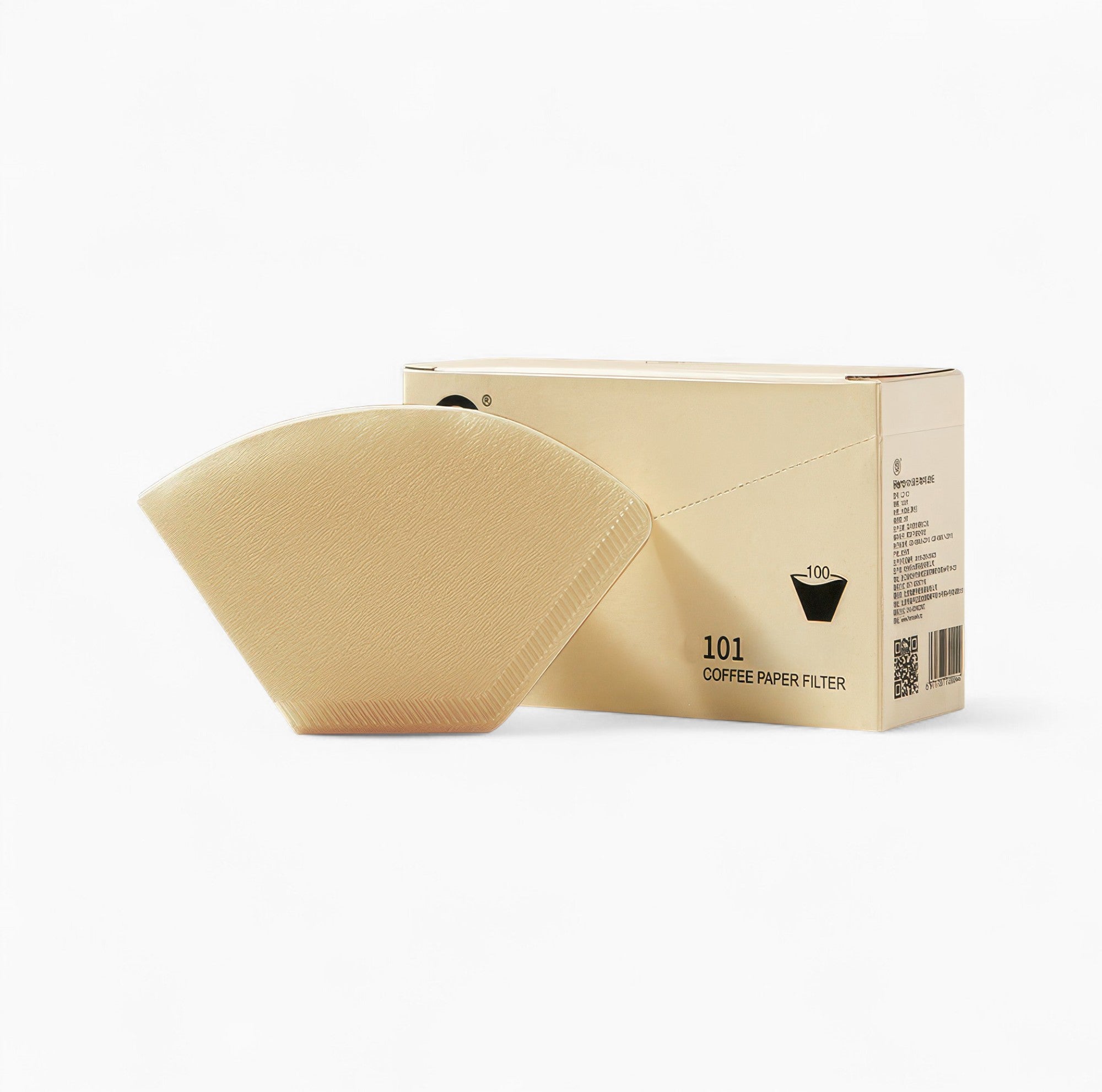
Paper is the most common pour over filter material, and for good reason. It traps oils, fines, and sediment, producing a bright, clean cup that highlights acidity and aromatic top notes. Bleached white filters tend to impart less papery taste than natural brown filters, though a thorough rinse before brewing minimizes flavor contribution from either type.
Paper filters are single-use, which means no cleaning but an ongoing cost. For many brewers, the flavor clarity they deliver is worth the trade-off. If you enjoy tasting origin-specific characteristics—the blueberry in an Ethiopian natural, the citrus in a Kenyan washed lot—paper filters are your friend.
Metal Filters for Body and Sustainability
A reusable pour over filter made from fine stainless steel mesh allows more oils and micro-fines into your cup. This produces a fuller body and a richer mouthfeel, closer to what you'd get from a French press but with more definition and less sludge at the bottom.
Metal filters never need replacing, which eliminates waste and saves money over time. The flavor profile they produce is divisive—some brewers love the added weight and texture, while others miss the sparkling clarity of paper. Trying both is the only way to know where you land.
Cloth Filters as a Middle Ground
Cloth filters split the difference between paper and metal. They remove most oils and sediment while allowing a slightly richer body than paper. The result is a smooth, rounded cup with excellent sweetness.
The catch is maintenance. Cloth filters need to be rinsed after every use and stored damp, usually in the refrigerator, to prevent off-flavors from developing. They also wear out over time and need periodic replacement. For brewers who enjoy the ritual of care and maintenance, cloth delivers a unique cup that neither paper nor metal can replicate.
Mastering Pour Over Technique at Home
Great pour over coffee gear matters, but technique is what ties everything together. The good news is that the fundamentals are simple, and improvements come quickly with a little attention.
Dialing in Your Coffee-to-Water Ratio
A reliable starting point for most pour over brewing is a coffee-to-water ratio of 1:16—one gram of coffee for every sixteen grams of water. For a single cup, that typically looks like 15 grams of coffee and 240 grams of water.
From there, adjustments are straightforward. Want a stronger cup? Move to 1:15. Prefer something lighter and more delicate? Try 1:17. A kitchen scale accurate to 0.1 grams removes all ambiguity and makes your recipes repeatable.
The Bloom Phase and Why It Matters
Fresh coffee releases carbon dioxide when it contacts hot water—this is the bloom. Pour just enough water to saturate all the grounds (roughly twice the weight of the coffee), then wait 30 to 45 seconds. You'll see the bed swell and bubble as gas escapes.
Blooming ensures that water can access the coffee evenly during the main pour. Skipping or rushing this step often leads to uneven extraction, sour spots, and inconsistency. It takes less than a minute and makes a measurable difference in cup quality.
Pouring Patterns and Timing for Even Extraction
After the bloom, pour in slow, concentric circles starting from the center and moving outward, avoiding pouring directly on the filter walls. This keeps the coffee bed level and promotes uniform contact between water and grounds.
Some brewers prefer a continuous pour, maintaining a steady stream until they hit their target water weight. Others use a pulse pouring technique—adding water in stages with brief pauses between each pour. Pulse pouring tends to produce a more complex cup with layered sweetness, while continuous pouring favors efficiency and consistency.
Total brew time for a single cup typically falls between 2:30 and 4:00, depending on your dripper, grind size, and pouring speed. If your cup tastes sour and thin, the brew was likely too fast—grind finer. If it's bitter and harsh, slow extraction is the culprit—grind coarser.
Best Beans for Pour Over Brewing
Pour over is a method built for transparency, which means best beans for pour over are typically those with interesting origin character worth showcasing. Light to medium roasts of single-origin coffees tend to shine brightest here, revealing the terroir, variety, and processing method in ways that darker roasts or blends often mask.
Ethiopian naturals with fruit-forward profiles, washed Colombians with caramel sweetness, and Kenyan lots with juicy acidity all perform exceptionally in a pour over setup. That said, there are no rules. A well-developed medium-dark roast can produce a surprisingly rich and satisfying pour over cup, especially through a metal filter that preserves oils and body.
Freshness matters more here than in almost any other brewing method. Coffee at peak freshness—roughly 7 to 21 days off roast—blooms more evenly, extracts more predictably, and produces more aromatic complexity. Stale beans won't bloom, won't degas properly, and will taste flat regardless of how precise your technique is.
Pour Over as a Drip Coffee Alternative
If you're coming from an automatic drip machine, manual pour over represents a meaningful upgrade in control and cup quality. Automatic drip brewers heat water to a fixed temperature, distribute it through a spray head at a rate you can't adjust, and steep the grounds without any input from you. The result is acceptable coffee that tastes roughly the same every day.
Pour over flips that equation. You choose the temperature. You control the flow. You decide when to pause and when to pour. This means your floor is slightly lower—a careless pour over can underperform a decent drip machine—but your ceiling is dramatically higher. A well-executed pour over from good beans will outclass automatic drip coffee every time.
The learning curve is gentler than most people expect. Within a week of daily brewing, most people find a consistent rhythm that produces excellent results. Within a month, they've developed enough intuition to start experimenting with variables intentionally rather than accidentally.
Building Your Complete Pour Over Coffee Gear Setup
A complete pour over coffee gear setup doesn't require a massive investment. At minimum, you need a dripper, filters, a gooseneck kettle, a grinder, and a scale. Each piece contributes to repeatability and cup quality, and upgrading any single element tends to improve your overall results.
Start with the dripper and kettle, since these define your pouring experience most directly. Add a quality burr grinder—hand or electric—because grind consistency affects extraction more than almost any other variable. A scale with a built-in timer rounds out the essentials by letting you track your pour rate and total water weight simultaneously.
Beyond the basics, a server or carafe, a dedicated brewing stand, and a thermometer (if your kettle lacks one) add convenience without complexity. The beauty of the pour over method is that the core setup stays simple no matter how deep you go.
Whether you're exploring slow drip coffee for the first time or rebuilding your home bar around manual methods, this collection is designed to help you elevate your morning ritual with gear that performs as intentionally as you brew.
Frequently Asked Questions About Pour Over Coffee
A pour over is a manual coffee brewing method where you pour hot water over ground coffee held in a filter, allowing gravity to draw the brewed liquid into a cup or carafe below. The brewer controls the water flow, temperature, and timing, which directly influences the flavor and strength of the finished cup.
The phrase "pour over" literally describes the action of pouring water over coffee grounds. In coffee culture, it refers specifically to a category of manual brewing where the user controls water delivery by hand, distinguishing it from automatic drip machines that handle water distribution mechanically.
Pour over coffee stands out for its flavor clarity. Because you control every brewing variable—water temperature, flow rate, pour pattern, and brew time—you can highlight specific flavor characteristics that automated methods tend to flatten. The result is a cleaner, more nuanced cup that reveals origin character, processing notes, and roast development with exceptional transparency.
Pour over offers a higher ceiling for cup quality because you can fine-tune every variable to match a specific bean. Automatic drip is more convenient and produces consistent, acceptable results without effort. If you value flavor complexity and enjoy the brewing process, pour over will generally outperform drip. If speed and hands-off convenience are your priorities, a well-designed drip machine may suit you better.
Start by heating water to 195–205°F in a gooseneck kettle. Place a filter in your dripper, rinse it with hot water, and add 15 grams of medium-fine ground coffee. Pour about 30 grams of water to bloom the grounds for 30–45 seconds, then pour the remaining water in slow, concentric circles until you reach 240 grams total. The entire brew should take roughly 2:30 to 3:30.
A scale, a timer, and fresh beans are the essentials that make home pour over consistently excellent.
Nearly total control. With a pour over, you independently adjust grind size, water temperature, pour rate, pour pattern, bloom duration, total brew time, and coffee-to-water ratio. Changing any single variable produces a perceptible shift in flavor, body, or acidity, which means you can systematically dial in a recipe that matches your taste preferences with precision no automated brewer can replicate.
Pour over improves clarity by allowing you to control how water interacts with the coffee bed. Even saturation prevents channeling—where water bypasses dry pockets of grounds—ensuring all coffee extracts uniformly. Combined with paper or cloth filtration that removes excess oils and sediment, the result is a cup where individual flavor notes are distinct and well-defined rather than muddled together.
A gooseneck kettle is the best match for pour over brewing. The narrow, curved spout delivers a thin, controlled stream that lets you place water exactly where you want it across the coffee bed. Electric gooseneck models with variable temperature control—like the Fellow Stagg—add the ability to hold a precise target temperature, which significantly improves consistency from brew to brew.
Paper filters produce the cleanest, brightest cups by trapping oils and fine particles. Metal filters allow more oils and micro-fines through, creating a fuller body similar to French press but with more definition. Cloth filters fall between the two, removing most sediment while permitting a richer mouthfeel than paper.
Paper is single-use, metal is permanent and zero-waste, and cloth is reusable but requires careful rinsing and refrigerated storage between uses to prevent off-flavors.
Choose manual if you enjoy the hands-on process and want maximum control over every brewing variable. Manual pour over rewards attention and experimentation with cups that can be fine-tuned to your exact preferences.
Choose automatic if you want pour over–quality flavor with minimal effort. High-end automatic pour over machines replicate some aspects of manual technique—like pulsed water delivery and temperature control—but they can't adapt mid-brew the way your hands can. Manual brewing offers a higher ceiling; automatic offers greater convenience.