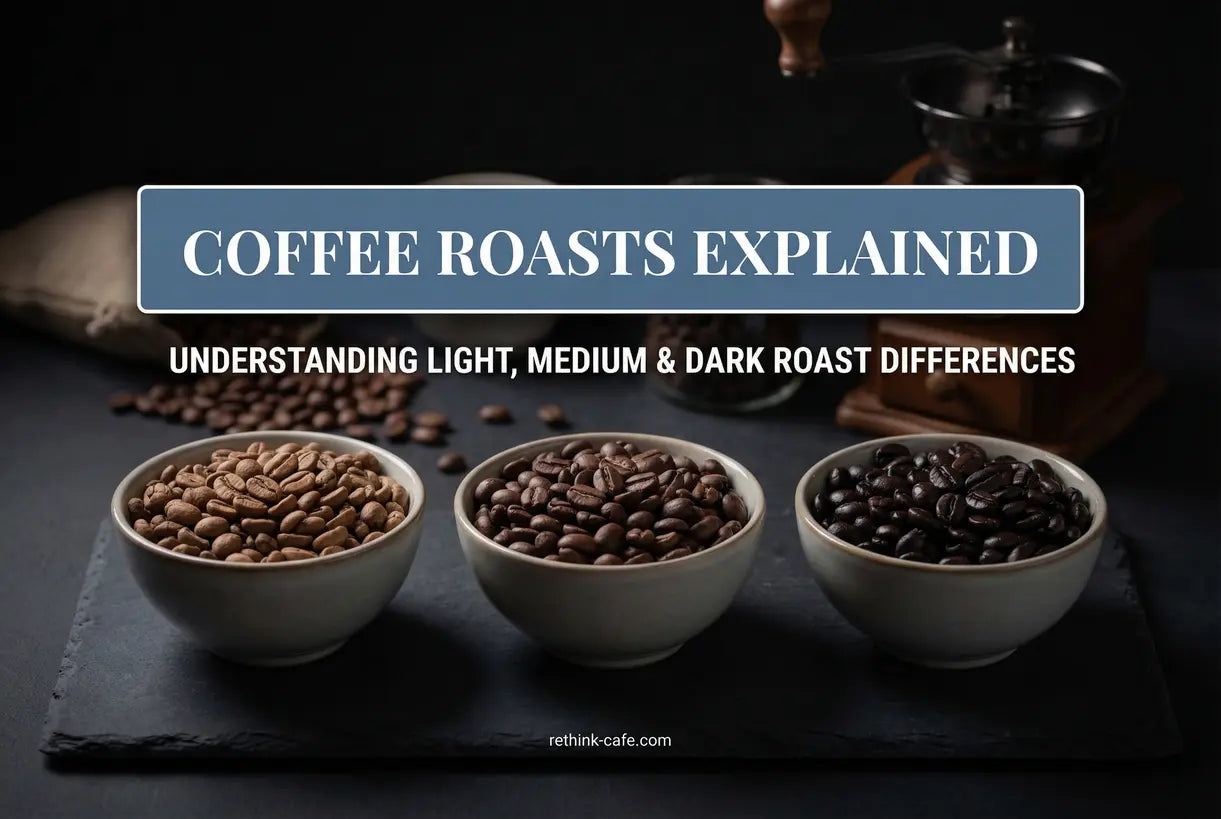
Walking into a specialty coffee shop and staring at bags labeled light roast, medium roast, and dark roast can feel overwhelming. What do these roast of coffee labels actually mean for your morning cup? Understanding coffee roast levels is the key that unlocks your ability to choose beans that match your taste preferences perfectly.
At Rethink Cafe, we believe every home barista deserves to understand the craft behind their brew. This guide will walk you through the complete spectrum of types of coffee roasts, from the bright, tea-like qualities of lightly roasted beans to the bold, smoky character of dark roasts. By the end, you'll know exactly how to identify each roast of coffee, what flavors to expect, and how to store and brew them for maximum enjoyment.
Understanding the Spectrum of Coffee Roast Levels
Coffee roasting levels exist on a continuous spectrum rather than rigid categories. A roaster makes hundreds of micro-decisions during the roasting process, watching for visual cues like bean color, listening for the "first crack" and "second crack" sounds, and monitoring temperature curves. These decisions determine which roast of coffee category the final beans fall into.
The three primary coffee roast differences you'll encounter are:
- Light Roast: Beans roasted until just after the first crack, preserving origin characteristics
- Medium Roast: Beans developed past first crack but stopped before or at second crack
- Dark Roast: Beans roasted through and beyond second crack, developing deeper caramelization

Each roast of coffee brings distinct flavor profiles, body characteristics, and brewing considerations to your cup. Let's explore each level in detail.
Light Roast Coffee: Origin in Every Sip
Light roast coffee represents the roast master's commitment to preserving the bean's inherent qualities. These beans spend the least amount of time in the roaster, typically reaching internal temperatures between 356°F and 401°F (180°C to 205°C). The roasting stops shortly after the audible "first crack"—a popping sound caused by moisture escaping the bean.
Visually, light roasts appear tan to light brown with a matte, dry surface. You won't see any oil on these beans because the roasting duration hasn't been long enough to draw oils to the surface. This appearance is your first visual cue when comparing coffee bean roasting profiles.
Flavor Profile of Light Roasts
The defining characteristic of light roast coffee is its bright, complex acidity and pronounced origin flavors. When you drink a light roast, you're essentially tasting the terroir—the soil, climate, and elevation where the coffee grew. Expect:
- High acidity: Crisp, wine-like, or citrus notes that enliven the palate
- Light body: A tea-like mouthfeel that feels delicate rather than heavy
- Origin-forward flavors: Floral, fruity, and herbal notes specific to the growing region
- No roast flavor: Minimal caramelization means no smoky or burnt notes
Coffee enthusiasts often describe light roasts as having blueberry, jasmine, lemon, or stone fruit characteristics. These are not added flavors—they're natural compounds preserved through gentle roasting.
Best Brewing Methods for Light Roasts
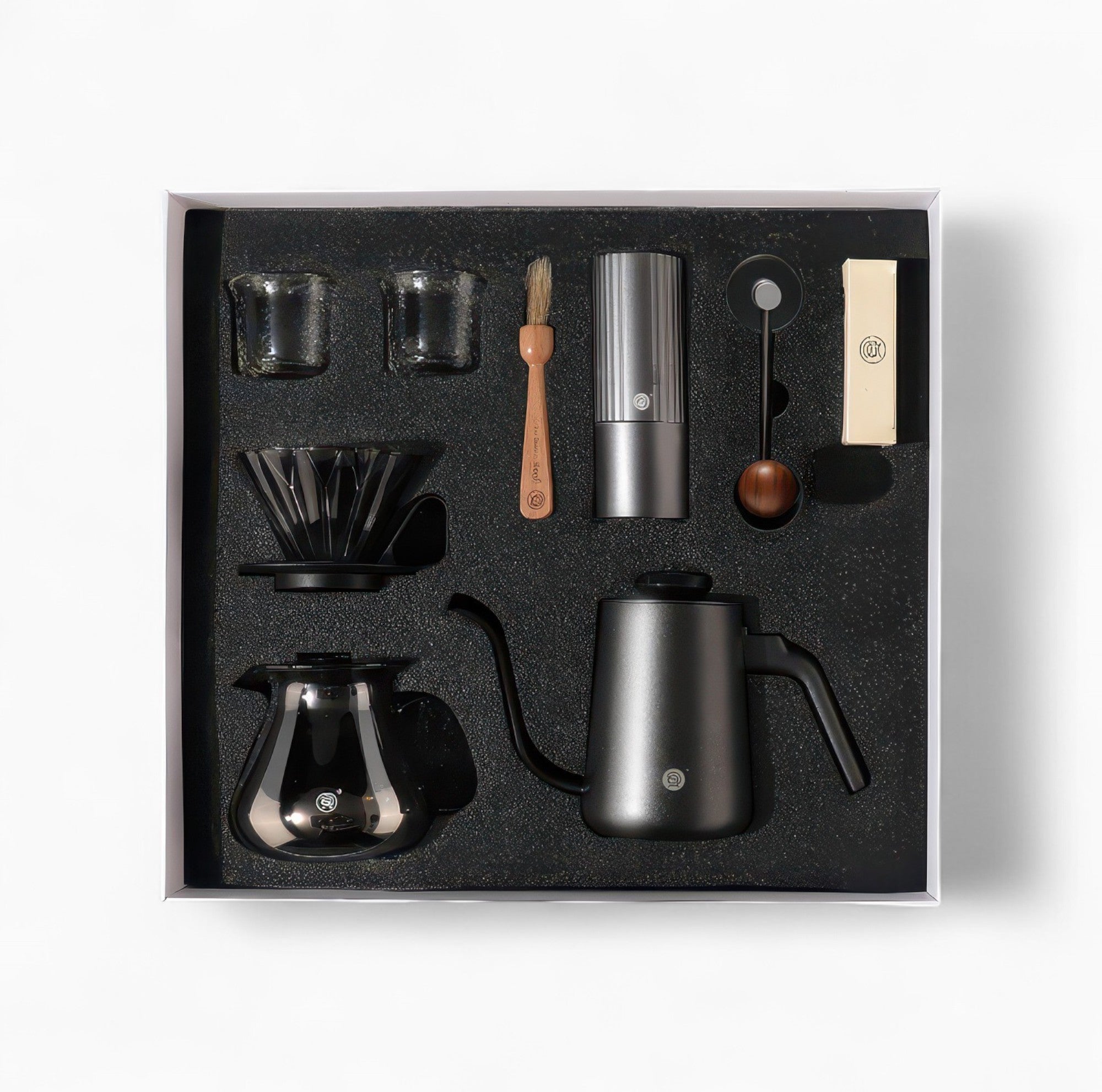
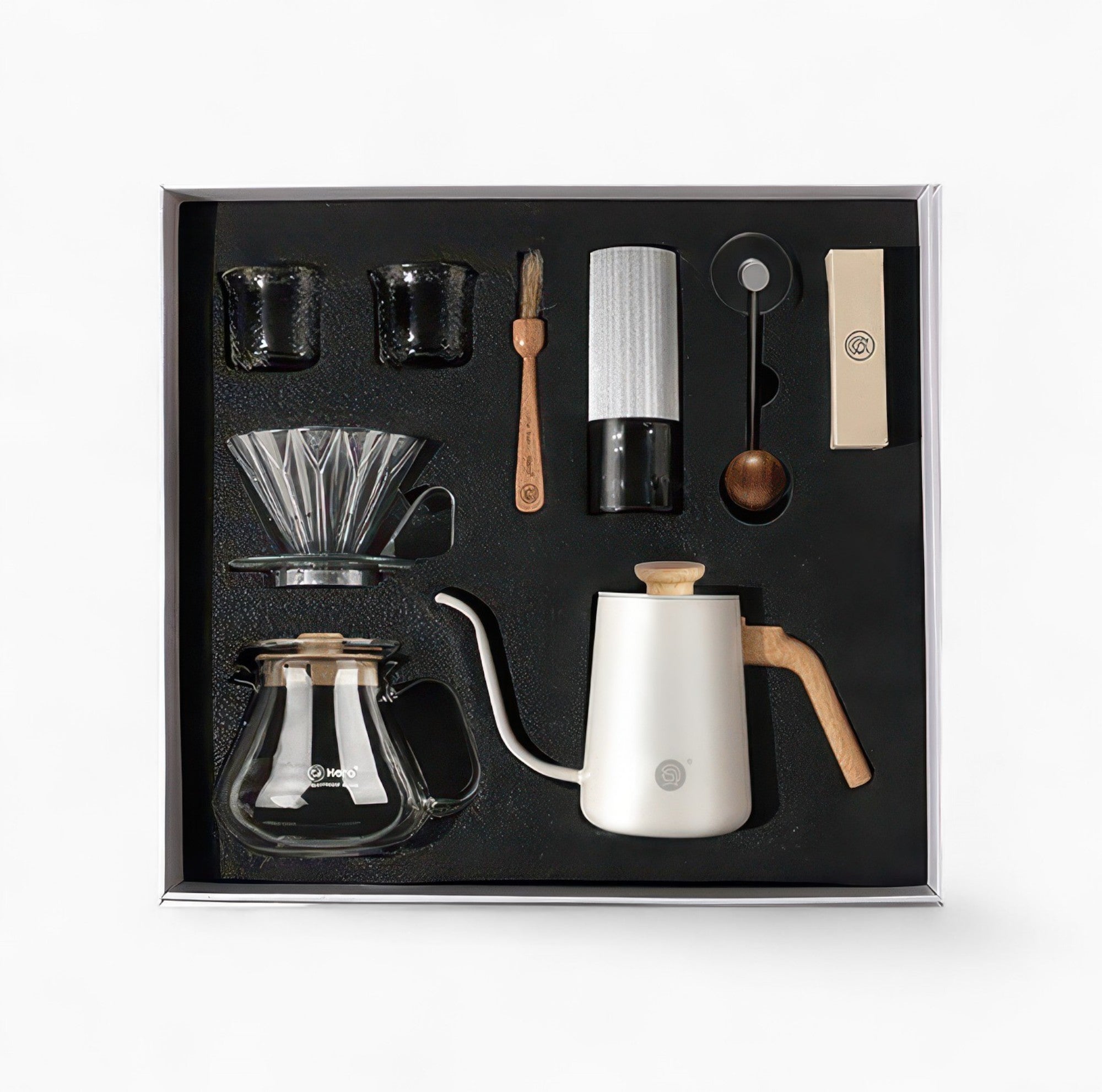
To extract the full complexity of light roast coffee, you'll want brewing methods that highlight clarity and nuance. Pour over methods like Hario V60 or Chemex work exceptionally well, as do Aeropress and high-quality drip machines with precise temperature control. The Complete Pour Over Coffee Kit with Grinder and Kettle provides the precision tools needed to unlock these delicate flavor notes.
Medium Roast Coffee: The Balanced Choice
Medium roast coffee occupies the sweet spot for many American coffee drinkers. These beans reach internal temperatures between 410°F and 428°F (210°C to 220°C), typically stopping at or just after the second crack begins. This extended roasting time allows for more sugar caramelization while still preserving some origin character.
The visual appearance shifts noticeably—medium roasts display a rich brown color, sometimes with a slight sheen as trace oils begin emerging. The surface remains relatively dry compared to dark roasts, but the color depth indicates more developed flavors within.
Flavor Profile of Medium Roasts
Medium roasts offer the best of both worlds: some origin complexity combined with the sweetness and body that develops during extended roasting. Expect:
- Balanced acidity: Brightness tempered by caramelization, creating a smoother experience
- Medium body: More substantial mouthfeel than light roasts without heaviness
- Caramel and nut notes: Brown sugar, hazelnut, and chocolate undertones emerge
- Origin balance: You can still detect regional characteristics, though more subtly
Popular medium roast descriptors include milk chocolate, toasted nuts, caramel, and stone fruit. This roast of coffee works beautifully for those who find light roasts too acidic and dark roasts too intense.
Best Brewing Methods for Medium Roasts
Medium roasts are versatile performers across virtually all brewing methods. They excel in pour over, French press, drip coffee makers, and even cold brew applications. The balanced extraction profile means you have more forgiveness in your technique while still achieving excellent results.
Dark Roast Coffee: Bold and Unapologetic
Dark roast coffee represents the traditional American coffee experience many grew up with. These beans are roasted to internal temperatures between 437°F and 446°F (225°C to 230°C) and well beyond the second crack. The extended heat exposure fundamentally transforms the bean's chemistry.
Visually, dark roast coffee is unmistakable. The beans appear dark brown to nearly black, with an oily, glossy surface that you can both see and feel. This oil migration is a direct result of prolonged roasting and serves as an immediate visual indicator when comparing light vs dark roast beans side by side.

Flavor Profile of Dark Roasts
Dark roasting creates a dramatically different cup profile that prioritizes roast-driven flavors over origin characteristics. Expect:
- Low acidity: Most of the bright acids have cooked off during extended roasting
- Full body: Heavy, syrupy mouthfeel that stands up to milk and cream
- Smoky and bitter notes: Char, dark chocolate, and spice flavors dominate
- Minimal origin character: Beans from different regions taste more similar at this roast level
Common descriptors for dark roasts include bittersweet chocolate, smoked wood, tobacco, and burnt caramel. These flavors come primarily from the roasting process itself rather than the bean's origin.
Best Brewing Methods for Dark Roasts
Dark roasts perform exceptionally well in methods that can handle their intensity. French press brings out the full body, while espresso preparation highlights the rich crema and concentrated flavors. Cold brew applications also work beautifully, as the extended steeping time extracts the deep chocolate notes without excessive bitterness.
Does Dark Roast Coffee Have More Caffeine? Debunking the Myth
One of the most persistent misconceptions about coffee roast differences involves caffeine content. Many people assume that dark roast coffee packs more caffeine because of its stronger, more intense flavor. The reality is more nuanced.
When comparing light vs dark roast beans by weight, they contain virtually identical caffeine content. Caffeine is a stable compound that doesn't significantly break down during typical roasting temperatures. However, dark roasts lose moisture and expand during the longer roasting process, making each individual bean slightly larger and lighter than its light roast counterpart.
This density difference creates an interesting practical effect: if you measure coffee by volume (scoops), dark roast will actually contain slightly less caffeine because the beans are larger and fewer fit in your scoop. If you measure by weight (grams), caffeine content remains essentially the same across coffee roast levels.
The perceived "energy boost" from dark roasts often comes from their bold flavor tricking your brain into thinking you're consuming something stronger, not from actual increased caffeine content.
Which Coffee Roast Has the Strongest Flavor?
The answer depends entirely on how you define "strong." If by strong you mean intense, bitter, and smoky, then dark roast coffee delivers the boldest flavor profile. The extended roasting creates compounds that read as intense on the palate, with lower acidity allowing bitter notes to dominate.
However, if by strong you mean complex, vibrant, and distinctive, light roast coffee offers more nuanced strength. The preserved acids and volatile aromatic compounds create a flavor experience that can be more intense in its complexity, even if it's not "bold" in the traditional sense.
For espresso preparation specifically, many baristas gravitate toward medium to medium-dark roast of coffee options. These provide enough developed sweetness to balance espresso's concentrated extraction while maintaining enough structure to create beautiful crema. Speaking of which...
What Roast of Coffee Is Best for Espresso?
The question of which roast of coffee works best for espresso doesn't have a single definitive answer—it depends on your taste preferences and equipment. That said, certain coffee roasting levels tend to perform better under espresso's high-pressure extraction.
Medium roast coffee is often considered the sweet spot for espresso. The developed sugars create the caramel and chocolate notes that shine through milk drinks, while the balanced acidity provides enough brightness to prevent a flat taste. The bean structure at this roast level also tends to produce thick, golden crema.
Traditional Italian espresso preparation historically favored darker roasts, and many cafes still use dark roasts for their espresso offerings. These produce heavy-bodied shots with prominent bitter chocolate notes that cut through steamed milk beautifully.
Light roasts can work for espresso but require more precise technique. The high acidity and lighter body demand careful grind adjustment and temperature control to avoid sour or thin results. Light roast espresso often showcases remarkable complexity—berry and floral notes that surprise and delight when extracted properly.
Is Light Roast Coffee More Acidic?
Yes, light roast coffee is objectively more acidic than darker roasts. This isn't a flaw—it's a feature. The shorter roasting duration preserves chlorogenic acids and other organic acids that break down during extended heat exposure. These acids contribute significantly to light roast's bright, lively flavor profile.
For coffee drinkers with sensitive stomachs, this higher acidity can occasionally cause discomfort. However, the quality of the bean and the freshness of the roast matter as much as the roast level itself. Freshly roasted high-quality beans, properly stored, tend to be gentler on the digestive system than stale commodity coffee regardless of roast level.
If you love the flavor complexity of light roasts but find the acidity challenging, consider cold brew preparation. The extended steeping time in cold water extracts fewer acids while preserving the nuanced flavor compounds that make light roasts special.
Matching Brewing Methods to Coffee Roast Levels
Understanding coffee roast differences becomes most valuable when you apply that knowledge to your brewing routine. Each roast of coffee responds differently to water temperature, extraction time, and grind size.
| Roast Level | Ideal Brewing Methods | Recommended Temperature | Key Tips |
|---|---|---|---|
| Light Roast | Pour Over, Aeropress, Drip | 200-205°F (93-96°C) | Use finer grind, longer bloom time |
| Medium Roast | Universal - all methods work well | 195-205°F (90-96°C) | Most forgiving roast level |
| Dark Roast | French Press, Espresso, Cold Brew | 185-200°F (85-93°C) | Slightly cooler water prevents bitterness |
One of the joys of exploring coffee roast levels is discovering how the same brewing method produces completely different cups depending on your bean selection. We recommend keeping multiple roasts on hand and experimenting with different preparation techniques to find your personal preferences.
Proper Storage for Every Roast of Coffee
Whether you prefer light roast coffee, medium roast coffee, or dark roast coffee, proper storage is essential for maintaining flavor. All roasted coffee begins losing aromatic compounds immediately after roasting, with the rate of degradation depending on exposure to oxygen, light, heat, and moisture.
Light roasts tend to stale slightly faster than dark roasts because their more volatile aromatic compounds are less stable. The delicate florals and fruit notes that make light roasts special are also the first to dissipate when exposed to air.
Dark roasts have more stable flavor compounds but face a different challenge: their oils are more prone to oxidation and rancidity. Those visible oils on dark roasted beans can turn stale and cardboard-like when stored improperly.

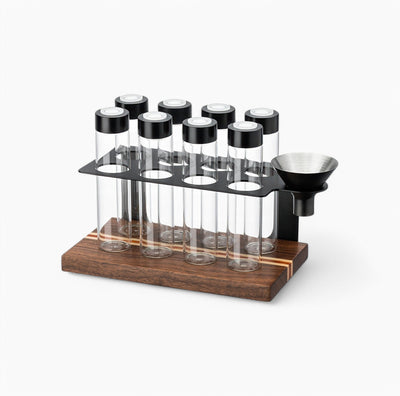
For home baristas who enjoy comparing multiple types of coffee roasts, proper storage solutions become even more important. You need systems that protect freshness while allowing you to access different beans easily throughout the week.

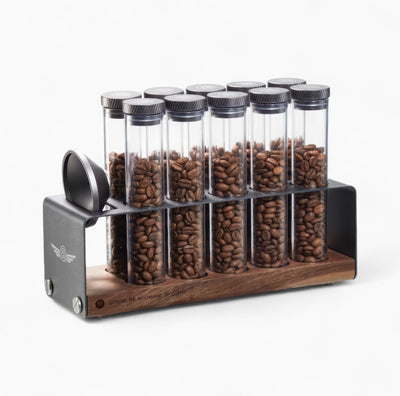
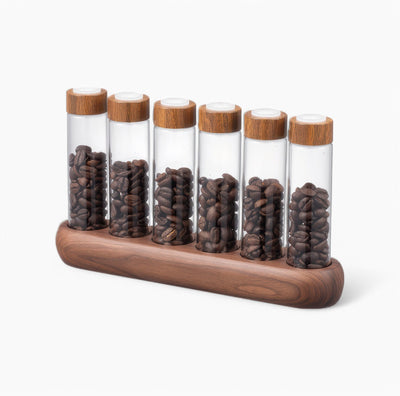
Coffee Bean Storage Tubes With Walnut Display Base
$34.90 $67.00
Display and protect your freshly roasted beans in these elegant glass tubes. Perfect for comparing different roast levels at a glance.
Explore ProductThe Coffee Bean Storage Tubes With Walnut Display Base solve this challenge elegantly. These glass tubes allow you to visually compare your different roast of coffee selections at a glance while protecting beans from air exposure. The walnut base adds a professional aesthetic to your home coffee station that reflects the care you put into your brewing.
Having multiple roasts visible and accessible encourages experimentation. You might discover that a light roast coffee from Ethiopia brightens your morning while a medium roast coffee from Colombia carries you through the afternoon.
Essential Equipment for Roast Exploration

Complete Pour Over Coffee Kit with Grinder and Kettle
$235.90
$360.00
Unlock the full potential of every roast with this professional brewing kit featuring a precision grinder and temperature-controlled kettle. Learn more ➔

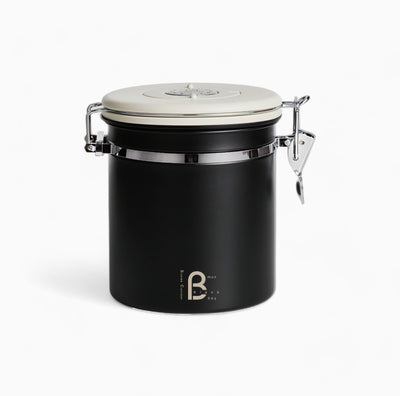
Airtight Coffee Bean Canister with CO2 Valve
$37.90
$63.00
Preserve the complex flavors of your favorite roasts with this vacuum-sealed canister that removes oxygen and extends freshness. Learn more ➔
When exploring different coffee roast levels, having the right equipment makes all the difference. The Complete Pour Over Coffee Kit with Grinder and Kettle gives you the precision to highlight the unique characteristics of each roast of coffee you try. The variable temperature kettle is particularly valuable—light roasts need near-boiling water to extract fully, while dark roasts benefit from slightly cooler temperatures to avoid excessive bitterness.
For your main storage needs, the Airtight Coffee Bean Canister with CO2 Valve creates the ideal environment for preserving those complex flavor profiles you're learning to appreciate. The one-way CO2 valve allows natural degassing while preventing oxygen from entering, effectively pausing the staling process and extending your coffee's peak flavor window.
Conclusion: Your Journey Through Coffee Roast Levels
Understanding roast of coffee differences transforms you from a passive coffee drinker into an informed home barista who can curate their daily experience with intention. Whether you gravitate toward the bright, origin-forward character of light roast coffee, the balanced approachability of medium roast coffee, or the bold intensity of dark roast coffee, the knowledge you've gained empowers you to choose beans that consistently deliver the experience you crave.
Remember that coffee roasting levels are tools, not rules. The best roast of coffee is the one that brings you genuine pleasure in the moment. Don't be afraid to experiment across the spectrum, try new origins at different roast levels, and develop your own preferences independent of coffee culture trends.
At Rethink Cafe, we're committed to supporting your exploration with equipment designed for home baristas who take their craft seriously. From storage solutions that preserve freshness to brewing tools that extract maximum flavor from every roast of coffee, we provide the gear you need to turn coffee knowledge into coffee excellence.
Frequently Asked Questions About Coffee Roast Levels
The primary differences lie in roasting duration, temperature, and resulting flavor. Light roasts are heated just until the "first crack" (356-401°F), preserving origin flavors with bright acidity and no oil on the surface. Medium roasts go slightly beyond first crack (410-428°F), creating balanced cups with caramel sweetness and slight sheen. Dark roasts continue through the "second crack" (437-446°F), developing bold, smoky flavors with oily, glossy beans and lower acidity.
No—this is a common myth. When measured by weight, light and dark roasts contain virtually identical caffeine content. Caffeine remains stable throughout the roasting process. However, dark roasts are less dense because they expand during longer roasting. If you measure by volume (scoops), dark roast appears to have slightly less caffeine because the larger, lighter beans take up more space. For consistent caffeine intake, always measure your coffee by weight in grams rather than volume.
Dark roast coffee delivers the most intense, bold flavor profile with smoky, bitter, and heavy characteristics. However, "strength" is subjective. Light roasts actually contain more complex, vibrant flavors—their brightness and acidity create an intense sensory experience in terms of complexity and nuance. If you prefer bold, traditional coffee taste, choose dark roast. If you enjoy complex, tea-like flavors with distinctive origin characteristics, light roast provides remarkable flavor intensity in a different form.
Medium to medium-dark roasts are generally considered best for espresso. These roasts provide developed sugars that create caramel and chocolate notes, balanced acidity that prevents flatness, and enough structure to produce thick, golden crema. Traditional Italian espresso uses dark roasts for heavy-bodied, milk-cutting shots. Light roasts can work for espresso but require precise technique and temperature control to avoid sour results. Ultimately, the best espresso roast depends on your taste preferences and equipment.
Yes, light roast coffee is objectively more acidic than darker roasts. The shorter roasting duration preserves chlorogenic acids and other organic acids that break down during extended heat exposure. This higher acidity contributes to light roast's characteristic brightness and complexity. For those with sensitive stomachs, cold brew preparation extracts fewer acids while preserving light roast's nuanced flavors. High-quality, freshly roasted beans also tend to be gentler than stale coffee regardless of roast level.