
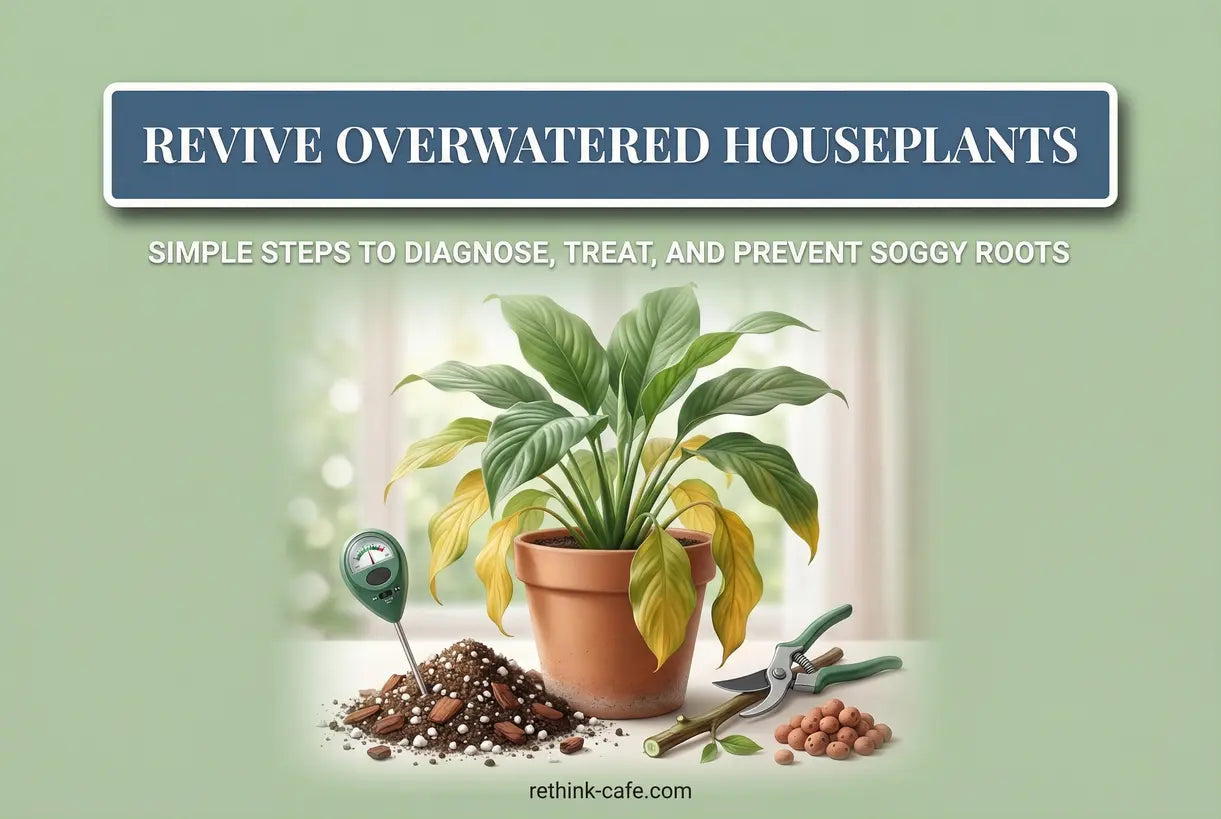
Overwatering is the silent killer lurking in every plant parent's watering can. While we water with love, excess moisture suffocates roots, invites fungal infections, and triggers the dreaded root rot that claims more houseplants than any pest or disease combined. If your favorite fern is looking peaked or your succulent is suspiciously squishy, you're likely dealing with a waterlogged root system gasping for air.
Learning how to save an overwatered houseplant isn't just about drying out soil—it's about understanding the delicate balance between hydration and oxygen at the root level. In this guide, you'll master quick diagnosis techniques, emergency recovery protocols, and the exact soil amendments that prevent future drowning disasters. We'll also show you how the right tools can transform you from accidental plant assassin to confident indoor gardener.
Overwatered or Underwatered? The Critical First Diagnosis
Before you panic-drench or dehydrate your plant further, you need definitive answers. Both overwatering and underwatering can cause droopy leaves and yellowing, but the devil is in the details.
Overwatering symptoms typically include soft, mushy stems, yellow leaves that feel squishy rather than crispy, and a musty odor wafting from the soil. You might notice fungus gnats hovering around the surface—those tiny black flies are nature's warning sign that your potting mix has stayed wet too long. The soil will feel soggy even days after watering.
Underwatered plants, conversely, present crispy, brittle leaves that crumble when touched. The soil pulls away from the pot edges, and the plant feels light as a feather when lifted. The key differentiator is texture: overwatered plants feel wet and mushy; underwatered ones feel dry and papery.

Emergency Response: Immediate Steps to Stop Root Rot
Speed matters when treating an overwatered plant. The moment you suspect waterlogging, stop all watering immediately. Remove the plant from its decorative cachepot or saucer to allow unrestricted drainage. If the soil is visibly saturated, tilt the pot sideways to pour out standing water—never let your plant sit in a puddle.
Increase air circulation around the plant by placing it near a fan (not directly in the draft) or opening windows. If the pot has drainage holes, gently insert a bamboo skewer or chopstick into the soil to create aeration channels that help moisture evaporate from the root zone. Blot the top of the soil with paper towels to wick away surface moisture.
For severely waterlogged plants, you may need to remove the root ball from the pot entirely, wrap it in several layers of newspaper or clean cloth, and squeeze gently to absorb excess water before repotting.
Can Your Plant Recover Without Repotting?
The million-dollar question for every plant parent staring at a sad, droopy monstera: Is the trauma reversible without disturbing the roots? The answer depends entirely on severity and timing.
If you caught the overwatering within 24-48 hours and there's no visible root rot (black, slimy roots) or fungal growth on the soil surface, your plant can absolutely recover in its current container. Simply follow the emergency drying steps above and abstain from watering until the top two inches of soil feel bone dry.
However, if the soil smells like rotten eggs, the roots are pushing through drainage holes looking for oxygen, or the stem base feels like overcooked pasta, repotting is non-negotiable. The existing soil is contaminated with anaerobic bacteria, and staying put will seal your plant's fate.
Inspecting the Damage: A Root Check Tutorial
When repotting becomes necessary, technique determines survival. Gently remove the plant from its pot and shake off loose soil. Rinse the root ball under lukewarm running water to reveal the true condition of the root system. Healthy roots should be firm, white or tan, and smell earthy.
Using sterilized pruning shears or scissors (wiped with rubbing alcohol), trim away any roots that are black, brown, mushy, or smell foul. Don't be gentle here—rotten roots must go completely, or the rot will spread. After pruning, dip the remaining healthy roots in a hydrogen peroxide solution (one part 3% peroxide to three parts water) for three minutes to kill lingering pathogens.

Let the roots air-dry for an hour before placing them in fresh, dry potting mix. This drying period is crucial—it prevents the healthy roots from immediately suffocating in new wet soil.
The Healing Timeline: How Long Recovery Takes
Patience is your greatest ally during plant recovery. For mild overwatering cases resolved without repotting, expect to see perky leaves and turgid stems within 7 to 14 days of drying out. The plant is essentially holding its breath while its root hairs regenerate.
Moderate cases requiring repotting take longer—typically 3 to 6 weeks before new growth appears. During this time, the plant directs all energy toward root system reconstruction rather than leaf production. Don't fertilize during recovery; new roots are too sensitive for nutrient salts.
Severe root rot recovery can span 2 to 4 months. Some plants may lose most of their foliage during this period. As long as the stem remains firm and green, and you see new white root tips emerging when you gently check the soil, hope remains. Resist the urge to overcompensate with extra water or plant food—stable, dry conditions win this race.
Soil and Pot Solutions That Prevent Future Disasters
Prevention starts with the foundation. Standard potting soil often retains too much moisture for indoor environments with limited light and air circulation. You need a mix designed specifically for aeration and rapid drainage—one that allows water to flow through quickly while maintaining enough structure to support the root ball.

Breathable Peat-Free Potting Mix (2 L)
Fast-draining, peat-free mix with perlite and composted bark to improve aeration and reduce root rot risk—ideal for repotting soggy plants.
Explore ProductWhen selecting containers, ensure every pot has adequate drainage holes. Terracotta pots are superior to plastic for overwatering-prone plants because the porous clay allows moisture to evaporate through the sides, not just the bottom. Avoid oversized pots—they retain excess soil moisture that roots can't absorb quickly enough.
Smart Tools for Precision Watering
Human intuition fails when it comes to soil moisture. The surface may feel dry while the root zone remains swampy. That's where technology becomes your insurance policy against well-meaning mistakes.
A digital moisture meter eliminates guesswork by measuring hydration levels at root depth. Rather than sticking to arbitrary weekly watering schedules, you water only when the meter reads "dry" at the appropriate depth for your specific plant species.
Essential Recovery & Prevention Tools

3-in-1 soil meter that measures moisture, pH, and light—helps prevent overwatering by giving quick, reliable readings. Learn more ➔

Unglazed terracotta tray that wicks up excess moisture and evens out watering—useful for plants that need drier surface soil. Learn more ➔
For plants recovering from overwatering or species that prefer drier conditions, terracotta watering trays provide passive moisture management. Unlike plastic saucers that trap water, these unglazed clay trays absorb excess moisture from the bottom of the pot while gradually releasing humidity—creating a stable microenvironment that prevents the dangerous wet-dry cycling that stresses roots.
High-Risk Plants: Species Most Vulnerable to Overwatering
Some houseplants are essentially aquatic plants in disguise, while others treat moisture like kryptonite. Succulents and cacti store water in their leaves and stems, making supplemental watering dangerous during dormant periods. Snake plants (Sansevieria), ZZ plants, and pothos can tolerate drought for weeks but succumb quickly to soggy soil.
Tropical plants with thick aerial roots like fiddle leaf figs and monsteras are particularly deceptive—they need humidity but hate wet feet. Orchids planted in dense potting mix rather than bark also face high overwatering risks. If you own any of these species, invest in the Digital Moisture Meter before adding a single drop of water.
Pro Tip: Always check the weight of your pots. Lift a freshly watered plant to feel its heft, then lift it when completely dry. Your hands become a scale that tells you exactly when watering is truly necessary.
Step-by-Step Video Guide
Sometimes seeing the process beats reading about it. Watch this detailed tutorial covering everything from emergency soil drying techniques to proper root pruning and repotting procedures:
Your Complete Recovery Cheat Sheet
Successful plant recovery follows a predictable pattern: stop watering, assess roots, remove rot, refresh soil, and modify your watering habits with proper tools. Keep this visual guide handy for future emergencies:

Remember that overwatering isn't a death sentence—it's a learning opportunity. With the right soil amendments like our Breathable Peat-Free Potting Mix and monitoring tools such as the Digital Moisture Meter, you can create an environment where roots thrive rather than merely survive.
Building Your Plant Care Ecosystem
Reviving overwatered houseplants requires more than hope—it demands the right materials, precise measurement tools, and soil that works as hard as you do. At Rethink Cafe, we understand that healthy growth starts from the ground up, whether you're cultivating coffee plants in your kitchen or maintaining a jungle of tropical foliage.
Our curated collection of specialized potting mixes and precision watering tools takes the anxiety out of plant maintenance. Stop guessing and start growing with products engineered for optimal aeration, drainage, and root health.
Frequently Asked Questions About Reviving Overwatered Plants
Overwatered plants have soft, mushy leaves and stems that feel squishy to the touch, often accompanied by a musty odor from the soil. The soil remains wet days after watering. Underwatered plants display crispy, brittle leaves that crumble when touched, with soil that pulls away from pot edges. The key differentiator is texture: overwatered plants feel wet and limp, while underwatered ones feel dry and papery.
Immediately stop watering and remove the plant from any cachepot or saucer. Tilt the pot to drain standing water, increase air circulation with a fan, and blot the soil surface with paper towels. For severe cases, remove the root ball and wrap it in newspaper to absorb excess moisture before repotting in fresh, dry soil.
Yes, if caught within 24-48 hours without visible root rot. Allow the soil to dry completely, increase air circulation, and abstain from watering until the top two inches feel dry. However, if you smell rotten eggs, see black roots, or notice fungus gnats, repotting is necessary to remove contaminated soil and trim rotted roots.
Mild cases resolve in 7-14 days. Moderate overwatering requiring repotting takes 3-6 weeks for new growth to appear. Severe root rot recovery can span 2-4 months. During recovery, avoid fertilizer and maintain consistent, dry conditions while roots regenerate.
Use fast-draining, peat-free potting mixes containing perlite and bark for aeration. Switch to terracotta pots with drainage holes instead of plastic, as clay allows moisture to evaporate through the walls. Avoid oversized pots that retain excess moisture, and always ensure containers have adequate drainage holes.
Succulents, cacti, snake plants (Sansevieria), ZZ plants, and pothos are highly susceptible due to their water-storing leaves. Tropical plants with aerial roots like fiddle leaf figs and monsteras also suffer in waterlogged soil. These species prefer thorough drying between waterings and require well-draining soil mixes.