
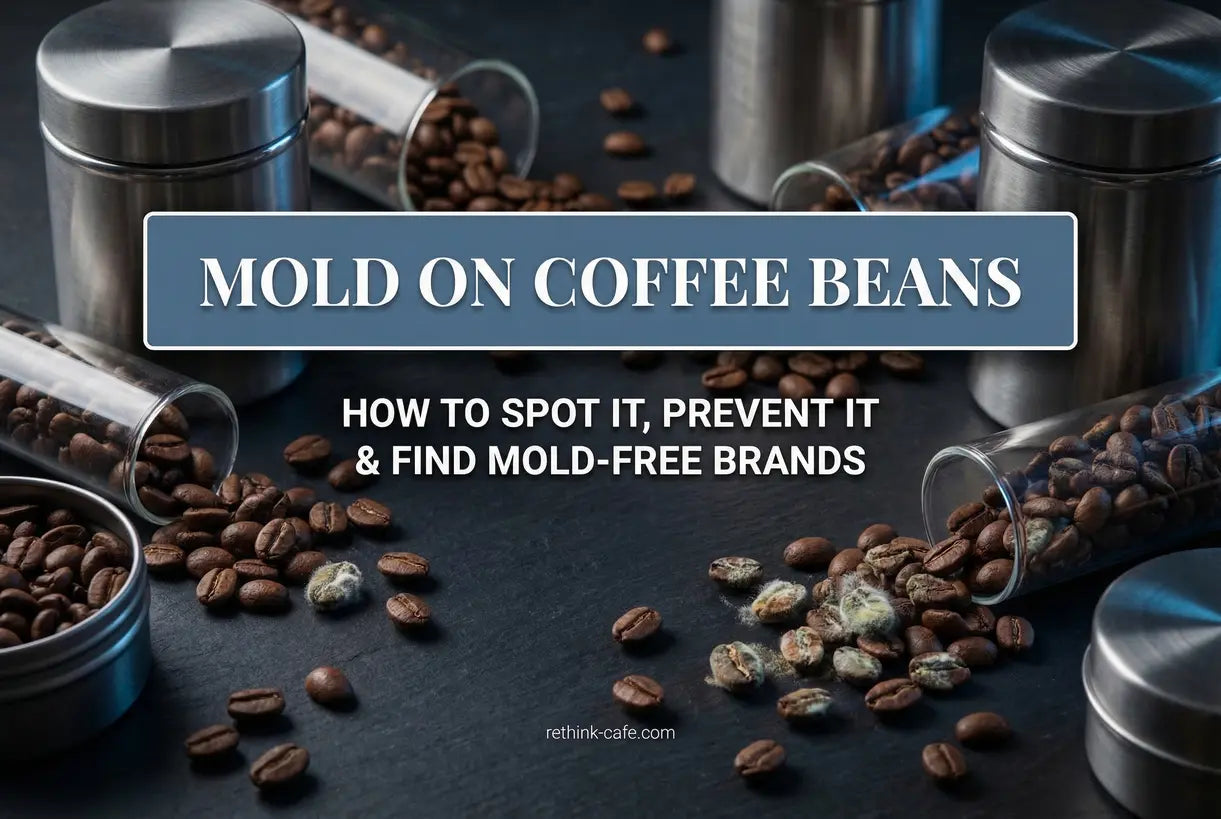
Discovering mold on coffee beans is every coffee lover's nightmare. Whether you've just opened a new bag of specialty beans or you're checking on your emergency coffee supply, that suspicious fuzzy growth can ruin your morning routine and raise serious health concerns. For home baristas who invest in premium equipment and high-quality beans, understanding how to identify, prevent, and avoid mold contamination is essential for protecting both your health and your investment.
In this comprehensive guide, we'll walk you through everything you need to know about moldy coffee symptoms, the science behind mycotoxins in coffee, and proven coffee bean storage strategies that keep your beans fresh and safe. You'll learn practical detection techniques and discover which mold free coffee options deliver exceptional flavor without the contamination risks.
What Causes Mold to Grow on Coffee Beans?
Understanding the root causes of mold in coffee grounds and whole beans helps you prevent contamination before it starts. Mold spores are everywhere in our environment, but they need specific conditions to colonize your precious coffee supply.
The primary culprits behind coffee mold detection failures are:
- Moisture exposure: Coffee beans are hygroscopic, meaning they readily absorb moisture from the air. Humidity levels above 60% create perfect breeding grounds for mold.
- Temperature fluctuations: Warm, damp environments accelerate mold growth exponentially.
- Poor ventilation: Trapped air in poorly sealed containers creates microclimates where mold thrives.
- Age and staleness: Older beans lose their natural defenses and become more susceptible to contamination.
According to research published by the National Center for Biotechnology Information, improper storage is the leading cause of mycotoxin development in coffee beans. These microscopic toxins produced by mold can survive roasting temperatures, making prevention far more critical than you might assume.
How to Spot Mold on Coffee Beans

Visual inspection is your first line of defense against contaminated coffee. Unlike the natural oils that give fresh beans their sheen, mold presents distinct characteristics that become obvious once you know what to look for.
When performing coffee mold detection, examine your beans for these warning signs:
Key Visual Indicators: White, green, or blue fuzzy patches; web-like filaments; discoloration that differs from the bean's natural roast profile; clumping where moisture has accumulated.
The smell test is equally important. Fresh coffee should deliver chocolate, nutty, or fruity aromatics depending on the origin. Moldy coffee symptoms include musty, damp basement odors, or sharp chemical smells that indicate mycotoxin presence. If your beans smell off, trust your nose and discard them immediately.
Distinguishing Mold from Natural Coffee Oils
Many home baristas mistake the natural oils on dark roasted beans for mold. Fresh coffee oils create an even, glossy surface that enhances the bean's color. Mold, however, appears as irregular patches that sit on top of the bean rather than integrating with its natural sheen. When in doubt, look for texture differences—mold feels fuzzy or powdery, while coffee oils feel slick and smooth.
Is It Safe to Drink Coffee With Mold?
The short answer is a resounding no. While some might tolerate certain foods with minimal mold growth, mycotoxins in coffee pose genuine health risks that aren't neutralized by brewing temperatures.
Research indicates that mycotoxins can cause:
- Respiratory irritation and allergic reactions
- Digestive distress and nausea
- Weakened immune system function
- Potential liver damage with prolonged exposure
The danger extends beyond visible mold. Mold in coffee grounds often starts at the microscopic level long before you can see it. By the time fuzzy patches appear, mycotoxins have likely permeated the entire batch. This is why storing coffee beans properly is your most effective safety strategy.
Prevention Strategies: Storing Coffee Beans Properly

Prevention is infinitely more effective than remediation when dealing with coffee mold. The investment you make in coffee bean storage solutions directly correlates to the longevity and safety of your beans.
The golden rules for storing coffee beans properly include maintaining dry conditions, limiting light exposure, and controlling temperature. Your kitchen might seem like the obvious storage location, but cabinets near the stove or dishwasher create humidity spikes that invites mold growth.

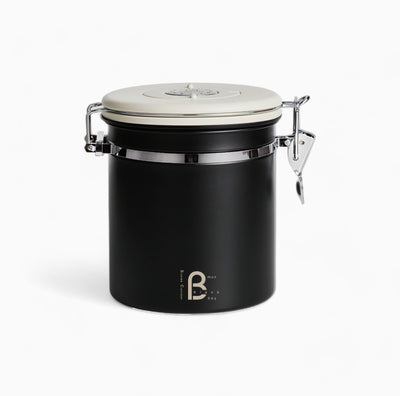
Airtight Coffee Bean Canister with CO2 Valve
$37.90 $63.00
Protect your beans from mold with this 304 stainless steel canister featuring a one-way CO2 exhaust valve that blocks oxygen while allowing gas release. The built-in date tracker ensures you always know your beans freshness window.
Explore ProductThe Airtight Coffee Bean Canister with CO2 Valve solves the primary problem that leads to mold on coffee beans: oxygen exposure combined with trapped moisture. Traditional containers trap the CO2 that freshly roasted beans release, creating humid microenvironments inside. The one-way exhaust valve on this canister allows CO2 escape while blocking oxygen entry.
Plus, the built-in date tracker helps you monitor freshness windows, ensuring you use beans before mold risk increases. The 304 stainless steel construction provides an additional barrier against light and temperature fluctuations that accelerate spoilage.
Optimal Storage Conditions Explained
For mold free coffee preservation, aim for these environmental parameters:
- Humidity: Keep relative humidity below 50% around your storage containers
- Temperature: Store between 60-70°F (15-21°C) away from heat sources
- Light: UV rays degrade coffee oils; opaque containers are essential
- Air exposure: Minimize opening frequency and duration

Premium Storage Solutions for Mold Prevention

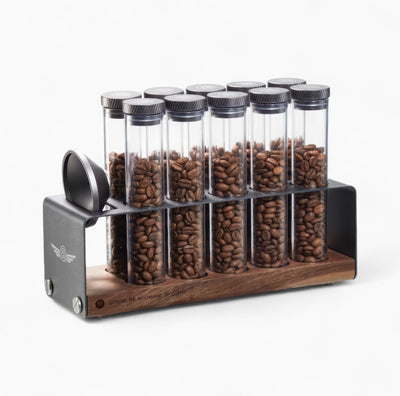
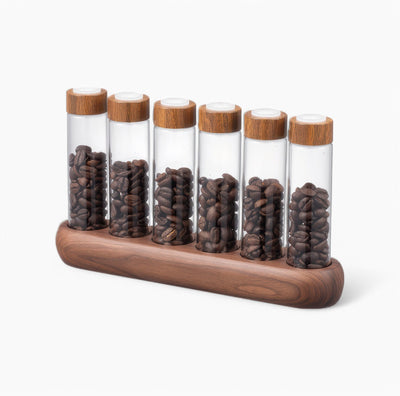
Coffee Bean Storage Tubes With Walnut Display Base
$34.90
$67.00
Store single doses in these elegant borosilicate glass tubes with cork stoppers that minimize air exposure. The solid walnut display base keeps multiple origins organized and sealed to prevent mold contamination. Learn more ➔

Digital Coffee Scale with 0.1g Precision Brewing
$49.90
$83.00
Track your coffee consumption with 0.1g precision to ensure beans are used before mold risk increases. Features a tempered glass surface and USB-C charging for accurate daily dosing. Learn more ➔
For enthusiasts with multiple coffee origins, the Coffee Bean Storage Tubes With Walnut Display Base offers elegant individual portion control. These borosilicate glass tubes with cork stoppers minimize air exposure while the walnut base keeps your collection organized. Unlike large containers that expose entire batches to air every time you brew, these tubes let you portion beans and keep the remainder sealed.
The Digital Coffee Scale with 0.1g Precision Brewing supports mold prevention indirectly but importantly. By tracking your daily consumption with precision, you can calculate exactly how quickly you're working through each bag. Knowing your consumption rate helps you buy appropriately sized quantities that you'll finish before mold risk increases, typically within 2-3 weeks of roasting.
Which Coffee Brands Are Mold Free?
The search for mold free coffee brands requires looking beyond marketing claims to third-party testing and sourcing practices. While no coffee is completely immune to mold spores, certain producers implement rigorous quality controls that drastically reduce contamination risks.
When evaluating mold free coffee options, prioritize brands that:
- Source beans from high-altitude regions with lower natural humidity
- Implement wet processing methods that reduce mold opportunity during fermentation
- Publish third-party mycotoxin testing results
- Roast in small batches to ensure rapid turnover
- Package immediately after roasting with proper sealing
Specialty coffee roasters focusing on single-origin beans often provide superior mold free coffee compared to commodity brands because they control the entire supply chain from farm to bag. These producers typically invest in proper drying equipment and storage facilities that prevent the moisture accumulation that leads to moldy coffee beans.
When to Discard vs. When to Salvage
A common dilemma facing home baristas: you've discovered possible mold—now what? Understanding the difference between surface oils, chaff, and actual mold helps you make safe decisions.
Discard immediately if: You see fuzzy patches, web structures, or smell musty odors. The presence of moldy coffee symptoms means mycotoxins are present even if you can't see them.
Salvage if: You're seeing chaff (natural bean skin remnants) or uneven roasting spots. These are cosmetic issues, not safety concerns. When uncertain, err on the side of caution. Specialty coffee represents a significant investment, but your health is irreplaceable.
Pro Tip: Freeze small batches of beans in airtight containers if you can't consume them quickly. This halts the aging process and mold risk indefinitely. Only remove what you'll use within 24 hours to prevent condensation damage.
Conclusion
Mold on coffee beans is a preventable problem that requires vigilance and the right equipment. By understanding how to spot moldy coffee symptoms, implementing proper coffee bean storage techniques, and investing in quality containers like the Airtight Coffee Bean Canister with CO2 Valve, you protect both your health and your coffee investment.
The difference between contaminated and mold free coffee often comes down to storage execution. At Rethink Cafe, we engineer solutions specifically designed for the challenges home baristas face, from precision scales that help track freshness to elegant storage systems that preserve your beans' integrity.
Ready to elevate your coffee game while ensuring every cup is safe and delicious? Explore our complete collection of coffee bean storage solutions and brewing accessories designed for the serious home barista.
Frequently Asked Questions about Mold on Coffee Beans
Look for white, green, or blue fuzzy patches on the bean surface, often appearing as irregular spots rather than an even coating. Moldy coffee beans may also show web-like filaments, clumping from moisture, or discoloration that differs from the roast profile. The smell test is equally important—fresh coffee should smell aromatic and inviting, while moldy beans emit musty, damp, or chemical odors. If you suspect mold but aren't certain, it's safest to discard the beans.
No, it is not safe to drink coffee with mold. Mycotoxins produced by mold can survive the high temperatures of brewing and may cause respiratory irritation, digestive issues, and potential liver damage with prolonged exposure. Additionally, mold often exists at microscopic levels before it becomes visible, meaning if you can see mold, the contamination has likely penetrated the entire batch. Always discard moldy coffee beans immediately.
Mold grows on coffee beans when four conditions align: moisture (humidity above 60%), warmth, poor ventilation, and time. Coffee beans are hygroscopic and absorb moisture from the air easily. Common causes include improper storage in humid kitchens, storing beans in refrigerators or freezers without proper airtight containers (which causes condensation), and keeping beans past their optimal freshness window. Beans in poorly sealed bags or containers that trap CO2 and moisture are especially vulnerable.
Store coffee beans in an airtight, opaque container with a one-way CO2 valve in a cool, dry location away from direct sunlight and heat sources. Ideal storage conditions include temperatures between 60-70°F (15-21°C) and relative humidity below 50%. Avoid storing beans in the refrigerator (causes condensation) or above appliances that generate heat. Use containers like the Airtight Coffee Bean Canister with CO2 Valve that allow gas release while blocking oxygen. Consume beans within 2-4 weeks of roasting for optimal freshness and safety.
While no coffee is completely immune to mold spores, specialty coffee brands that emphasize third-party mycotoxin testing, high-altitude sourcing (lower humidity regions), and small-batch roasting offer the lowest risk. Look for brands that publish lab results for ochratoxin A and aflatoxin levels. Single-origin specialty roasters often provide cleaner coffee than commodity brands because they control the entire supply chain. Store-brand or bulk-bin coffees typically carry higher mold risks due to extended storage times and unknown handling practices.


