We've all been there. You wake up craving that perfect morning cup, reach for your coffee beans, and then the realization hits: your grinder is broken, missing, or you simply haven't invested in one yet. The question immediately comes to mind: how to grind coffee beans without a grinder without ruining your brew? Fortunately, your kitchen is likely stocked with tools that can save your morning routine.
This guide covers six proven methods to crush and grind coffee beans using common household items. While these emergency techniques work in a pinch, you'll learn why consistent particle size matters and how investing in the right equipment—like the Complete Pour Over Coffee Kit with Electric Grinder—transforms your daily coffee experience from acceptable to extraordinary.
Why Coffee Grind Size Matters
Before diving into alternative methods, understanding extraction principles helps you achieve better results even with improvised tools. Coffee extraction depends on surface area contact with water. Uneven grinds—some powdery fines mixed with large chunks—create imbalanced flavor: bitterness from over-extracted fines and sourness from under-extracted boulders.

Professional burr grinders create uniform particles through precise crushing mechanisms. Household alternatives like blenders chop beans randomly, producing inconsistent sizes. The methods below minimize this issue through specific techniques, but managing expectations is key. These are temporary solutions, not permanent replacements for proper grinding equipment.
Pro Tip: Whichever method you choose, work in small batches (about 2 tablespoons at a time) to maintain control over particle size and prevent overheating the beans.
Method 1: The Blender Technique
The most common question desperate coffee drinkers ask is: can you grind coffee beans in a blender? Yes, but technique determines success. Blenders use blades rather than burrs, which slice rather than crush, potentially generating heat that damages volatile aromatic oils.
Step-by-Step Process:
- Add small batches (¼ cup maximum) to the blender jar
- Use the pulse setting in short 2-3 second bursts
- Shake the blender gently between pulses to redistribute beans
- Stop when reaching a coarse, sand-like consistency
- Immediately transfer grounds to avoid residual heat exposure
This method works best for coarse grind preparations like French press or cold brew, where precision matters less. Avoid blending continuously, which creates friction heat and static electricity causing grounds to cling to container sides.
Method 2: Food Processor Grinding
Similar to blenders but typically larger, food processors handle bigger batches but suffer from the same blade-chopping limitations. Can you grind coffee beans in a food processor? Absolutely, and the wider bowl makes accessing grounds easier than narrow blender jars.
Best Practices:
- Use the "S" blade (standard chopping blade) attachment
- Process beans in 10-second intervals with 5-second rests
- Tilt the processor occasionally while running to move beans toward blades
- Aim for medium-coarse texture suitable for drip brewing
The food processor generates less heat than high-speed blenders due to slower blade rotation, making it gentler on delicate bean oils. However, static cling remains problematic—tap the bowl firmly before opening to settle fines.
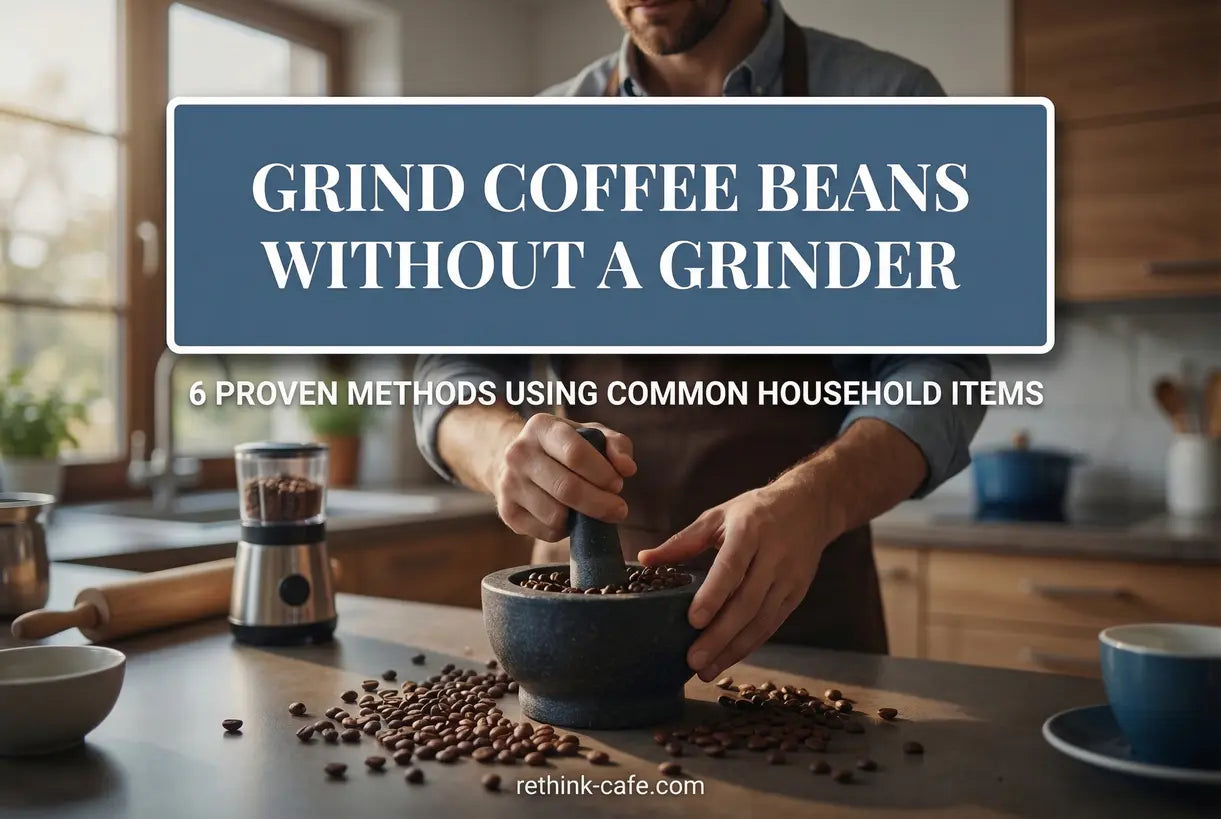
Method 3: Mortar and Pestle Grinding

Among alternative coffee grinding methods, the mortar and pestle offers superior control over particle size distribution. This ancient technique crushes rather than slices, producing more uniform results than blade-based approaches. Is it okay to grind coffee beans with a mortar and pestle? Not only is it okay, but coffee professionals historically used this method before mechanical grinders existed.
Technique for Success:
- Fill mortar no more than one-quarter full to prevent spillage
- Use a firm, twisting motion rather than pounding to minimize bean escape
- Work from coarse crushing to fine grinding in stages
- Rotate the pestle with downward pressure for even particle reduction
This manual coffee grinding technique excels for espresso-fine grinds, though it requires patience and elbow grease. Expect 5-10 minutes of grinding for a single serving. The ceramic or stone surface maintains bean temperature better than metal blades, preserving delicate flavor compounds.
Method 4: Rolling Pin Crushing
The rolling pin method transforms your countertop into a grinding station. Place beans inside a sturdy plastic bag (freezer bags work best) or between parchment paper sheets. Roll firmly with consistent pressure, applying body weight evenly across the pin.
Achieving Consistency:
- Seal bags completely and double-bag to prevent ruptures
- Roll in one direction first, then perpendicular for even crushing
- Shake the bag between rolling sessions to redistribute larger pieces
- Target medium grind for pour-over applications
This technique creates flaky, irregular particles rather than uniform cubes, resulting in uneven extraction. It works acceptably for immersion brewing methods where coffee steeps in water for extended periods, forgiving some inconsistency.
Method 5: The Knife Chopping Method
For true emergencies, a large chef's knife provides surprising control. Use the flat blade (not the edge) in a rocking motion similar to mincing garlic. Press down firmly while rocking forward to crush beans, then gather and repeat.
Safety Considerations:
- Use a wide-bladed chef's knife (8-inch minimum) for stability
- Keep fingertips curled under using proper knife grip technique
- Work on a stable cutting board with a damp towel underneath to prevent slipping
- Expect coarse, uneven results best suited for French press
This method risks flying bean fragments and requires significant effort for single servings. It represents a last-resort option when other tools remain unavailable.
Method 6: Hammer and Bag Technique

The most primitive yet effective manual bean grinding approach uses a meat tenderizer mallet or rolling pin as a hammer. Beans sealed in heavy-duty bags receive controlled strikes to achieve crushing.
Execution:
- Distribute beans evenly in a single layer within a freezer bag
- Remove air completely before sealing
- Strike with moderate force, avoiding rupturing the bag
- Continue until reaching desired consistency, checking frequently
This aggressive method generates significant fines mixed with large chunks, making it suitable only for cold brew preparations where extended steeping compensates for particle variation.
Comparing Emergency Grinding Methods
| Method | Best Grind Size | Batch Size | Consistency Rating |
|---|---|---|---|
| Blender | Coarse | Large | Fair |
| Food Processor | Medium-Coarse | Large | Fair |
| Mortar & Pestle | Fine to Coarse | Small | Good |
| Rolling Pin | Medium | Medium | Poor |
| Knife | Coarse | Small | Poor |
| Hammer | Extra Coarse | Medium | Very Poor |



Preserve & Prepare While You Upgrade

Coffee Bean Storage Tubes with One Way CO2 Valve
$12.90
$22.00
Preserve bean freshness until you get a proper grinder with these airtight single-dose storage tubes featuring CO2 degassing valves for peak flavor retention. Learn more ➔

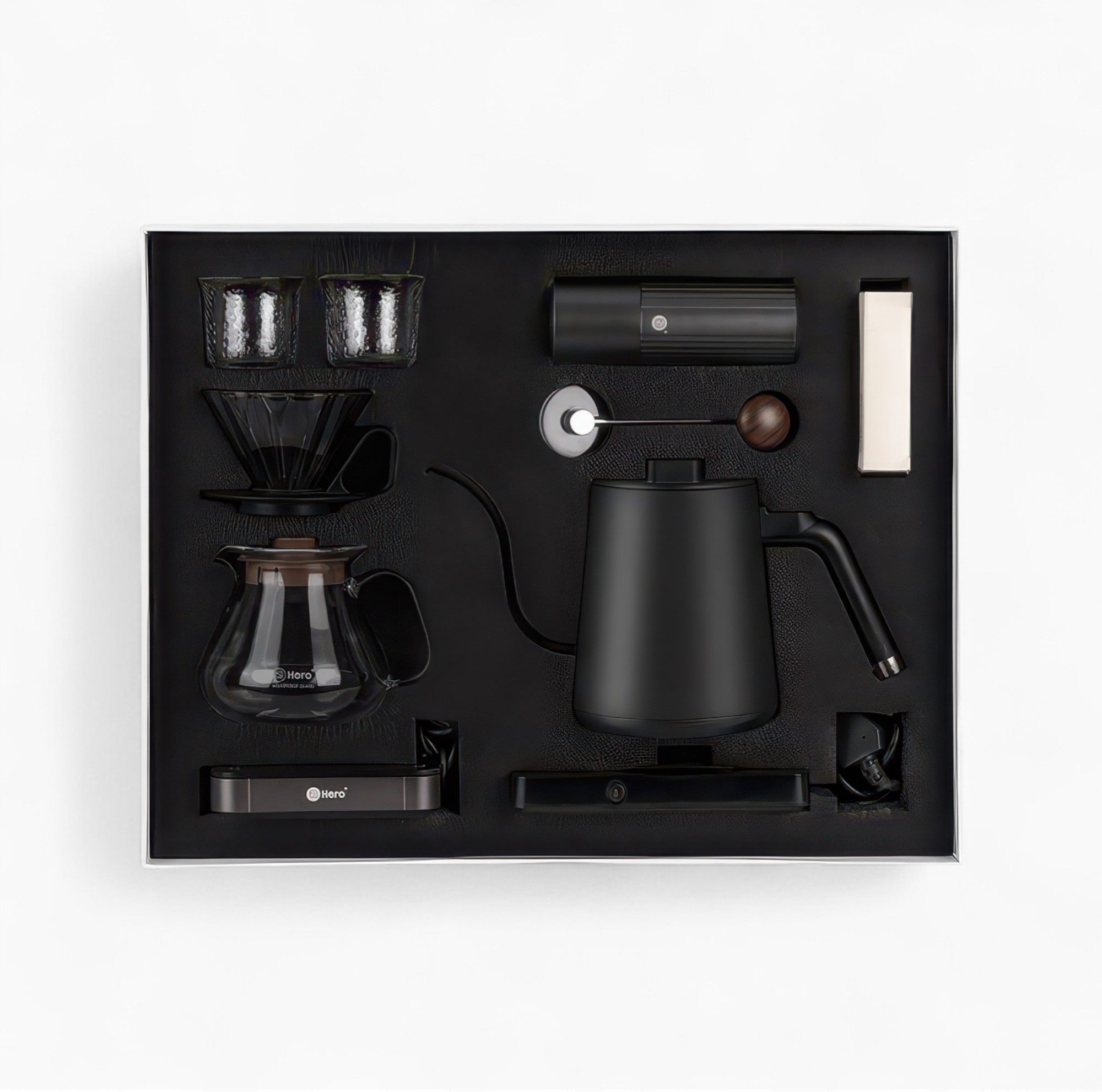
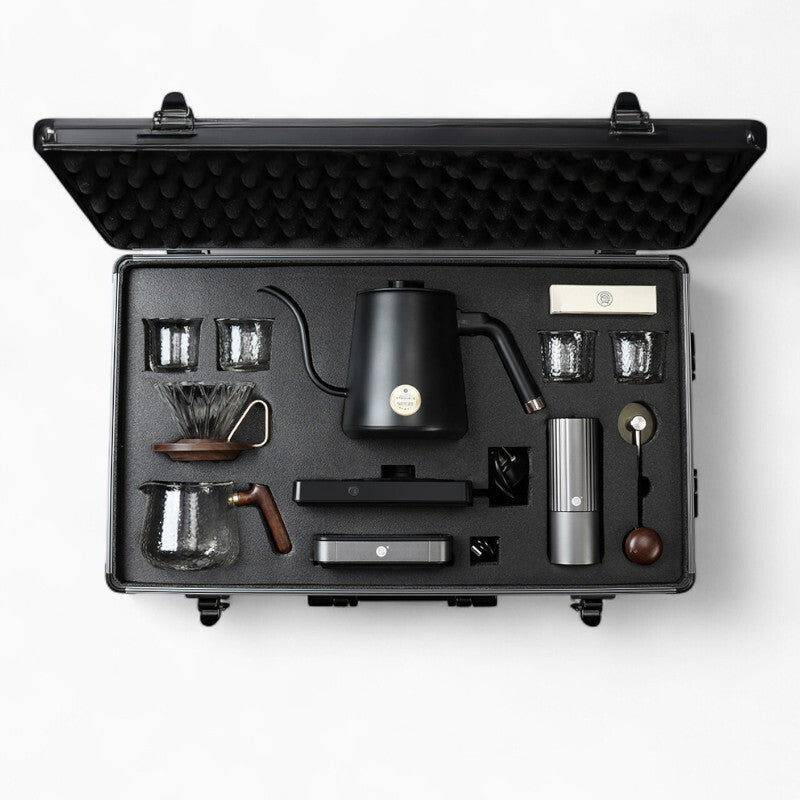
Professional Pour Over Coffee Kit with Grinder and Kettle
$445.90
$743.00
Invest in professional grinding equipment with this portable kit featuring CNC burr grinders and a temperature-controlled gooseneck kettle for complete control. Learn more ➔
Maximizing Flavor With Improvised Methods
When grinding coffee without a machine, several adjustments improve your results regardless of technique:
- Grind immediately before brewing to preserve volatile aromatics that escape within minutes of grinding
- Sift grounds using a fine mesh strainer to remove powdery fines that create bitterness
- Adjust brewing parameters—use slightly cooler water (195°F instead of 205°F) to reduce over-extraction risk from uneven particles
- Shorten brew time for pour-over methods when using inconsistent grinds
Store whole beans properly while relying on emergency methods. The Coffee Bean Storage Tubes with One Way CO2 Valve maintain peak freshness until you obtain proper grinding equipment, preventing the staleness that makes improvised grinding methods even more challenging.
When You're Ready to Upgrade
Consistently producing café-quality coffee requires particle size uniformity that only dedicated burr grinders provide. Blade-based alternatives and manual crushing methods introduce too many variables affecting extraction. The investment in proper equipment eliminates morning uncertainty and elevates every cup.
Consider your brewing preferences when selecting grinding equipment. Where can I grind coffee beans if you don't have a grinder at home? While grocery stores and cafés offer grinding services, pre-ground coffee loses complexity within hours. Home grinding with purpose-built equipment delivers unmatched freshness and control.

Complete Pour Over Coffee Kit with Electric Grinder
$305.90 $560.00
Upgrade from makeshift grinding with this complete pour-over kit featuring professional grinding performance and precision temperature control for cafe-quality results.
Explore ProductConclusion: Emergency Solutions vs. Long-Term Success
Learning how to grind coffee beans without a grinder provides valuable knowledge for travel, power outages, or equipment failures. The six methods outlined—from blenders to mortar and pestle—deliver drinkable coffee when desperation strikes. However, these remain compromises rather than solutions.
True coffee excellence requires consistency. The Complete Pour Over Coffee Kit with Electric Grinder eliminates the guesswork, providing uniform particle distribution and precise extraction control. At Rethink Cafe, we understand that great coffee starts with proper preparation tools. Invest in equipment designed for the task, and transform your daily ritual from a gamble into a guaranteed pleasure. Your taste buds—and your morning routine—deserve better than improvised grinding.
Frequently Asked Questions About Grinding Coffee Without a Grinder
Yes, you can grind coffee beans in a blender using the pulse setting in short bursts. However, blenders produce inconsistent particle sizes and generate heat that can damage coffee oils. Work in small batches (¼ cup maximum) and shake the blender between pulses for best results. This method works best for coarse grinds like French press rather than fine espresso grinding.
Yes, food processors can grind coffee beans using the standard chopping blade. Process in 10-second intervals with rests in between to prevent heat buildup. The wider bowl makes accessing grounds easier than narrow blender jars, but results remain inconsistent compared to burr grinders. This method suits medium-coarse grinds for drip coffee preparation.
Grocery stores with bulk coffee sections often provide grinders for customer use. Some cafés will grind beans purchased from their shop. However, pre-grinding at these locations causes rapid flavor loss—coffee begins staling within minutes of grinding. For best results, use home methods like blenders, mortar and pestle, or rolling pins until you obtain a personal grinder.
Absolutely. Manual grinding methods include mortar and pestle, rolling pin and bag technique, knife chopping, and hammer crushing. Mortar and pestle provides the most consistent results among manual methods and works for fine espresso grinds, though it requires time and effort. These techniques were standard practice before electric grinders became available and remain effective emergency solutions.
Yes, grinding coffee with a mortar and pestle is not only acceptable but historically accurate—this method predates mechanical grinders. The crushing action produces more uniform particles than blade methods. Use a firm, twisting motion rather than pounding, work in small batches, and progress from coarse to fine grinding. This method excels for achieving fine espresso grinds and preserves bean temperature better than metal blades.