Every cup of coffee tells a story that begins thousands of miles away, in the equatorial belt known as the Bean Belt. Understanding how coffee beans are made transforms your daily ritual from a simple caffeine fix into an appreciation of agricultural artistry and scientific precision. Whether you're a home barista seeking to deepen your knowledge or simply curious about what happens before your morning brew, the journey from coffee cherry to roasted bean is a fascinating process that spans months and involves countless skilled hands.
In this comprehensive guide, we'll trace the complete coffee bean production process, exploring each critical stage that determines the flavor in your cup. From the flowering coffee trees to the final roast, you'll discover why specialty coffee commands such reverence—and why preserving these carefully crafted beans matters once they reach your kitchen.
Cultivation and Harvesting: The Foundation of Quality
The coffee bean journey begins not with a bean, but with a seedling that takes approximately 3-4 years to mature and bear fruit. Coffee trees thrive in high-altitude regions between the Tropics of Cancer and Capricorn, where rich volcanic soil, consistent rainfall, and temperate climates create the perfect environment for these delicate plants.

When coffee cherries turn from green to deep red or purple, they're ready for coffee bean harvesting. This critical stage determines much of the final cup's quality. There are two primary approaches:
- Selective Hand-Picking: Experienced harvesters carefully choose only perfectly ripe cherries, leaving underdeveloped fruit for future harvesting rounds. This labor-intensive method dominates specialty coffee production.
- Strip Picking: All cherries are removed from the branch simultaneously, regardless of ripeness. While more efficient, this method requires additional sorting to ensure quality.
Immediately after harvest, the processing coffee cherries phase begins—a make-or-break stage that dramatically influences flavor development.
Coffee Processing Methods: Defining the Flavor Profile
Once harvested, how coffee is made from beans diverges based on processing techniques. These coffee processing methods—washed, natural, and honey—each create distinct flavor characteristics that persist through roasting and brewing.

The Washed (Wet) Process
In this method, ripe cherries pass through a pulping machine that removes the outer skin. The beans—still coated in sticky mucilage—ferment in water tanks for 12-48 hours. Enzymes naturally break down the mucilage, after which the beans are washed clean and dried. Washed processing produces coffee with bright acidity, clean flavors, and pronounced terroir characteristics.
The Natural (Dry) Process
The oldest method involves drying whole cherries intact on raised beds or patios under the sun for 2-4 weeks. As the fruit dehydrates, natural sugars migrate into the bean, imparting intense fruit-forward sweetness and complex, wine-like notes. This from coffee cherry to bean approach requires constant turning to prevent mold and ensure even drying.
The Honey (Pulped Natural) Process
A hybrid approach where the skin is removed but some or all of the mucilage remains on the bean during drying. The "honey" refers to the sticky, golden appearance of the drying mucilage. This method balances the clarity of washed coffee with the body and sweetness of naturals.
Drying, Milling, and Preparation for Export
Regardless of processing method, beans must reach 10-12% moisture content for stable storage. Depending on weather conditions, sun-drying takes 1-4 weeks. Mechanical dryers may accelerate this process, though traditional sun-drying often yields superior results.
Once dried, the coffee—now called parchment coffee—undergoes milling to remove the parchment layer and silver skin. The beans are then graded by size, density, and color, with defects removed through hand-sorting or optical scanners. At this stage, the green coffee beans are ready for export and eventual roasting.
The Art and Science of Coffee Roasting
The coffee roasting process represents the final major transformation. Green coffee beans contain all the potential flavors developed during cultivation and processing, but only roasting unlocks them through the Maillard reaction—a complex chemical transformation where amino acids and reducing sugars interact under heat.

Roastmasters carefully control temperature curves, typically reaching 370-540°F depending on the desired roast level:
- Light Roasts: Preserved origin flavors, higher acidity, floral and fruity notes
- Medium Roasts: Balanced acidity and body, caramel sweetness emerges
- Dark Roasts: Bold, smoky flavors with reduced acidity, dominated by roast character
Each batch requires precise timing—seconds can mean the difference between a perfect roast and a ruined one. The beans expand, crack audibly (first crack at around 385°F, second crack near 435°F), and develop their signature brown color as hundreds of aromatic compounds form.

Preserving Your Freshly Roasted Beans
After understanding the meticulous coffee production stages that brought your beans from a distant farm to your doorstep, proper storage becomes essential. Oxygen, light, heat, and moisture are roasted coffee's enemies, rapidly degrading the volatile aromatic compounds that make specialty coffee extraordinary.
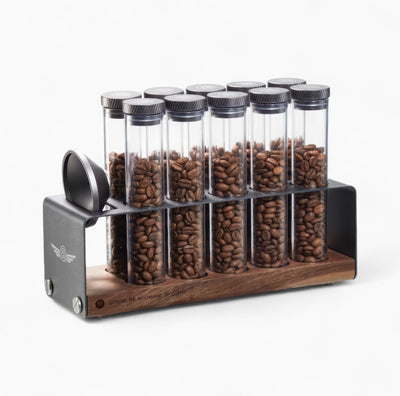
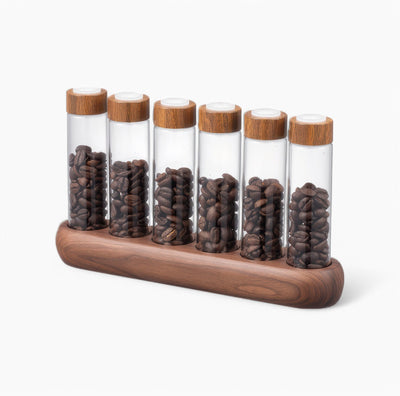
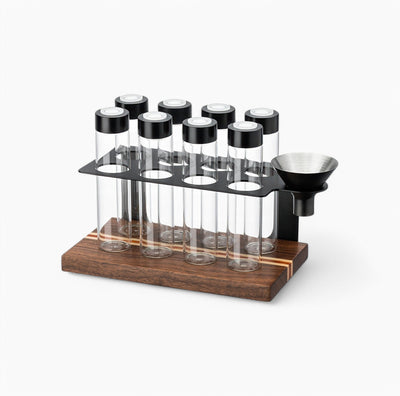
Coffee Bean Storage Tubes With Walnut Display Base solve this preservation challenge elegantly. Unlike opaque containers that hide your beans or basic jars that create stale pockets, these glass tubes with walnut display bases allow you to showcase your collection while protecting it from degradation. The airtight seal maintains peak freshness, and the sophisticated design elevates your kitchen aesthetic—because beans that traveled so far deserve better than a cardboard bag.

Coffee Bean Storage Tubes With Walnut Display Base
$34.90 $67.00
Keep your freshly roasted beans perfectly preserved in elegant glass tubes with a walnut base. Display your collection while maintaining peak freshness.
Explore ProductFrom Bean to Brew: Completing the Journey
The journey of how coffee beans are made concludes in your hands. Grinding releases the final aromas, and brewing extracts the flavors that began developing on a mountainside farm months ago. For home baristas seeking to honor this journey, the right equipment ensures you're tasting the coffee—not the shortcomings of your tools.
Static electricity during grinding causes grounds to cling unevenly, creating channeling and inconsistent extraction. The Anti-Static Coffee Grinder RDT Spray Bottle eliminates this frustration with a precisely measured water mist—a simple technique that professional baristas use to achieve cleaner, more consistent grounds. Pair this with a comprehensive brewing setup like the Complete Pour Over Coffee Kit with Grinder and Kettle, which includes temperature-controlled precision that respects the integrity of your carefully processed beans.
Elevate Your Home Brewing Experience

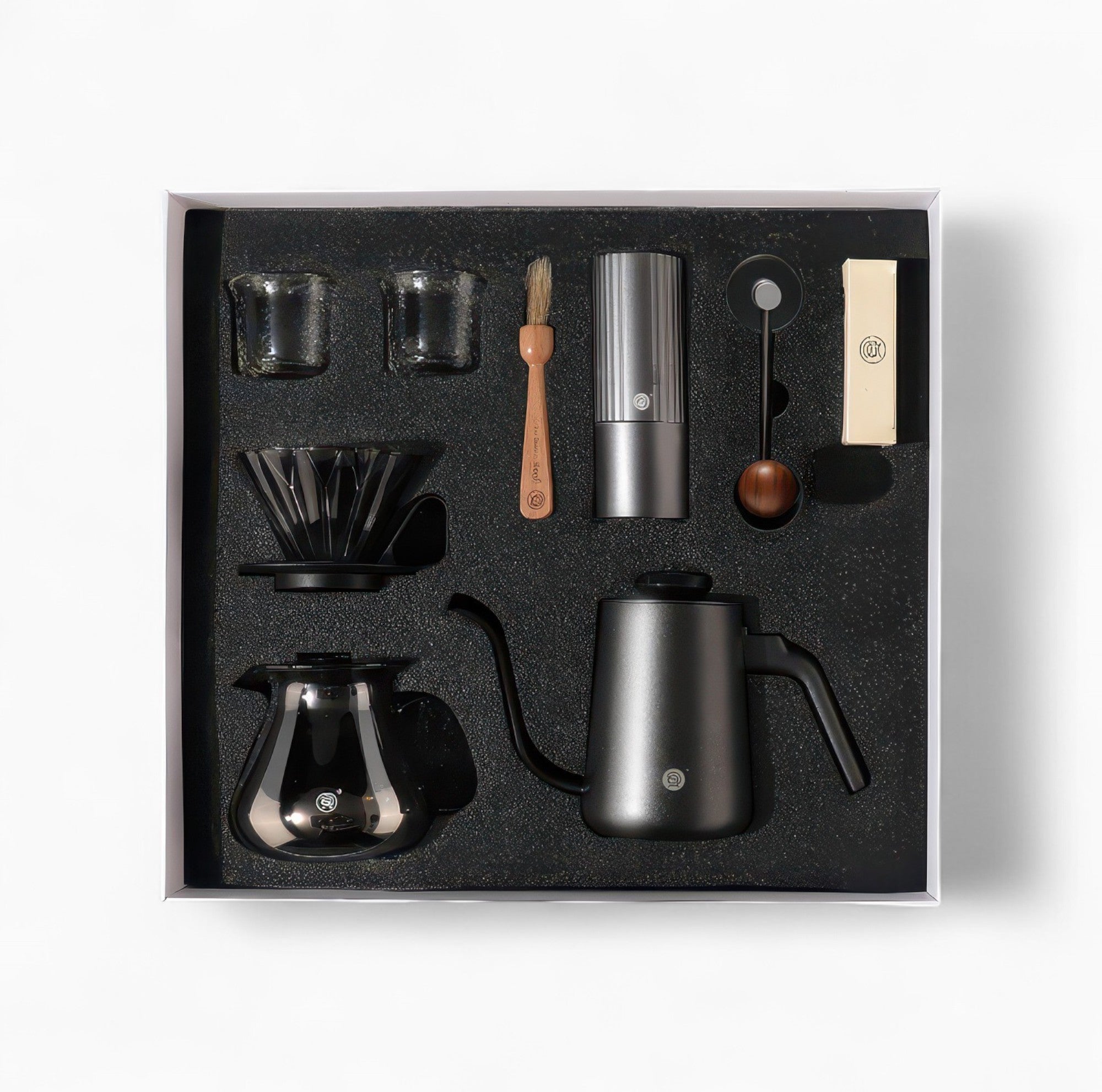
Complete Pour Over Coffee Kit with Grinder and Kettle
$235.90
$360.00
Experience the full potential of your roasted beans with this complete pour over kit featuring precision grinder and temperature-controlled kettle. Learn more ➔

Anti-Static Coffee Grinder RDT Spray Bottle
$14.90
$24.00
Grind your roasted beans perfectly every time with this precision RDT spray bottle that eliminates static for cleaner, more consistent grinding. Learn more ➔
Understanding the complete coffee bean journey from cherry to cup transforms how you approach every morning brew. The countless hands involved—from farm workers harvesting at peak ripeness to roasters monitoring temperature curves in small batches—deserve recognition through careful preparation. When you grind fresh beans stored properly and extract them with precision equipment, you're completing a story that began thousands of miles away.
At Rethink Cafe, we believe that appreciating how coffee beans are made naturally leads to demanding better tools for the final brewing stages. Whether you're exploring single-origin pour-overs or perfecting your espresso technique, honoring the production process means using equipment that matches the quality of the beans themselves.
Frequently Asked Questions About Coffee Bean Production
Coffee beans are made through a multi-stage process: 1) Coffee cherries are grown for 3-4 years until trees bear fruit, 2) Ripe cherries are harvested by hand or machine, 3) Cherries are processed using washed, natural, or honey methods to remove fruit and dry the beans, 4) Dried parchment coffee is milled to remove husks, 5) Green beans are sorted and graded, 6) Roasting transforms green beans into aromatic roasted coffee through controlled heat application. Each step requires precision to preserve quality and develop flavor.
The transformation from coffee cherry to bean involves removing the outer layers—the skin, pulp, parchment, and silver skin—to reveal the seed inside. After harvesting, cherries are either pulped and fermented (washed process), dried whole (natural process), or partially processed (honey process). Once dried to 10-12% moisture, hulling machines remove the parchment layer. The resulting green coffee beans are polished, sorted by size and density, and prepared for roasting, where they undergo the final transformation into the aromatic beans we brew.
The total processing time varies by method. Washed (wet) processing typically takes 1-2 weeks for fermentation and washing, plus 1-2 weeks for drying. Natural (dry) processing requires 2-4 weeks of sun-drying time. Honey processing falls between these timeframes. After drying, milling and export preparation add several days. From harvest to export-ready green coffee, expect 3-6 weeks depending on weather conditions, processing method, and infrastructure. The coffee then travels to roasters, where roasting takes only 10-15 minutes per batch.
The three primary coffee processing methods are: Washed (Wet) Process: Fruit is removed immediately through pulping and fermentation, producing clean, bright, acidic coffees. Natural (Dry) Process: Whole cherries dry intact for weeks, allowing fruit sugars to impart intense sweetness and fruit-forward flavors. Honey (Pulped Natural) Process: The skin is removed but mucilage remains during drying, creating balanced cups with body and sweetness. Additional variations include wet-hulled (common in Indonesia) and experimental anaerobic fermentation methods gaining popularity in specialty coffee.
Coffee grows in the "Bean Belt" between the Tropics of Cancer and Capricorn, typically at elevations of 1,800-6,000 feet. Coffee trees require 3-4 years to mature and produce fruit. They flower after rainfall, developing cherries that ripen over 6-9 months. Harvesting occurs when cherries turn deep red or purple. In specialty coffee, selective hand-picking prevails—workers harvest only ripe cherries, returning to the same tree multiple times. Commercial operations may use strip-picking or mechanical harvesters. Altitude affects both harvesting method and flavor profile, with higher elevations generally producing denser, more complex beans.