
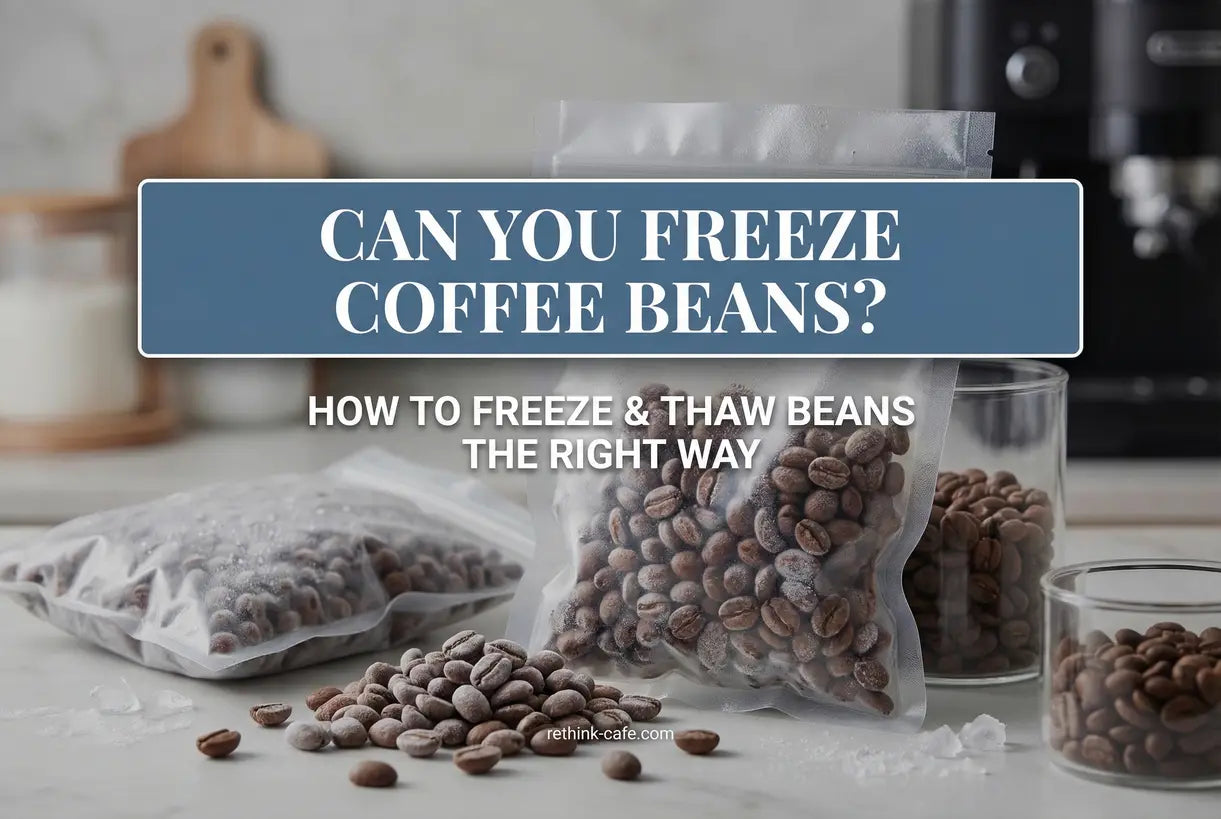
You just scored an incredible deal on a limited-edition Ethiopian Yirgacheffe, but you can't possibly brew through five pounds before peak freshness fades. Or perhaps you're batch-prepping your morning routine to eliminate decision fatigue. The question immediately arises: can you freeze coffee beans without destroying their nuanced flavor profile? The short answer is yes—but only when executed with precision. Freezing coffee beans effectively preserves volatile aromatic compounds and slows oxidation, yet one misstep with moisture exposure can ruin an entire batch.
Mastering coffee bean storage through freezing requires understanding the delicate chemistry at play. When done correctly, freezing coffee beans extends your purchasing power and ensures consistent brewing for months. When done incorrectly, you risk condensation damage, flavor degradation, and freezer burn. This comprehensive guide explores the science-backed methods for frozen coffee beans, from preparation protocols to thawing techniques that protect your investment.
Is It OK to Freeze Coffee Beans?
Freezing coffee beans is not only acceptable—it's increasingly recommended by coffee professionals for long-term preservation. The specialty coffee industry has evolved past the outdated stigma against freezer storage. Modern freezing coffee techniques prioritize minimal oxygen exposure and rapid temperature transition to protect cellular integrity.
The key lies in timing. Coffee beans should be frozen as fresh as possible, ideally within two weeks of roasting, to lock in peak flavor potential. Once frozen, beans remain stable for extended periods without the staling process that room-temperature storage accelerates. However, the freeze-thaw cycle presents the primary risk: each temperature swing creates condensation that degrades quality.
Does Freezing Coffee Beans Ruin Them?
Contrary to persistent myths, proper freezing does not ruin coffee beans. Scientific research demonstrates that frozen storage preserves aromatic oils and volatile compounds that room-temperature storage gradually depletes. The critical factor is how you freeze and store the beans.
The primary enemy isn't the cold—it's moisture. When warm air contacts frozen beans, condensation forms on the surface, causing immediate flavor degradation and potential mold development. This is why proper packaging and thawing protocols matter more than the freezing itself. Beans stored in airtight, vacuum-sealed containers with minimal headspace maintain their cup quality for months, while poorly packaged beans develop off-flavors within weeks.

How to Freeze Coffee Beans: The Proper Method
Successful coffee freezer storage requires methodical preparation. Follow these steps to ensure your beans remain pristine:
- Portion before freezing: Divide beans into daily-use quantities to avoid repeated thaw cycles. Single-dose portions (18-20g for espresso, 25-30g for pour-over) minimize waste and preserve quality.
- Vacuum seal completely: Remove as much air as possible using a vacuum sealer. Oxygen exposure causes oxidation even at freezing temperatures, gradually diminishing flavor complexity.
- Label meticulously: Record roast dates, origin, and freeze dates on each package. Different coffees have varying optimal windows, and proper tracking ensures rotation.
- Freeze rapidly: Place sealed portions in the coldest part of your freezer (typically the back wall) for rapid temperature reduction. Slow freezing creates larger ice crystals that potentially damage cell structure.
The freeze coffee beans process demands quality storage vessels. Poor containers allow air exchange and moisture infiltration, undermining your careful preparation. Investing in purpose-built coffee storage solutions transforms freezer preservation from risky to routine.
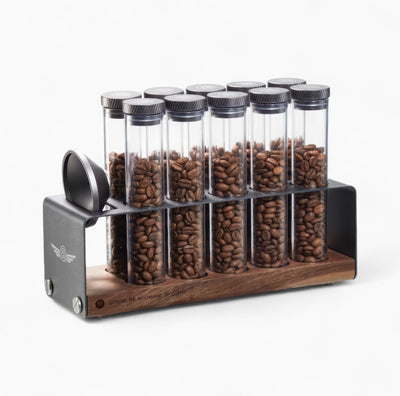
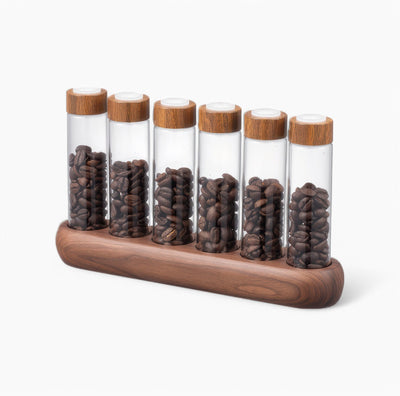
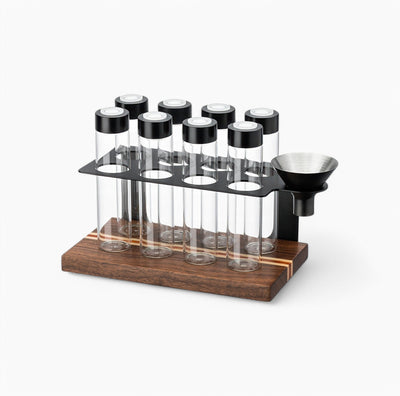

Coffee Bean Storage Tubes With Walnut Display Base
$34.90 $67.00
Keep frozen beans organized and accessible with elegant glass storage tubes that turn portioning into a ritual.
Explore Product
How Long Can You Freeze Coffee Beans?
Optimal coffee bean preservation in the freezer extends three to six months while maintaining exceptional cup quality. Beyond six months, beans remain safe to consume but gradually lose the vibrant aromatics that define specialty coffee. Some enthusiasts report satisfactory results up to one year, though subtle flavor degradation becomes noticeable.
The duration depends heavily on roast level and origin characteristics. Lighter roasts with higher acidity and complex fruit notes degrade faster than darker, more developed profiles. Similarly, delicate single-origin beans require more careful timeline management than hardy espresso blends. For truly special coffees you want to savor year-round, consider rotating stock and consuming within the four-month window for peak experience.
The Single-Dose Revolution: Advanced Freezing Techniques
Modern home baristas increasingly adopt single-dose store coffee beans in freezer methods popularized by championship competitors. This approach eliminates the primary risk of freezing—repeated temperature cycling—by pre-portioning exact brewing quantities. Each morning, you remove precisely what you need while the remainder stays frozen and pristine.
This technique demands purpose-built storage that maintains airtight seals through repeated handling. Glass tubes with secure closures or specialized travel canisters provide the ideal solution for organizing frozen portions while maintaining kitchen aesthetics. The ritual of selecting your daily dose from an elegant display transforms storage into part of the brewing ceremony.

Essential Tools for Single-Dose Freezing

Portable Dual-Mode Travel Coffee Bean Canister 35g
$25.90
$43.00
Freeze beans in single-serve portions with this dual-mode canister that preserves freshness until you are ready to brew. Learn more ➔

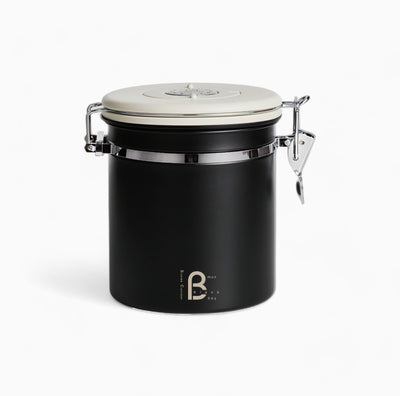
Airtight Coffee Bean Canister with CO2 Valve
$37.90
$63.00
Protect thawed beans from oxidation with an airtight canister featuring one-way CO2 exhaust valve technology. Learn more ➔
Should You Thaw Frozen Coffee Beans Before Grinding?
The thaw coffee beans debate generates constant confusion. Here's the definitive answer: never thaw coffee beans before grinding. Grinding frozen beans actually produces more uniform particle distribution and preserves aromatic integrity. Warming beans to room temperature before grinding releases captured volatiles and creates condensation that damages extraction.
Remove your sealed portion from the freezer, open the container immediately, and grind within seconds. The beans pass through their grinder while still frozen, preventing moisture accumulation on the surface. This technique, championed by World Barista competitors, yields cleaner shots and more consistent pour-overs. If you accidentally leave beans on the counter and condensation forms, use them immediately or discard—never refreeze wet beans.
Can You Freeze Ground Coffee or Just Whole Beans?
While freezing whole beans remains strongly preferred, you can freeze ground coffee with acceptable results for brewing methods requiring less precision. Ground coffee's increased surface area accelerates oxidation, making frozen coffee beans (whole) significantly superior for espresso and manual brewing. However, batch-brewing enthusiasts find frozen grounds perfectly adequate for drip machines or French press.
If freezing grounds, vacuum seal in small portions (single brews only) and use within two weeks of grinding for best flavor. Never grind frozen beans and then refreeze the grounds—the multiple freeze-thaw cycles destroy aromatics. For maximum quality, invest in a capable home grinder and freeze whole beans exclusively, grinding directly from frozen as needed.
Common Freezing Mistakes to Avoid
Even experienced home baristas commit storage errors that compromise their beans. Avoid these critical pitfalls:
- The daily freezer trip: Opening the freezer container repeatedly each morning introduces temperature fluctuations and moisture. Remove weekly portions to secondary storage instead.
- Re-freezing thawed beans: Once removed from frozen storage, consume within days. Never return room-temperature beans to the freezer.
- Inadequate sealing: Standard zip bags allow oxygen exchange. Always vacuum seal or use specialized coffee storage containers with one-way valves.
- Freezing aged coffee: Only freeze fresh beans within their prime consumption window. Freezing stale coffee preserves staleness.
Understanding these fundamentals transforms your approach to how to freeze coffee beans from guesswork into precision craft.
Elevating Your Coffee Storage Game
Freezing represents just one component of comprehensive bean stewardship. The journey from freezer to cup demands quality equipment that respects the coffee's potential. Whether you're preserving rare Geishas or simply buying in bulk to reduce shipping costs, proper storage infrastructure ensures every brew meets your standards.
At Rethink Cafe, we curate specialized equipment for enthusiasts who refuse compromise. From precision dosing tools to advanced storage solutions featuring CO2 valves and vacuum-sealing capabilities, our collection supports every stage of your coffee journey. The difference between good and exceptional often lies in these details—the right grinder, the perfect storage vessel, the precise water temperature.
Investing in your freezer storage system pays dividends through extended bean life, reduced waste, and consistently exceptional extraction. Experiment with single-dose techniques, document your results, and discover the method that integrates seamlessly into your morning ritual.
Frequently Asked Questions About Freezing Coffee Beans
Yes, freezing coffee beans is perfectly acceptable and recommended for long-term storage when done correctly. Freezing preserves volatile aromatic compounds and slows oxidation, maintaining freshness for 3-6 months or longer. The key is proper packaging—vacuum sealing or using airtight containers to prevent moisture exposure and freezer odors from affecting the beans.
No, freezing does not ruin coffee beans when executed properly. Scientific research confirms that frozen storage preserves aromatic oils better than room-temperature storage. The risk comes from moisture exposure during freeze-thaw cycles, not the freezing itself. Using proper vacuum sealing and single-dose portioning eliminates this risk, making freezing an excellent preservation method.
Coffee beans maintain optimal flavor for 3-6 months in the freezer when properly sealed. While beans remain safe to consume for up to a year, subtle aromatic degradation occurs after six months. Lighter roasts and delicate single-origins should be consumed within 3-4 months, while darker espresso blends may last longer. Always label packages with roast and freeze dates for proper rotation.
No, you should not thaw coffee beans before grinding. Grinding frozen beans produces superior particle distribution and preserves aromatic integrity. Thawing releases volatile compounds and creates condensation that damages extraction quality. Remove your sealed portion from the freezer, open immediately, and grind within seconds while still frozen. This technique is widely used by competition baristas for optimal results.
While freezing whole beans is strongly preferred, you can freeze ground coffee for methods requiring less precision like drip or French press. Ground coffee's increased surface area accelerates oxidation, so consume frozen grounds within two weeks of grinding. For espresso and manual brewing, always freeze whole beans and grind directly from frozen. Never refreeze grounds once thawed.


