
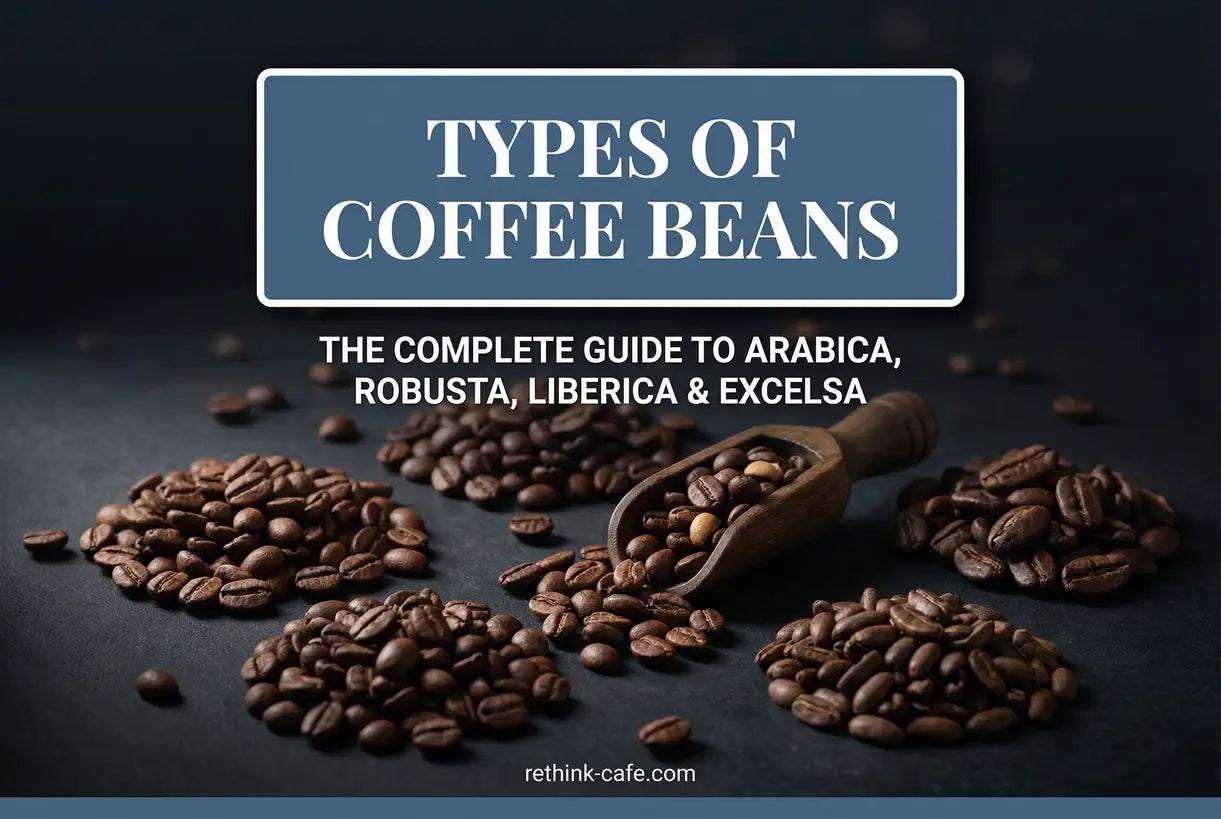
Understanding the types of coffee beans available today transforms how you approach your morning brew. Whether you're a seasoned home barista or just beginning your coffee journey, knowing the distinct characteristics of each variety helps you make informed decisions about what lands in your cup. From the fruity, nuanced profiles of Arabica to the bold intensity of Robusta, each bean type offers a unique experience shaped by genetics, growing conditions, and processing methods.
At Rethink Cafe, we believe that exceptional coffee starts with knowledge. This comprehensive guide explores the four main coffee bean varieties, their flavor profiles, caffeine content, and origins. By the end, you'll understand exactly what sets specialty coffee beans apart and how to select the perfect variety for your preferred brewing method.
What Are the 4 Main Types of Coffee Beans?
The coffee industry recognizes four primary species that dominate global production and consumption. While hundreds of coffee species exist in the wild, Arabica, Robusta, Liberica, and Excelsa represent the varieties you'll encounter in cafes and specialty shops. Each type possesses distinct physical characteristics, flavor profiles, and growing requirements that influence everything from cultivation challenges to final cup quality.
Understanding these differences empowers you to explore single origin coffee with confidence and appreciation for the complexity behind each roast. Let's examine what makes each variety unique.

Arabica Coffee Beans: The Global Favorite
Arabica coffee beans account for approximately 60-70% of worldwide coffee production, making them the most consumed variety globally. Grown primarily at high altitudes between 2,000 and 6,000 feet, Arabica plants thrive in cool, subtropical climates with consistent rainfall and rich, well-draining soil.
The beans themselves feature an oval shape with a distinctive curved crease. In the cup, Arabica delivers complex flavor profiles ranging from sweet and fruity to floral and wine-like, often with bright acidity and multiple layers of taste. Common tasting notes include berries, citrus, chocolate, nuts, and caramel, depending on the specific growing region and processing method.
However, Arabica plants demand careful cultivation. They're more susceptible to pests, diseases, and environmental changes than other varieties, which contributes to their premium pricing. When you invest in high-quality Arabica, you're paying for the meticulous care required throughout the growing and harvesting process.
Robusta Coffee Beans: Bold and Powerful
As the name suggests, Robusta beans offer a robust, intense experience. These hardy plants grow at lower altitudes, resist pests naturally, and produce higher yields than Arabica. Originally from sub-Saharan Africa, Robusta now dominates production in Vietnam, Indonesia, and parts of Africa.
Physically, Robusta beans are rounder and smaller than their Arabica counterparts, with a straighter crease. The most notable distinction lies in their caffeine content—Robusta contains roughly double the caffeine of Arabica, making it ideal for those seeking an energetic kick.
Flavor-wise, Robusta presents earthy, woody, and nutty characteristics with a fuller body and thicker crema. While some coffee enthusiasts dismiss Robusta as inferior, high-quality Robusta contributes excellent structure to espresso blends and provides the signature intensity in traditional Italian preparations.
Liberica Coffee Beans: The Rare Gem
Liberica coffee represents less than 2% of global production, making it a true specialty find. Native to West Africa, specifically Liberia, this variety gained prominence in the late 19th century when coffee leaf rust devastated Arabica plantations in Southeast Asia. Filipino farmers turned to Liberica as a resistant alternative, and it remains culturally significant in the Philippines and Malaysia.
Liberica beans are immediately recognizable by their irregular, asymmetrical shape and notably larger size—often twice the dimensions of Arabica beans. The plants themselves tower above other coffee species, reaching heights of 20 meters compared to the typical 3-4 meters of Arabica.
The flavor profile surprises many first-time tasters. Liberica offers a distinctive woody, smoky character with floral and fruity undertones, plus a full, almost syrupy body. Some describe hints of jackfruit, durian, or dark chocolate. This unconventional taste profile polarizes drinkers—you'll either love its uniqueness or prefer more traditional varieties.
Excelsa Coffee Beans: The Complex Fourth
Recently reclassified as a variant of Liberica rather than a separate species, Excelsa coffee deserves individual recognition for its distinct growing patterns and flavor contributions. Found predominantly in Southeast Asia, particularly Vietnam and the Philippines, Excelsa grows on towering trees similar to Liberica but at medium altitudes.
Excelsa beans feature a distinctive teardrop or almond shape that differentiates them from other varieties. They contribute a unique combination of attributes to coffee blends—providing both tart, fruity brightness and deep, roasted depth simultaneously.
Flavor-wise, Excelsa presents complex fruity and tart notes reminiscent of dark berries, stone fruits, and sometimes a pleasant wine-like acidity. Coffee blenders value Excelsa for its ability to add dimensional complexity and lingering finish to medium and dark roasts without overwhelming the palate.

Coffee Bean Varieties Comparison
| Characteristic | Arabica | Robusta | Liberica | Excelsa |
|---|---|---|---|---|
| Caffeine Content | 1.2-1.5% | 2.2-2.7% | 1.2-1.5% | 1.0-1.2% |
| Flavor Profile | Fruity, floral, sweet | Earthy, woody, bitter | Smoky, woody, floral | Tart, fruity, complex |
| Bean Shape | Oval, curved crease | Round, straight crease | Large, asymmetrical | Teardrop, almond-like |
| Growing Altitude | High (2,000-6,000 ft) | Low (0-2,000 ft) | Low to medium | Medium |
| Global Production | 60-70% | 30-40% | <2% | <2% |
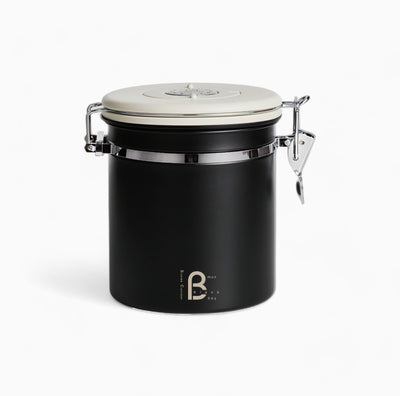

Airtight Coffee Bean Canister with CO2 Valve
$37.90 $63.00
Preserve the freshness of your premium coffee beans with this stainless steel canister featuring a one-way CO2 exhaust valve. Available in 4 colors and 3 sizes.
Explore ProductWhich Coffee Bean Type Has the Most Caffeine?
For those seeking maximum caffeine intake, Robusta beans contain the highest caffeine content among the four main varieties. With caffeine levels ranging from 2.2% to 2.7% by weight, Robusta delivers nearly twice the caffeine punch of Arabica. This higher concentration serves as the plant's natural defense mechanism against insects and diseases in lower-altitude growing regions.
Excelsa contains the least caffeine at approximately 1.0-1.2%, while Arabica and Liberica fall in the middle range at 1.2-1.5%. When selecting beans specifically for caffeine content, look for packaging that specifies Robusta content or opt for Vietnamese-style coffees and traditional Italian espresso blends, which often incorporate significant Robusta percentages.
Pro Tip: Dark roasts don't actually contain more caffeine than light roasts. The roasting process reduces caffeine slightly, so light roasts retain marginally more caffeine by volume.
Premium Tools for Exploring Coffee Bean Varieties

Walnut Wood Precision Coffee Scale 0.1g Accuracy
$39.90
$93.00
Achieve perfect dosing with this beautiful walnut wood scale offering 0.1g precision. Ideal for espresso, pour-over, and weighing your favorite coffee beans accurately. Learn more ➔

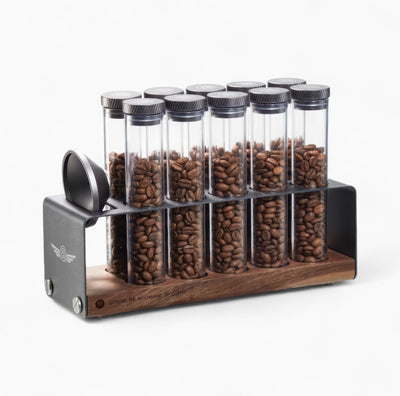
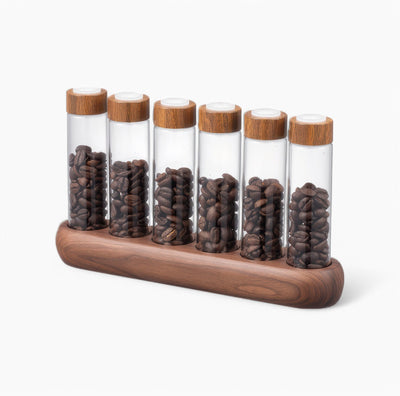
Coffee Bean Storage Tubes With Walnut Display Base
$34.90
$67.00
Display and store your different coffee bean varieties in style with glass tubes and a premium walnut base. Perfect for organizing multiple origins at your coffee station. Learn more ➔
Which Coffee Bean Is Best for Espresso?
The ideal espresso bean depends on your taste preferences, but traditional Italian espresso relies heavily on Robusta or Robusta-Arabica blends. Robusta contributes the thick, persistent crema and intense body that define classic espresso shots. The higher caffeine content also cuts through milk in cappuccinos and lattes effectively.
For modern third-wave espresso emphasizing nuanced flavors and sweetness, 100% Arabica or Arabica-dominant blends work beautifully. Single origin Arabica from regions like Ethiopia, Colombia, or Guatemala produces bright, complex espresso with distinctive regional characteristics.
Some adventurous baristas experiment with Liberica espresso for its unconventional smoky-fruity profile, though this remains rare outside Southeast Asian specialty shops. Ultimately, the best espresso bean is one that matches your extraction equipment and palate preferences.
What Do Different Coffee Beans Taste Like?
Flavor variation between coffee bean types stems from genetic differences, growing conditions, and processing methods. Arabica delivers the widest flavor spectrum, from delicate jasmine and bergamot notes in Ethiopian Yirgacheffe to chocolate and caramel in Brazilian Santos.
Robusta presents stronger, more straightforward flavors—think peanut, wood, leather, and dark chocolate with a grain-like aftertaste. High-quality Robusta can offer pleasant cereal and spice notes, while lower grades taste rubbery or burnt.
Liberica challenges conventional coffee expectations with its woody, smoky foundation and surprising floral and fruit layers. The body feels substantial and almost juicy. Excelsa adds tart, berry-like brightness and wine-like complexity, making it valuable for creating multi-dimensional blends.

How to Choose and Store Your Coffee Bean Varieties
Selecting the right coffee bean variety starts with identifying your flavor preferences. Do you enjoy bright, acidic coffees with fruit notes? Arabica from Africa or Central America suits you. Prefer intense, full-bodied cups with thick crema? Seek Robusta blends or dark-roasted Arabica. Want something completely different? Source Liberica or Excelsa from specialty Southeast Asian roasters.
Once you've invested in quality beans, proper storage becomes essential. Coffee bean storage requires protection from oxygen, moisture, light, and heat—the four enemies of freshness. Different varieties, especially delicate Arabica and rare Liberica, degrade quickly when exposed to these elements.
Storage Best Practices: Keep beans in airtight containers at room temperature, away from direct sunlight. Only grind immediately before brewing, and consume within 2-4 weeks of roasting for optimal flavor.
Conclusion: Expand Your Coffee Horizons
Understanding the four main types of coffee beans opens doors to a world of diverse flavors, aromas, and experiences. From the sophisticated complexity of Arabica to the bold intensity of Robusta, the unconventional character of Liberica, and the tart complexity of Excelsa, each variety contributes something unique to the global coffee landscape.
As you explore different coffee bean varieties, remember that proper equipment and storage solutions elevate your experience. At Rethink Cafe, we're passionate about providing home baristas with the tools, knowledge, and accessories needed to unlock the full potential of every bean. Whether you're experimenting with single origin coffee or crafting the perfect espresso blend, investing in quality equipment ensures you taste each variety exactly as nature intended.
Ready to start your exploration? Browse our curated collection of specialty coffee equipment and discover how the right tools transform your daily brew from routine to revelation.
Frequently Asked Questions about Types of Coffee Beans
The four main types of coffee beans are Arabica, Robusta, Liberica, and Excelsa. Arabica dominates global production with 60-70% market share, known for its sweet, complex flavors. Robusta accounts for 30-40%, valued for its high caffeine content and bold, earthy taste. Liberica and Excelsa are rare varieties, each representing less than 2% of worldwide production, offering unique flavor profiles ranging from smoky and woody to tart and fruity.
Robusta beans contain the most caffeine, with levels ranging from 2.2% to 2.7% by weight—nearly double that of Arabica. This high caffeine concentration serves as a natural insecticide, protecting the plants at lower altitudes. Arabica and Liberica contain moderate caffeine at 1.2-1.5%, while Excelsa has the lowest at 1.0-1.2%.
Arabica and Robusta differ significantly in flavor, caffeine content, growing conditions, and bean structure. Arabica features oval-shaped beans with curved creases, grows at high altitudes, offers complex fruity and floral flavors with higher acidity, and contains 1.2-1.5% caffeine. Robusta has rounder beans with straight creases, grows at lower elevations, delivers earthy, woody, and bitter flavors with fuller body, and packs 2.2-2.7% caffeine. Arabica requires more careful cultivation, explaining its premium pricing.
Liberica originated in West Africa (specifically Liberia) but found its major production centers in the Philippines and Malaysia after coffee leaf rust devastated Arabica plantations in the late 1800s. Excelsa grows primarily in Southeast Asia, particularly Vietnam and the Philippines, on towering trees at medium altitudes. Both varieties thrive in hot, humid tropical climates and remain relatively difficult to source outside their native growing regions.
For traditional Italian-style espresso, Robusta or Robusta-Arabica blends work best, providing thick crema, intense body, and enough caffeine to cut through milk. For modern specialty espresso emphasizing nuance and sweetness, 100% Arabica from regions like Ethiopia, Colombia, or Guatemala produces bright, complex shots with distinctive regional characteristics. The "best" choice depends on whether you prefer classic intensity or contemporary flavor exploration.
Each coffee bean variety offers distinct tasting notes: Arabica ranges from sweet and fruity (berries, citrus) to floral and wine-like with bright acidity. Robusta delivers earthy, woody, and nutty flavors with a heavier body and bitter undertones. Liberica presents a unique combination of smoky, woody foundations with surprising floral and fruity layers (jackfruit, durian notes). Excelsa contributes tart, berry-like brightness and wine-like acidity, adding dimensional complexity to blends.
Choose based on your flavor preferences and brewing method. If you enjoy bright, acidic, fruity coffees, select Arabica from Africa or Central America. If you prefer intense, full-bodied cups with thick crema, look for Robusta blends or dark-roasted Arabica. For maximum caffeine, prioritize Robusta. For unique, unconventional flavors, seek out rare Liberica or Excelsa from specialty Southeast Asian roasters. Consider starting with single-origin samples to identify your preferences before committing to larger quantities.


