

Finding the perfect espresso grinding machine is the single most important decision you'll make on your home barista journey. While your espresso machine gets the spotlight, it's actually the grinder that determines whether you'll pull rich, crema-topped shots or bitter, watery disappointments. The reality is simple: even a $3,000 espresso machine can't save poorly ground coffee, but a quality grinder can elevate an entry-level machine to cafe-quality performance.
In this comprehensive 2025 buyer's guide, we'll explore everything you need to know about selecting the right grinder for your setup. From understanding burr types and grind consistency to finding options that fit every budget, you'll discover why investing in the right grinding equipment transforms your daily coffee ritual. Throughout this guide, we'll highlight specific solutions from Rethink Cafe's carefully curated collection that address the exact pain points home baristas face.
Why Your Grinder Is The Most Important Espresso Investment
Before diving into specific recommendations, let's address a fundamental truth: grind quality accounts for approximately 80% of your espresso's final flavor profile. When you brew drip coffee, minor grind inconsistencies get masked by the longer extraction time and paper filter. Espresso, however, is unforgiving. The high-pressure extraction (9 bars) over 25-30 seconds means every particle size variation translates directly to taste—whether that's sour under-extraction from boulders or bitter over-extraction from fines.

The best espresso grinders achieve what professionals call "particle uniformity"—creating consistent micron-sized particles that extract evenly. This isn't just about having sharp burrs; it's about engineering that minimizes heat generation, eliminates static, and provides micro-adjustments for dialing in. Cheap blade grinders chop beans randomly, producing dust and boulders simultaneously. Quality burr grinders crush beans between two precisely machined surfaces, resulting in the uniformity espresso demands.
Understanding Burr Types and Grind Consistency
When researching an espresso grinding machine, you'll encounter two primary burr types: flat burrs and conical burrs. Both can produce excellent espresso, but they offer different characteristics worth understanding.
Flat Burrs
Flat burr grinders use two ring-shaped burrs positioned parallel to each other. Coffee beans drop between these rings and are sheared into uniform particles. Flat burrs typically create a more uniform particle distribution with fewer fines, resulting in shots with clarity, brightness, and distinct flavor separation. Many competition baristas prefer flat burrs for light-roasted specialty coffees where terroir notes shine. The T64 Single Dose Coffee Grinder exemplifies this approach with its 64mm titanium-coated flat burrs designed for cafe-caliber consistency.
Conical Burrs
Conical burrs feature a cone-shaped center burr that fits inside a ring-shaped outer burr. This design draws beans down through the grinding path using gravity and geometry. Conical burrs naturally create a bimodal distribution—some larger particles mixed with micro-fines. This actually benefits espresso extraction by providing flow resistance and body, resulting in richer mouthfeel and chocolate-forward profiles. They're also generally quieter and require less powerful motors. The Mechanic E-Grinder leverages 48mm CNC conical burrs to deliver this classic espresso character with modern precision.

Key Features Every Espresso Grinding Machine Needs
Beyond burr type, several critical features separate mediocre grinders from professional-grade equipment. When evaluating options, prioritize these specifications:
Stepless Grind Adjustment
Espresso requires microscopic calibration changes. Stepped grinders limit you to preset notches, often jumping from perfect to ruined in one click. Stepless adjustment provides infinite variability, letting you dial in between "18 clicks" and "19 clicks" when your shot runs 2 seconds too fast. This precision proves essential as coffee ages or humidity changes.
Single-Dose Capability
Traditional hopper grinders store half-pound batches, causing oxidation and requiring purging between grind setting changes. Single-dose grinding—weighing beans before grinding and eliminating the hopper—ensures maximum freshness and zero waste. This approach has become the gold standard for serious home baristas who rotate between different coffee origins.
Low Retention Design
Retention refers to coffee grounds left inside the grinder after use. High-retention grinders force you to purge 2-3 grams before each shot to clear stale grinds. The best espresso grinders achieve near-zero retention through vertical grinding paths, bellows accessories, and smart chute design, ensuring every ground particle you dose is fresh.


Our Top Espresso Grinding Machine Recommendations
After testing dozens of models and analyzing real-world performance, we've identified grinders that deliver professional results without requiring professional maintenance skills. These selections prioritize grind quality, user experience, and long-term reliability.

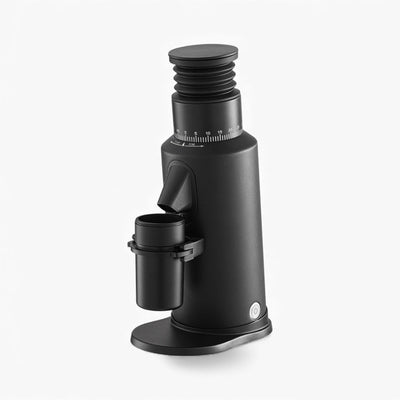
T64 Single Dose Coffee Grinder with 64mm Flat Burrs
$345.90 $356.00
Achieve cafe-caliber espresso at home with 64mm titanium-coated flat burrs, stepless grind adjustment, and near-zero retention for maximum freshness.
Explore ProductThe T64 Single Dose Coffee Grinder represents the pinnacle of flat burr engineering for home use. The 64mm titanium-coated burrs stay sharp longer than standard steel while producing the uniformity needed for complex single-origin espressos. Its stepless adjustment collar allows microscopic changes, and the near-zero retention design means you're never wasting precious specialty beans on purge shots. For home baristas serious about light roasts and nuanced extraction, this grinder removes the "home" from home espresso—it produces cafe-tier results that rival $2,000 commercial units.
Versatile Options for Every Budget
While flat burr precision excels for certain profiles, conical burr grinders offer exceptional value and user-friendly operation. These recommendations prioritize quiet operation, compact footprints, and intuitive adjustment systems perfect for daily use.
Grinders for Precision and Portability

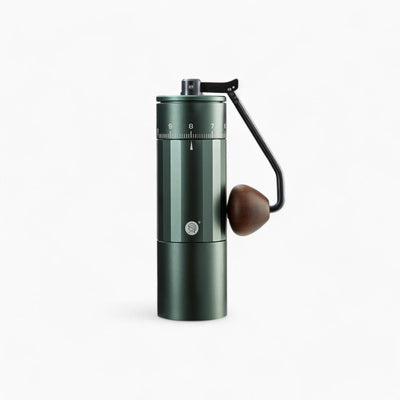
Mechanic E-Grinder Precision Conical Burr Coffee Grinder
$375.90
$650.00
Take command of your grind with 100 micro-adjustments, 48mm CNC conical burrs, and ultra-quiet 55dB operation for precise espresso extraction. Learn more ➔

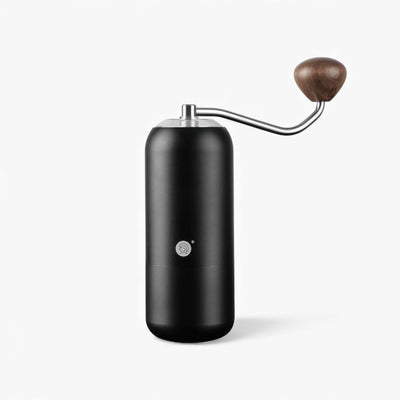
Mini Rui Compact Travel Coffee Grinder for Espresso
$116.90
$181.00
Grind fresh anywhere with this palm-sized portable grinder featuring six-axis precision burr, 800mAh battery, and magnetic spill-proof lid. Learn more ➔
The Mechanic E-Grinder solves the primary frustration of entry-level grinders: lack of adjustment precision. With 100 micro-adjustments across its range, you can fine-tune extraction to the quarter-second without frustration. The 48mm CNC conical burrs operate at just 55dB—quieter than normal conversation—making 6 AM espresso sessions household-friendly. Its compact footprint fits comfortably under standard cabinets while delivering the adjustment range typically reserved for commercial equipment.
For travelers, office workers, or anyone prioritizing space efficiency, the Mini Rui Compact Travel Coffee Grinder proves that portability doesn't mean sacrificing quality. The six-axis precision burr system produces remarkably consistent grinds for its size, and the 800mAh battery delivers multiple grinding sessions per charge. The magnetic spill-proof lid eliminates the mess that plagues other portable options. Whether you're dialing in espresso at an Airbnb or need a desk-side grinder for office espresso, this palm-sized unit delivers surprising capability.
Perfecting Your Grind Settings
Owning a quality espresso grinding machine is just the beginning; understanding how to adjust it separates good shots from exceptional ones. Start with a benchmark: most espresso grinds should resemble fine table salt or powdered sugar, but visual inspection alone proves unreliable. Instead, use extraction timing as your guide.
The 2:1 brew ratio—using twice as much espresso out as coffee grounds in—serves as your starting point. For 18 grams of coffee, aim for 36 grams of espresso in 25-30 seconds. If your shot runs faster, adjust finer; if it chokes or runs slower than 35 seconds, adjust coarser. Make small adjustments (just a few millimeters on stepless grinders) between shots until you hit the timing sweet spot.
Remember that grind setting interacts with dose, distribution, and tamping pressure. Change only one variable at a time when dialing in. Keep a notebook or use a dosing app to track settings for different coffees—what works for a natural Ethiopian will likely over-extract a washed Colombian. For more information on extraction science and coffee chemistry, the Specialty Coffee Association's research portal provides peer-reviewed studies on particle distribution and extraction theory.
Conclusion: Your Path to Perfect Espresso Starts Here
Selecting the right espresso grinding machine transforms your relationship with coffee. Whether you choose the precision of flat burrs with the T64 Single Dose Grinder, the user-friendly micro-adjustments of the Mechanic E-Grinder, or the portability of the Mini Rui, investing in quality grinding equipment pays dividends with every shot you pull.
At Rethink Cafe, we understand that great espresso is both art and science. Our curated selection of grinders represents equipment that meets professional standards while remaining accessible to passionate home baristas. Don't let your espresso machine's potential go unrealized due to inconsistent grinds—explore our complete collection of coffee grinders and take the first step toward cafe-quality coffee in your own kitchen. The perfect grind isn't just possible; it's waiting for you.
Frequently Asked Questions about Espresso Grinding Machines
The best espresso grinders use burr mechanisms rather than blades, with either flat or conical burr designs. Burr grinders crush beans between two precision-machined surfaces, creating uniform particle sizes essential for proper extraction. Flat burrs typically offer greater clarity and separation of flavors, while conical burrs provide richer body and are often quieter. Look for grinders with stepless adjustment capabilities, as espresso requires microscopic calibration changes that stepped grinders cannot provide. Single-dose grinders have become increasingly popular among home baristas for maximizing freshness and minimizing waste.
Espresso requires a fine grind—finer than drip coffee but coarser than powder. Visually, it should resemble fine table salt or slightly coarser than powdered sugar. However, the exact grind setting varies based on your specific beans, roast level, humidity, and machine pressure. Rather than relying on visual cues alone, use extraction timing as your guide: aim for 25-30 seconds to produce a 2:1 ratio (for example, 36 grams of espresso from 18 grams of grounds). If the shot pulls too quickly (under 20 seconds), grind finer; if it takes longer than 35 seconds or barely drips, grind coarser.
The 2:1 rule (also called a 1:2 ratio) is a standard brewing ratio where you extract twice as much liquid espresso as the dry coffee grounds used. For example, using 18 grams of coffee grounds should yield approximately 36 grams of finished espresso. This ratio serves as an excellent starting point for dialing in most espresso roasts. While some modern baristas experiment with ratios between 1:1.5 (ristretto) and 1:3 (lungo), the 2:1 ratio generally produces balanced extraction that highlights both sweetness and acidity. Combine this ratio with a 25-30 second extraction time for optimal results.
Yes, there are significant differences. Espresso grinders are specifically engineered to produce consistent fine grinds with precise adjustment capabilities. They typically feature stepless or micro-adjustment systems that allow tiny calibration changes, whereas general coffee grinders often have larger stepped increments suitable for drip or French press. Espresso grinders also prioritize low retention (grounds left inside the machine) and often include features like programmable dosing timers or single-dose capabilities. While some high-quality multi-purpose grinders can handle both espresso and coarser brewing methods, budget grinders marketed for "all coffee types" often fail to achieve the fineness and consistency espresso requires.
The under-$500 market has improved dramatically, with several options offering professional-grade features. Look for grinders with 40mm or larger burrs, stepless adjustment, and low retention design. The Mechanic E-Grinder offers exceptional value with its 100 micro-adjustments and quiet 55dB operation. For those prioritizing single-dose grinding and flat burr precision, the T64 Single Dose Coffee Grinder delivers cafe-caliber performance at an accessible price point. When evaluating budget options, prioritize stepless adjustment and grind consistency over digital features or large hopper capacity— these factors impact shot quality more than convenience features.


