There's something magical about watching a skilled barista pour a perfect rosetta or heart into your morning latte. As a home barista, you might think creating beautiful espresso machine latte art is reserved for coffee shop professionals, but that couldn't be further from the truth. With the right techniques, quality equipment, and a bit of practice, you can master how to do latte art at home and impress yourself every single morning.
In this comprehensive guide, we'll walk you through everything you need to know—from understanding the science of microfoam to mastering the perfect pour. Whether you're just starting your home espresso journey or looking to take your latte art to the next level, you'll find actionable tips and techniques that deliver real results.

Understanding the Foundation of Great Latte Art
Before diving into pouring techniques, it's essential to understand what makes latte art possible. Great latte art isn't just about the pour—it's the culmination of two critical components: properly extracted espresso and perfectly steamed milk.
The espresso provides the dark canvas, while the microfoam creates the white contrast that forms your patterns. If either element falls short, your latte art will suffer. This is why understanding milk steaming techniques is just as important as learning pouring mechanics.
Mastering Milk Steaming for Latte Art
Milk steaming is where most home baristas struggle. Creating the silky, glossy microfoam required for defined latte art requires precision and technique. The goal is to incorporate tiny bubbles of air into the milk while heating it to the optimal temperature—typically between 140°F and 150°F (60°C to 65°C).
Here's the fundamental process for steaming milk on your espresso machine:
- Purge your steam wand to remove any condensation before starting.
- Position the steam wand tip just below the surface of the milk, slightly off-center.
- Introduce air by lowering the pitcher until you hear a subtle "paper tearing" sound. This should last 3-5 seconds.
- Create a vortex by submerging the wand deeper and tilting the pitcher slightly. The milk should spin in a whirlpool pattern.
- Heat to temperature while maintaining the vortex until the pitcher becomes uncomfortable to touch (approximately 140-150°F).
- Tap and swirl the pitcher on the counter to eliminate any large bubbles and polish the milk.
The texture you're aiming for is often described as "wet paint"—thick, glossy, and free of visible bubbles. This microfoam will hold its shape when poured, allowing you to create defined patterns.
The Temperature Factor
One of the most common mistakes home baristas make is overheating their milk. Beyond 160°F (71°C), milk proteins begin to break down, resulting in a thin, flat texture that won't support latte art. If you don't have a thermometer, the hand test method works—stop steaming when the pitcher feels too hot to hold comfortably for more than a second.

Essential Equipment for Latte Art Success
While technique matters most, having the right tools can dramatically accelerate your learning curve. The quality of your milk pitcher, the shape of your cups, and even a simple thermometer can make the difference between frustration and beautiful pours.
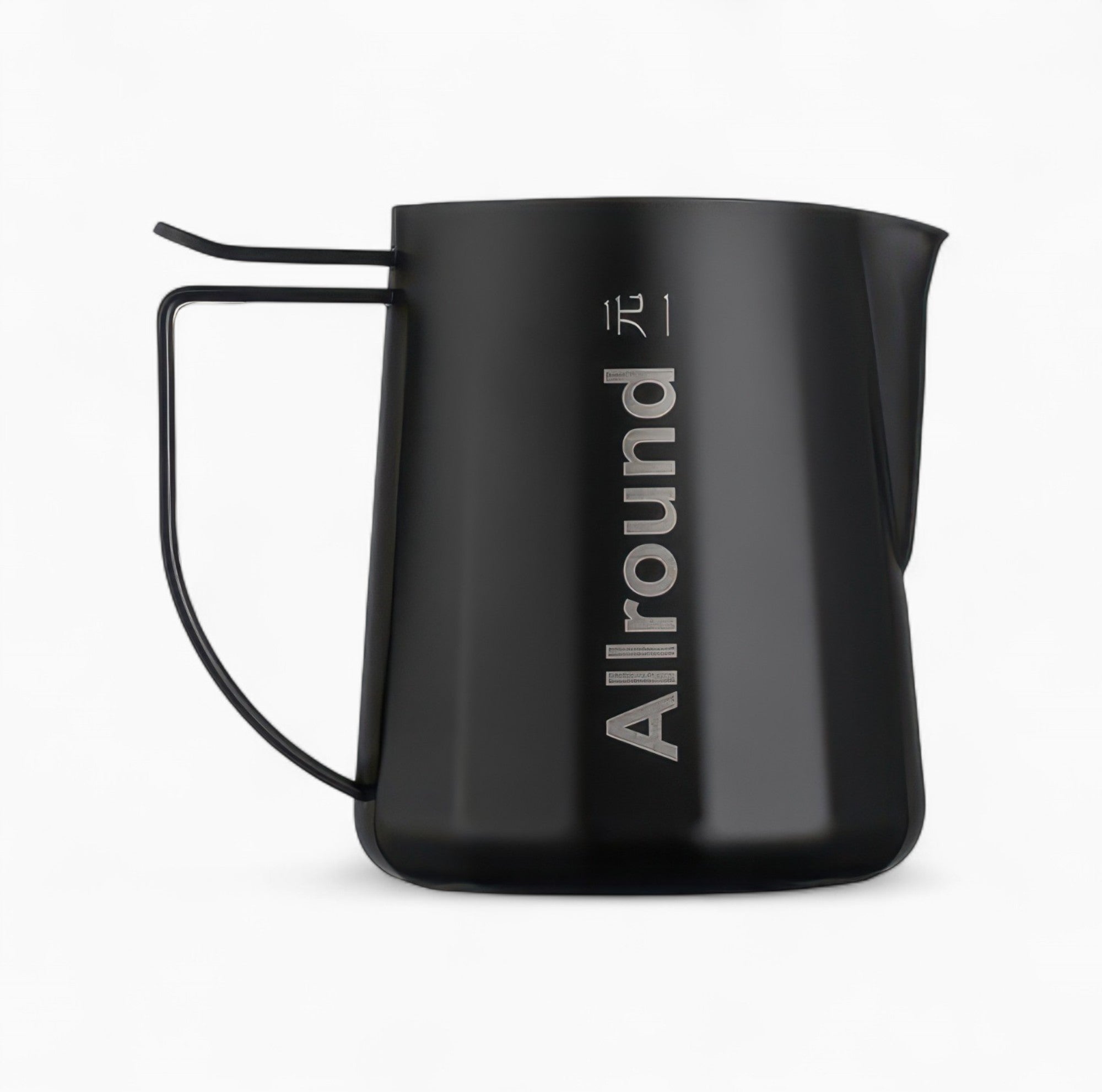
For home baristas serious about their craft, investing in equipment designed specifically for latte art isn't a luxury—it's a necessity. The Competition Grade Milk Frothing Pitcher from Rethink Cafe features an advanced flow spout engineered for smooth, controlled pouring, while its symmetrical body provides perfect balance in your hand.


Competition Grade Milk Frothing Pitcher Stainless Steel
$57.90 $112.00
Elevate your latte art game with this precision-engineered pitcher featuring an advanced flow spout for smooth, controlled pouring and a 14-sided symmetrical body for perfect balance.
Explore ProductLatte Art Pouring Techniques
Once you've mastered milk steaming, it's time to learn the actual pouring patterns. The key principle is controlling the pour speed and height to manipulate how the milk interacts with the espresso crema.
The Three Fundamental Patterns
1. The Heart
The heart is the perfect starting point for beginners. Pour from a moderate height to integrate the milk, then lower the pitcher spout close to the surface. As the cup fills, a white circle will appear—at this point, shake the pitcher slightly side to side while pulling back and then pushing forward in a single motion to create the heart shape.
2. The Rosetta (Fern)
The rosetta builds on the heart technique but introduces continuous side-to-side motion. As you pour, maintain a steady rhythm of small left-right movements while gradually moving the pitcher backward. This creates the characteristic leaf or fern pattern. The Ceramic Espresso Cup and Saucer Set features an egg-shaped interior that naturally guides your pour, making rosettas easier to execute with beautiful definition.
3. The Tulip
The tulip involves pouring multiple "layers" that stack on top of each other. Pour to create a base, stop briefly to let it set, then pour again slightly higher to create the next layer. Finish with a quick pull-through to connect the layers into a tulip shape.

Pour Height and Speed Control
Understanding the relationship between pour height and speed is crucial. Pouring from higher up integrates the milk with the espresso (submerging the white foam), while pouring closer to the surface allows the foam to sit on top and create white patterns. Slow, controlled pours produce defined lines, while faster pours create broader, more blended effects.
Complete Your Latte Art Setup

Ceramic Espresso Cup and Saucer Set for Latte Art
$23.90
$48.00
The egg-shaped interior of these high-fired ceramic cups creates a natural swirl path for steamed milk, making rosettas and tulips easier to pour with beautiful definition. Learn more ➔

Stainless Steel Coffee Dial Thermometer for Espresso
$17.90
$55.00
Achieve silky microfoam every time with this analog thermometer that delivers reliable temperature readings in 3 seconds for perfect milk steaming results. Learn more ➔
Troubleshooting Common Latte Art Problems
Even experienced home baristas encounter challenges. Here's how to diagnose and fix the most common issues:
| Problem | Likely Cause | Solution |
|---|---|---|
| Milk bubbles too large | Introducing too much air or at wrong angle | Reduce aeration time; keep wand tip just below surface |
| Milk too thin/watery | Not enough air introduced or overheated | Aerate for 3-5 seconds; use a milk thermometer to avoid overheating |
| Patterns disappear immediately | Milk and espresso not integrated properly | Pour from higher initially to mix; crema may be too thin |
| No white foam appearing | Pouring too high throughout | Lower pitcher close to surface once cup is 1/3 full |
For more in-depth information on milk science and espresso preparation, the Specialty Coffee Association offers excellent educational resources on brewing standards and milk chemistry.
Pro Tips for Consistent Results
As you practice your espresso machine latte art, keep these expert tips in mind:
- Start with cold milk straight from the refrigerator—it gives you more time to texture before overheating.
- Use whole milk when learning—the higher fat content creates more stable, forgiving microfoam.
- Practice with water first to master the pouring motion without wasting milk or espresso.
- Film yourself to identify technique flaws you might not notice in the moment.
- Maintain your equipment—a clean steam wand and properly calibrated machine make all the difference.
Quick Tip: The 2:1 rule for espresso (2 parts milk to 1 part espresso) provides the ideal canvas for latte art. Too much espresso and your patterns will sink; too little and the contrast won't be visible.
Conclusion: Your Journey to Beautiful Latte Art Starts Today
Creating stunning latte art with your espresso machine isn't about having professional-grade skills on day one—it's about understanding the fundamentals and practicing consistently. By mastering milk steaming techniques, investing in quality tools like the Competition Grade Milk Frothing Pitcher and Ceramic Espresso Cup Set, and applying the pouring techniques outlined in this guide, you'll see dramatic improvement in just weeks.
At Rethink Cafe, we believe every home barista deserves the tools and knowledge to craft café-quality drinks. Whether you're pulling your first shot or perfecting your rosetta, we're here to support your coffee journey with premium equipment designed for real results.
Frequently Asked Questions about Espresso Machine Latte Art
The best espresso for latte art has a rich, thick crema that creates a dark canvas for your white milk patterns. Medium to medium-dark roasts typically produce the most stable crema. Fresh beans (used within 2-4 weeks of roasting) are essential, as stale coffee won't generate proper crema. A well-extracted shot with a 1:2 to 1:2.5 ratio of ground coffee to liquid espresso provides the ideal base for contrast and pattern definition.
The 2:1 rule refers to the ratio of milk to espresso in a traditional latte, meaning you use twice as much steamed milk as espresso. For example, a standard latte might contain 2 ounces of espresso and 4 ounces of steamed milk. This ratio provides enough espresso flavor to shine through while providing adequate milk volume for latte art patterns. For cappuccinos, the ratio is closer to 1:1:1 (espresso, steamed milk, foam).
Yes, an espresso machine is the ideal tool for making authentic lattes at home. A proper espresso machine with a steam wand allows you to extract concentrated espresso shots and steam milk to create the silky microfoam essential for lattes. While you can make espresso-style drinks with other methods, only a true espresso machine provides the pressure (typically 9 bars) and steaming capability needed for café-quality results and latte art.
For home espresso machines, 15 bars is generally considered optimal and sufficient. While some machines advertise 20 bars, the ideal extraction pressure at the portafilter is actually around 9 bars. Machines rated at 15 bars have enough pressure to maintain optimal 9-bar extraction consistently. Higher pressure ratings (20 bars) don't necessarily produce better espresso and can sometimes lead to over-extraction and bitter flavors if not properly regulated.
Proper milk steaming for latte art requires three key steps: First, position your steam wand tip just below the milk surface to introduce air for 3-5 seconds (listen for a paper-tearing sound). Second, submerge the wand deeper and create a vortex by tilting the pitcher—this incorporates the air throughout the milk. Third, heat to 140-150°F while maintaining the whirlpool motion. The result should be glossy, paint-like microfoam without visible bubbles. Tap the pitcher and swirl before pouring.