
Knock Boxes
2 products
Showing 1 - 2 of 2 products


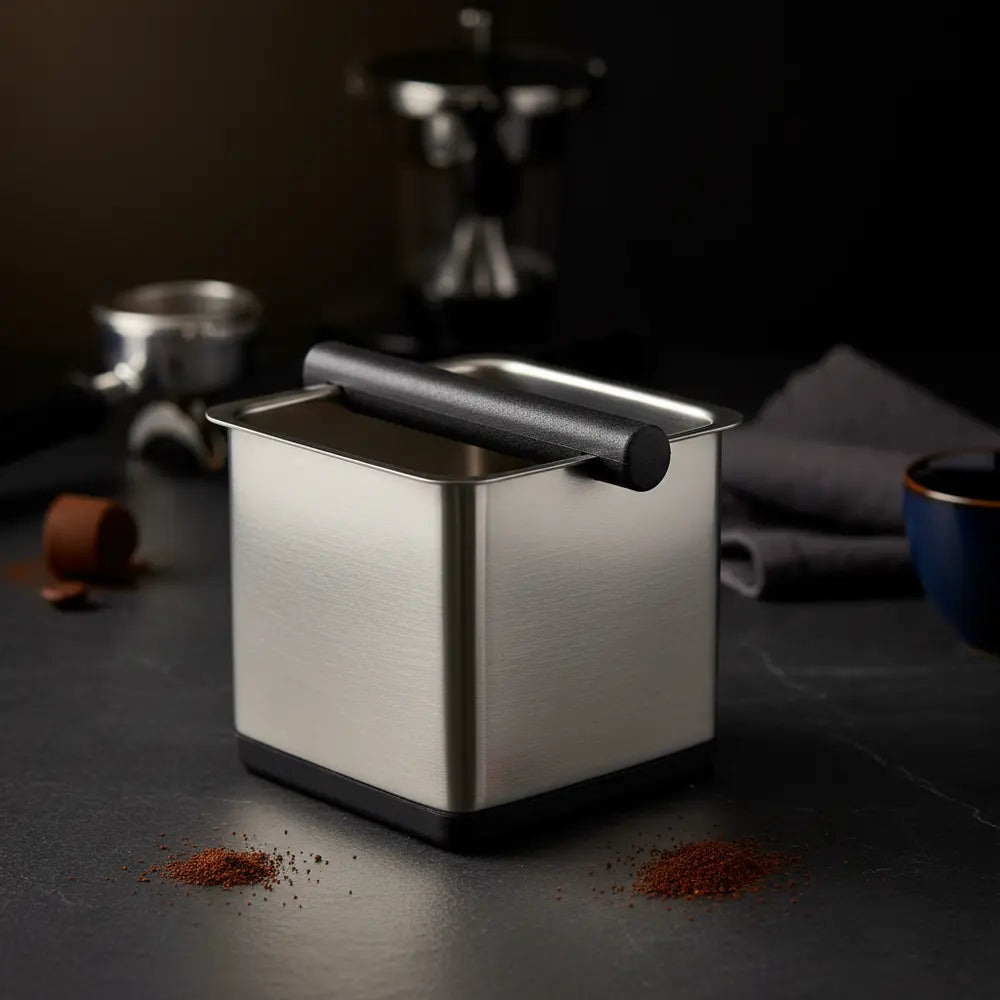
Every great shot of espresso leaves something behind — a tightly packed puck of spent grounds that needs somewhere to go. A coffee knock box gives you a clean, fast, and satisfying way to clear your portafilter between pulls. No mess on the counter, no awkward tapping over a trash bin, and no wasted time when you're dialing in your next shot.
Here at Rethink Cafe, we've curated a selection of knock boxes built for real-world use — whether you're pulling two shots before work or running through a dozen on a lazy Sunday with friends. Every option in this collection has been chosen for its material quality, knock bar resilience, and overall ease of use so you can keep your workflow tight and your station spotless.
Why Every Home Barista Needs an Espresso Knock Box
If you've ever tried knocking a spent puck into your kitchen bin, you already know the problem. Grounds scatter. The portafilter clangs against hard edges. And you end up wiping down surfaces that should have stayed clean. An espresso knock box solves all of this in one purpose-built container.
The concept is beautifully simple. A sturdy bar sits across the top of a deep bin. You strike the portafilter against the bar, the puck drops free, and you move on. It's a technique borrowed straight from commercial cafés, where speed and cleanliness are non-negotiable during a morning rush.
But the benefits go beyond tidiness. Using a dedicated espresso puck bin protects your portafilter from damage. Banging a precision-machined basket against the edge of a trash can or sink introduces dents and micro-deformations over time. Those imperfections may seem cosmetic, but they can subtly affect how your puck seats and how water channels through the bed. A proper knockbox with a shock-absorbing rubber bar eliminates that risk entirely.
Stainless Steel Knock Box Options for Long-Term Durability
Material choice matters more than most people realize when shopping for a coffee grind bin. Plastic models might seem fine at first, but repeated impacts and daily exposure to hot, oily coffee residue can degrade them quickly. That's why we lean heavily toward stainless steel knock box designs in our collection.
Stainless steel resists corrosion, doesn't absorb odors, and handles the thermal shock of hot puck impacts without warping. A quality stainless body also adds enough weight to keep the box planted on your counter — no chasing it across the workspace with every knock.
Some of our options combine stainless steel construction with rubberized exteriors or non-slip base pads. This hybrid approach gives you the internal durability of metal with the counter-grip stability that prevents sliding. It's a thoughtful detail that separates a well-designed knockbox from a cheap afterthought.
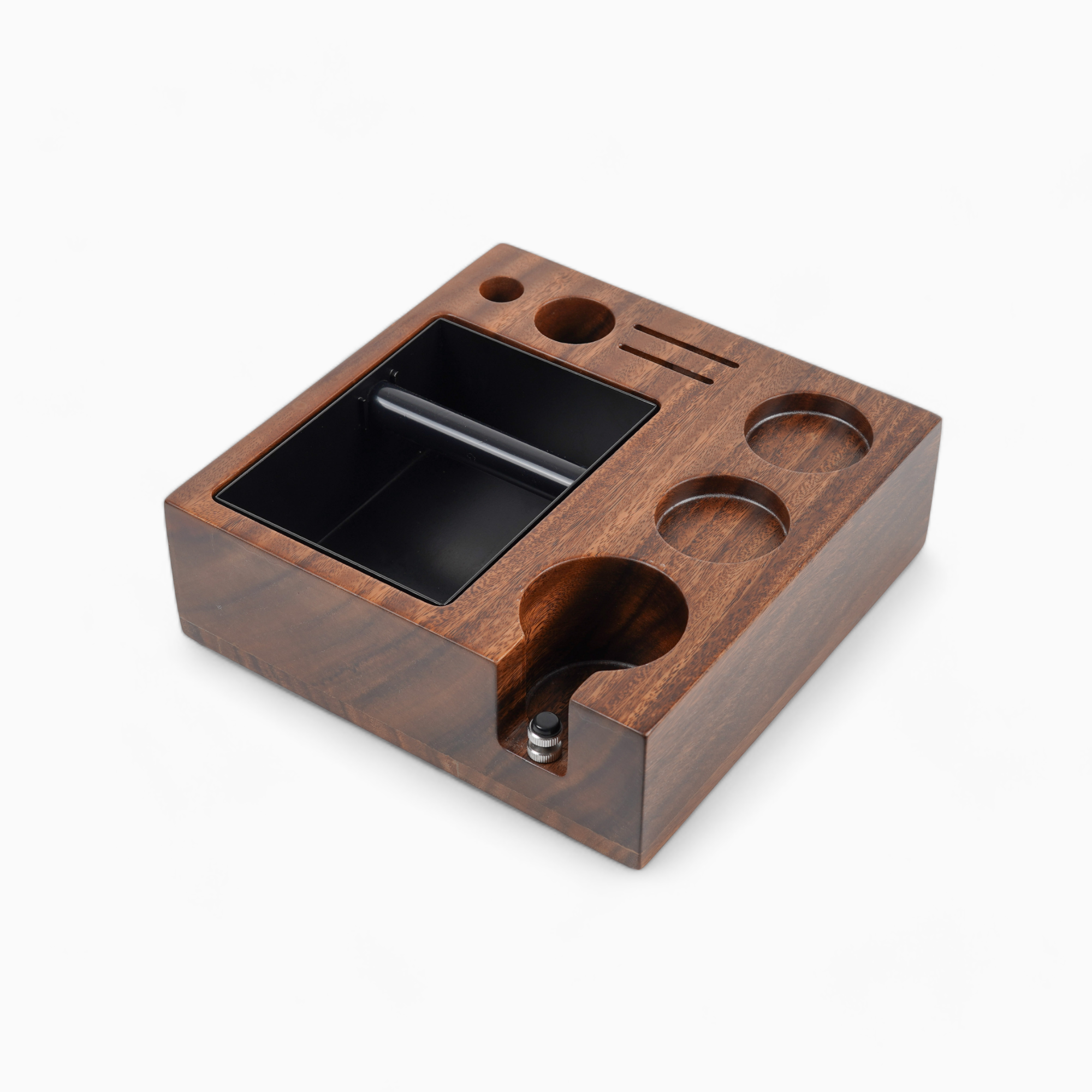
For those who prefer a warmer aesthetic, we also carry select wooden knock box models that pair natural materials with reinforced internal structures. These look stunning next to a walnut-accented grinder setup while still delivering the impact resistance your workflow demands.
Choosing the Right Knock Bar Size and Sturdiness
The knock bar is the heart of any espresso knock box. It's the component that absorbs every single impact, day after day. A flimsy bar will compress, crack, or detach within months. A properly engineered one will outlast the box itself.
Look for a removable knock bar made from heavy-duty food-grade rubber or silicone. Removability is key for two reasons. First, it makes deep cleaning dramatically easier — you can pull the bar out, scrub underneath, and reassemble in seconds. Second, it means the bar is replaceable if it ever does wear down, extending the life of your entire unit.
Bar diameter matters too. A thicker bar distributes impact force more evenly, which is gentler on your portafilter's basket ears. Thinner bars can feel sharper on contact and may require more precise aim to hit cleanly. If you're using a heavier commercial-style portafilter, a wider bar with dense rubber provides a more satisfying and controlled knock.
Sturdiness also extends to how the bar is mounted. Some models use a simple friction fit, while better designs use a locking channel or molded cradle that prevents the bar from rotating or shifting during use. This kind of engineering might seem minor on paper, but it makes a noticeable difference after hundreds of knocks.
Compact Knock Box Designs for Tight Espresso Stations
Counter space is premium real estate, especially in a home barista setup where a grinder, espresso machine, scale, and tamping station all compete for room. A compact knock box earns its place by fitting into your workflow without demanding a dedicated corner.
Some of the most popular models in our collection are designed to tuck beside or even beneath your espresso machine. An under-counter knock box or drawer-style unit mounts below your countertop edge, keeping the bin accessible but completely out of sight. This is a favorite among home baristas who have invested in a clean, minimal station aesthetic.
A knock box drawer design pulls out when needed and slides back flush when you're done. The puck drops into a removable tray that lifts out for emptying and rinsing. It's the kind of solution that feels like an upgrade to your entire espresso ritual — not just a place to dump grounds.
Even among countertop models, size varies considerably. If you're pulling just a few shots daily, a smaller footprint box with a capacity of 10-15 pucks works perfectly. High-volume home baristas or those who entertain frequently might prefer a deeper bin that holds 25 or more pucks before needing to be emptied.
Coffee Knock Box Compatibility with Popular Espresso Machines
One of the most common questions we hear is whether a particular knock box works with a specific machine. The good news is that most knock boxes are universally compatible because the interaction point is your portafilter, not your machine. As long as the knock bar sits at a comfortable height relative to your portafilter handle, you're set.
That said, there are nuances worth considering. If you're using a Breville knock box or pairing a knock box with a Breville machine, the 54mm portafilter baskets used on models like the Barista Express and Bambino are slightly smaller than the industry-standard 58mm. This means smaller pucks that drop easily into virtually any bin. Larger commercial-style 58mm baskets produce heftier pucks, so a slightly wider opening is helpful but rarely a deal-breaker.
Height is the more practical consideration. Your knock bar should sit roughly at or just below the level of your portafilter when you hold it naturally at your side. Too high, and you're lifting and aiming awkwardly. Too low, and you're bending down for each knock. Most countertop models fall into a comfortable range between 10 and 15 centimeters tall, which works well for standard counter heights and common portafilter sizes.
If your machine sits on a raised platform or you have an unusually high counter, consider a taller or deeper box. Conversely, machines placed lower — like on a pull-out shelf — pair better with a shorter profile knockbox that stays proportional to your working height.
Easy-Clean Designs That Keep Your Coffee Station Fresh
Spent espresso grounds are oily, aromatic, and surprisingly stubborn when left to dry. A knock box that's difficult to clean becomes a box you avoid cleaning — and that leads to stale odors, mold, and a generally unpleasant corner of your otherwise beautiful setup.
The best designs in our collection prioritize cleaning simplicity. Smooth internal walls without hard-to-reach crevices mean a quick rinse under the tap removes 90% of residue. Models with removable knock bars let you access every surface inside the bin without contorting a sponge around fixed obstacles.
A knock box with lid is another smart choice for cleanliness. The lid contains odors between sessions and prevents any stray grounds from escaping when you carry the box to empty it. Some lids also reduce fruit fly attraction during warmer months — a surprisingly common complaint among home baristas who compost their used espresso grounds.
Dishwasher-safe components are a bonus, though most stainless steel models clean up so quickly by hand that it's rarely necessary. A weekly deep clean with warm soapy water and a thorough dry keeps any quality knock box performing and smelling fresh for years.
Non-Slip Stability for Confident Portafilter Cleaning
There's nothing worse than a knock box that slides across the counter every time you strike it. It disrupts your rhythm, risks spilling grounds, and makes the whole process feel clumsy rather than controlled. A secure non-slip base transforms the knocking motion from a cautious tap into a confident strike.
Rubber feet, silicone pads, and weighted bases all contribute to stability. The most effective designs combine multiple approaches — a heavy stainless body with a wide rubberized base pad creates a planted, immovable feel even on polished granite or laminate counters.
This stability also protects your countertops. Direct metal-on-stone contact during repeated impacts can cause micro-scratches over time. A proper base pad acts as a buffer, absorbing vibration and preventing surface damage to both the box and your workspace.
From Coffee Puck to Compost — Completing the Cycle
A coffee puck knock box isn't just a convenience tool — it's the bridge between your espresso ritual and responsible disposal. Spent coffee grounds are one of the most compost-friendly kitchen byproducts. They add nitrogen to soil, improve drainage, and break down quickly in a compost bin or garden bed.
Having a dedicated knock box makes composting effortless. Instead of fishing wet grounds out of a mixed trash bag, you simply carry your bin to your compost pile and tip it out. Some baristas keep a small compost caddy right next to their knock box, creating a seamless waste-to-garden pipeline that takes seconds.
Even if composting isn't your thing, a knock box keeps your general waste cleaner and drier. Wet coffee grounds in a regular bin create weight, moisture, and odor problems. Containing them separately until disposal day is a small change with a surprisingly noticeable impact on kitchen cleanliness.
Building a Complete Home Barista Toolkit
A knock box doesn't work in isolation. It's one piece of a larger ecosystem of home barista tools that work together to streamline your espresso process and improve shot quality. The right accessories eliminate friction at every step — from grinding and dosing to tamping, pulling, and cleaning.
Think of your knock box as the final stage of each shot cycle. After you've dialed in your grind, distributed and tamped your dose, and pulled a beautiful extraction, the knock box resets the cycle. A quick, clean knock clears the portafilter, and you're ready to dose again. When that transition is smooth and mess-free, the whole ritual feels elevated.
Investing in quality at this stage pays dividends. A well-built knockbox lasts years, protects your portafilter, keeps your station clean, and makes the repetitive part of multi-shot sessions feel effortless rather than tedious. It's one of those purchases that seems modest but fundamentally changes how your daily espresso routine feels.
Frequently Asked Questions About Coffee Knock Boxes
A coffee knock box provides a dedicated, padded container for ejecting spent espresso pucks from your portafilter. You strike the portafilter against the rubber knock bar, the puck drops cleanly into the bin, and your portafilter is ready for the next dose.
Beyond tidiness, it protects your portafilter basket from damage that occurs when banging it against hard surfaces like sinks or trash cans. It also centralizes used grounds for easy composting or disposal, keeping your entire workspace cleaner and more efficient.
Absolutely. Even if you only pull one or two shots a day, a knockbox streamlines your cleanup and protects your equipment. The cost is modest compared to your grinder or machine, yet it improves every single session by eliminating the messy, improvised alternatives.
For anyone pulling multiple shots — especially when entertaining or batch-brewing milk drinks — the time and mess savings compound quickly. Most baristas consider it one of the best value-for-money accessories in their entire setup.
Hold your portafilter upside down over the knock box and strike the rim or ears of the portafilter firmly against the rubber knock bar. One or two confident hits should release the puck cleanly. Avoid using excessive force — a controlled, moderate knock is more effective and gentler on your basket.
After the puck drops, a quick visual check ensures nothing is stuck. If your grounds are clinging, it may indicate your shot was under-extracted or your puck prep needs adjustment. Empty and rinse the box once it's full or at the end of each session to prevent residue buildup.
Prioritize a sturdy, removable knock bar made from dense food-grade rubber or silicone — this is the component that absorbs the most wear. A non-slip base prevents sliding during use, and smooth interior walls make rinsing fast and thorough.
Consider the capacity relative to your daily volume, and check that the overall height sits comfortably with your portafilter's working position. Stainless steel construction offers the best longevity, while a lid helps contain odors and keeps grounds contained during disposal.
Stainless steel is the gold standard for knock box bodies. It resists corrosion from coffee oils, handles thermal shock from hot pucks, doesn't absorb stains or odors, and adds stabilizing weight. High-quality ABS plastic can work for lighter-duty use, but it's more prone to cracking and discoloration over time.
For the knock bar itself, dense food-grade rubber or silicone provides the best shock absorption and longevity. Avoid thin or hollow bars that compress quickly — a solid, hefty bar will maintain its shape and cushion after thousands of impacts.
Empty the box daily or when full, then rinse it under warm running water. Remove the knock bar and wash both pieces with a mild dish soap to cut through coffee oils. A quick wipe with a soft sponge is usually all that's needed — avoid abrasive scrubbers on stainless steel to prevent scratching.
Once a week, do a more thorough clean by soaking the bar and bin in warm soapy water for a few minutes. Dry everything completely before reassembling. This routine prevents odor buildup, mold, and the gradual staining that comes from dried coffee residue.
A thicker bar — roughly 30 to 40mm in diameter — distributes impact force more evenly and feels more forgiving during use. Thinner bars require more precise aim and can feel harsh against portafilter ears. Look for solid (not hollow) construction for maximum shock absorption.
Mounting matters too. Bars that lock into a molded channel or cradle stay fixed during use, while simple friction-fit bars can rotate or shift over time. A removable yet securely seated bar gives you the best of both worlds — stability during use and easy removal for cleaning.
Nearly all knock boxes are universally compatible because the interaction is with your portafilter, not the machine itself. Whether you use a Breville, Gaggia, Rancilio, or La Marzocca, any standard knock box will work as long as the bar height feels comfortable relative to your portafilter grip.
The main variable is puck size — 54mm portafilters (common on Breville machines) produce smaller pucks that fit any bin, while 58mm baskets create slightly larger pucks. Both sizes work in standard knock boxes. Focus more on matching the box height to your counter setup than on machine-specific compatibility.
Some baristas improvise with a small trash bin lined with a bag, a sturdy bowl with a towel draped over the rim, or even a rubber-padded section of their countertop. These can work in a pinch, but none offer the combination of portafilter protection, mess containment, and ergonomic design that a purpose-built knock box provides.
A knock box drawer that mounts under your counter is another alternative to a traditional countertop bin if space is your concern. Ultimately, for anyone pulling espresso regularly, a dedicated knock box is the most efficient and equipment-safe solution available.