Every serious espresso setup deserves a foundation that works as hard as the machine sitting on top of it. A dedicated coffee stations mat transforms a cluttered countertop into a purpose-built brewing corner — protecting surfaces, catching drips, and giving your entire workflow a clean, professional feel. At Rethink Cafe, we curate mats engineered for real extraction routines, not just aesthetics.
Whether you pull shots daily on a prosumer machine or rotate between pour-over and Aeropress, the right mat turns chaos into calm. Below, you'll find everything you need to choose the perfect coffee bar mat for your counter, your gear, and your ritual.
Why Every Home Barista Needs a Coffee Stations Mat
Espresso is messy by nature. Purging the steam wand sends droplets sideways. Knocking out a puck leaves grounds scattered. Tamping generates lateral force that can scratch delicate stone or laminate surfaces. Without a dedicated mat beneath your setup, these micro-aggressions add up fast — stained grout lines, heat rings, and hairline scratches that no amount of countertop cleaner can undo.
A purpose-built coffee bar mat absorbs the daily punishment your brewing habit dishes out. It acts as an insulating barrier between a 200°F group head and your quartz countertop. It cushions the portafilter during tamping so you're not grinding metal against stone. And it catches every rogue drip before it becomes a permanent stain.
Think of it less as an accessory and more as insurance for your kitchen. The cost of a quality mat is a fraction of a countertop repair — and it makes your entire coffee station look intentional rather than improvised.
Choosing the Right Espresso Machine Mat Material
Not all mats are created equal, and the material you choose directly affects performance, longevity, and maintenance. Here's how the most common options stack up in a real home barista environment.
Silicone Coffee Mats
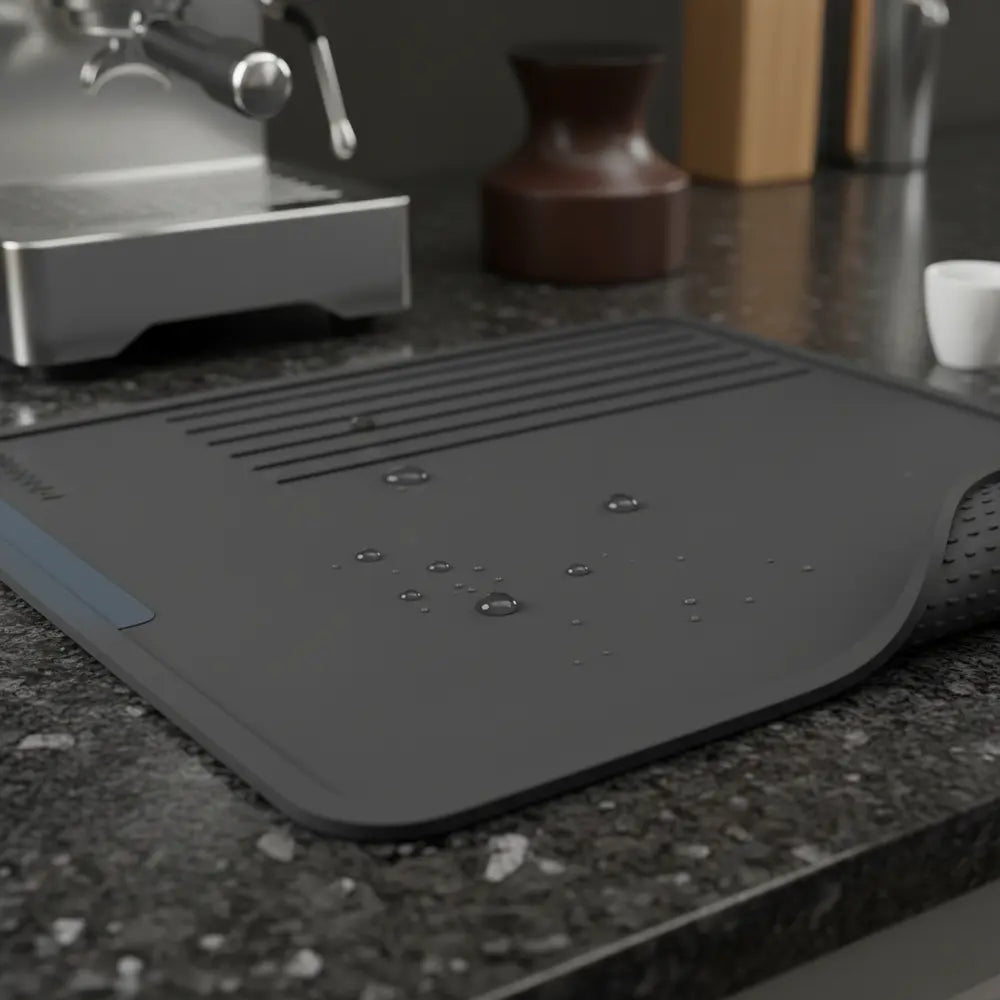
Silicone is the go-to for most espresso setups, and for good reason. A quality silicone coffee mat typically handles continuous heat exposure up to 450°F — well beyond anything your machine's drip tray or boiler will produce. Silicone is naturally non-porous, meaning coffee oils and espresso stains wipe clean without soaking in.
The texture also matters. Food-grade silicone grips countertops without adhesive, providing a stable, non-slip espresso mat surface that stays put when you're applying 30 pounds of tamping pressure. It won't degrade from repeated exposure to hot water or cleaning solutions, either.
Rubber Coffee Mats
Rubber mats tend to be denser and heavier, which gives them excellent vibration dampening. If your grinder sits on the same mat as your espresso machine, a thick rubber coffee mat can absorb motor vibration and reduce noise — a genuine benefit in open-plan kitchens or early-morning routines.
The trade-off is that rubber can retain odors over time if not cleaned regularly, and some lower-grade options may leave marks on lighter countertop materials. Look for mats made from natural or FDA-compliant rubber to avoid off-gassing.
Microfiber and Absorbent Fabric Mats
These function more like a dish drying mat alternative than a traditional barista station mat. They're excellent at absorbing large spills and can be tossed in the washing machine, but they lack heat resistance and structural rigidity. Best used as a supplementary layer beneath drip trays or around your sink-side rinsing station rather than directly under a hot machine.
Heat Resistance and Countertop Protection Explained
Heat is the silent threat most home baristas underestimate. Your espresso machine's base plate can reach surface temperatures of 150–180°F during extended sessions. Some heat exchangers and dual boilers run even hotter. Place that directly on engineered stone, butcher block, or laminate without a heatproof mat for coffee makers, and you risk thermal shock, discoloration, or warping over time.
A proper coffee counter mat creates an insulating air pocket between the machine and the surface. Silicone and rubber both excel here because they conduct heat poorly — meaning the energy stays in the mat rather than transferring downward. For maximum protection, choose a mat at least 3mm thick. Thinner mats look sleek but sacrifice meaningful thermal insulation.
Beyond heat, your mat also shields against mechanical damage. The repeated micro-impacts of setting down a portafilter, adjusting your tamper, or repositioning a knock box all take a toll. A mat with slight cushion absorbs these forces so your counter doesn't have to.
Non-Slip Grip and Stability for Your Espresso Station
Consistency in espresso starts with a stable platform. If your mat slides when you tamp, your puck prep suffers — and so does your extraction. A non-slip espresso mat anchors your entire workflow, from dosing to distribution to tamping, so every variable you can control stays controlled.
The best coffee station mats feature a textured underside that grips the countertop without adhesive residue. Some use a waffle or honeycomb pattern on the bottom surface that creates suction against smooth counters. On the top surface, a slightly raised lip or textured zone keeps your portafilter from wandering during tamping.
If you've ever had your machine shift mid-pull because the drip tray was overfull and created a wet, slippery surface — you already know why grip matters. A stable mat eliminates that variable entirely.
Sizing Your Coffee Mat for Counter Space
One of the most overlooked decisions is getting the dimensions right. A mat that's too small defeats the purpose — drips land beyond the edge, and your grinder hangs off one side. Too large, and it dominates your kitchen counter, making your home coffee nook feel cramped rather than curated.
Start by measuring the footprint of your machine, grinder, and any accessories that live on the counter permanently (knock box, dosing cup, scale). Add two to three inches on each side for overspill protection. Most serious espresso setups need a mat in the range of 16×20 inches to 20×24 inches.
For a more compact coffee station, consider dedicated smaller mats — one under the machine, a separate tamping mat beside it, and perhaps a third under the grinder. This modular approach lets you customize the layout without committing to a single large footprint.
Keeping Your Coffee Bar Mat Clean
Coffee oils are persistent. Left unchecked, they build up into a tacky residue that traps grounds and creates an unsanitary brewing environment. The good news is that most quality mats are designed for effortless maintenance.
For silicone and rubber mats, a quick wipe with warm soapy water after each session prevents buildup. Once a week, give the mat a deeper clean — soak it in a solution of warm water and a teaspoon of cafiza or a mild dish detergent for 15 minutes, then rinse and air dry. This dissolves the oils that daily wiping misses.
Avoid abrasive scrubbers on silicone surfaces; they can create micro-scratches that actually trap more residue over time. A soft sponge or microfiber cloth is all you need. For rubber mats, check that your cleaning solution is pH-neutral to prevent degradation of the rubber compound.
The ease of cleaning is one of the reasons a coffee spill mat pays for itself. Without one, you're scrubbing dried espresso off grout lines and stone surfaces — a far more tedious process.
Organizing Your Barista Workstation
A mat does more than protect. It defines your workspace. The simple act of placing a mat on your counter creates a visual and physical boundary for your espresso station setup — everything inside that rectangle is your brewing zone. Everything outside stays clean.
This psychological framing matters more than you'd think. When your gear has a designated home, you naturally keep it organized. The tamper goes back to its spot. The dosing funnel sits beside the grinder. Your WDT tool stays within arm's reach. The mat becomes the organizing principle for your entire coffee gear organization system.
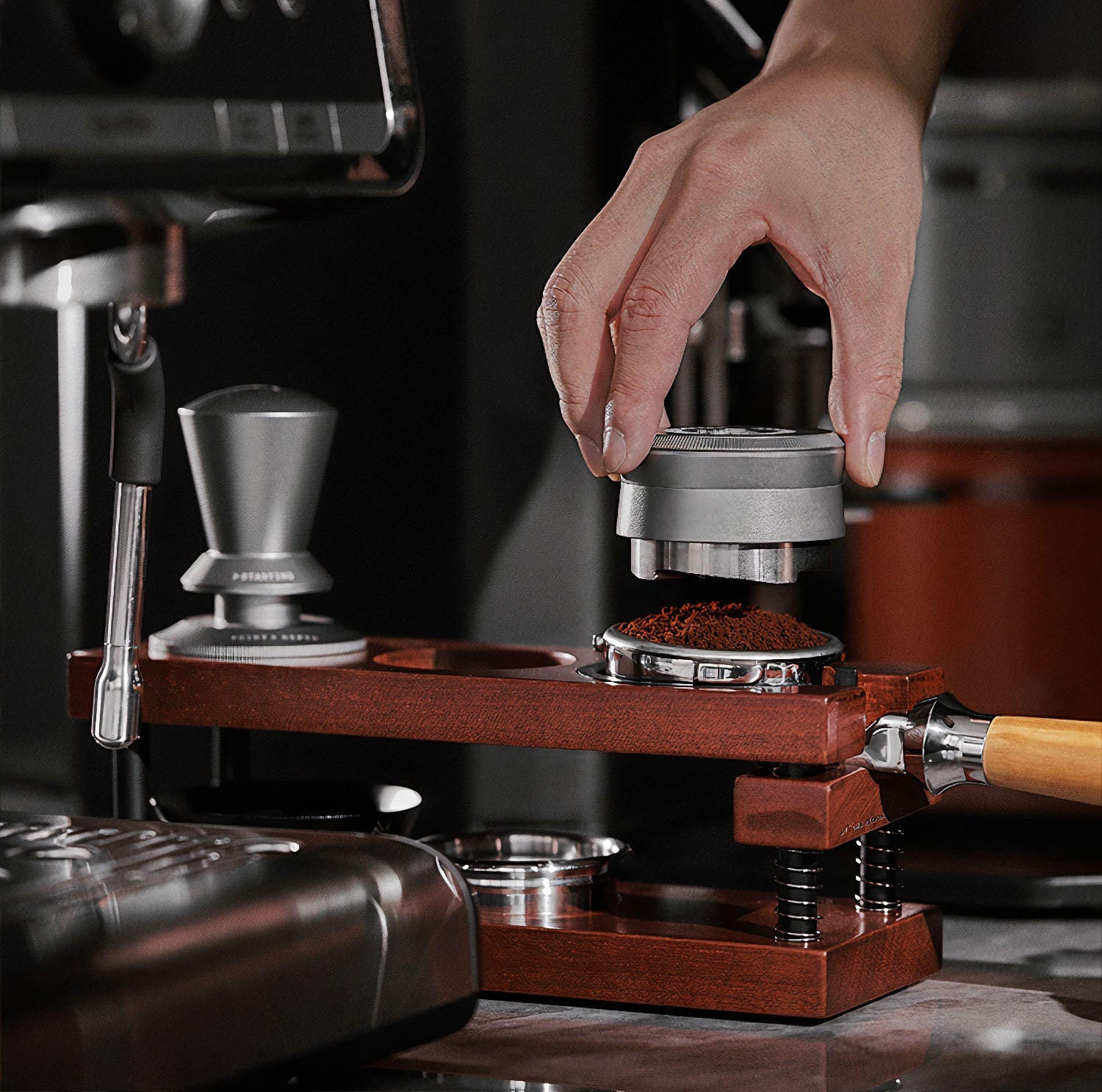
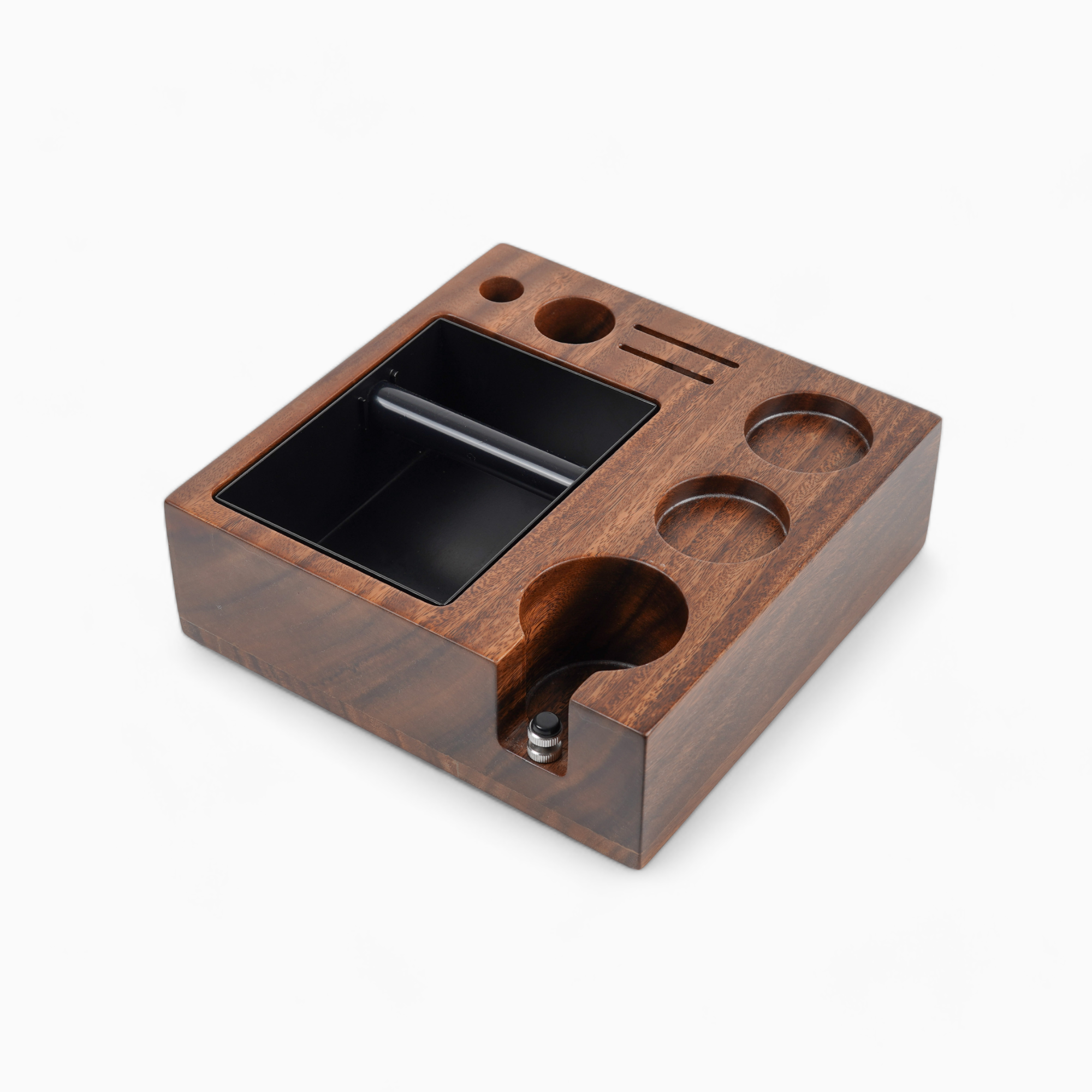
Some mats include built-in features that enhance this effect — molded portafilter cradles, raised edges to contain spills, or designated tamping zones with extra cushion. These aren't gimmicks. They're workflow refinements that shave seconds off every shot and reduce the mental overhead of keeping your station tidy.
Material Durability and Long-Term Value
A well-made coffee stations mat should last years, not months. High-grade silicone resists UV degradation, doesn't crack in cold environments, and maintains its flexibility through thousands of heating and cooling cycles. Premium rubber compounds offer similar longevity, though they may show wear patterns faster in high-traffic tamping zones.
The enemy of mat longevity is neglect. Coffee oils left to accumulate can break down even quality materials over time. Sharp objects — like the edge of a metal tamper dropped at an angle — can puncture thinner mats. And storing a mat folded rather than flat can create permanent creases that compromise the non-slip base.
Treat your mat like any other piece of barista equipment. Clean it regularly, store it properly, and it will protect your counter and support your workflow for years. At Rethink Cafe, every mat in our collection is selected for materials and construction that stand up to daily use — because we know your espresso habit isn't a phase.
Elevating Your Brewing Corner Essentials
The details matter in espresso, and your station setup is no exception. The right kitchen coffee station mat doesn't just prevent damage — it changes how your entire brewing corner feels. There's a noticeable shift when you move from a bare countertop to a properly outfitted workspace. Your movements become more deliberate. Your routine gains rhythm. And the surface beneath your hands feels purpose-built rather than borrowed from another part of the kitchen.
That's the Rethink Cafe philosophy in a single product category. We believe that eliminating small frustrations — a sliding machine, a stained counter, grounds scattered everywhere — is how you achieve consistent extraction. When your environment is dialed in, you can focus entirely on grind size, dose, and pressure. The mat handles everything else.
Browse our full selection of coffee stations mats below. Every option has been tested against real espresso workflows and chosen because it genuinely improves the daily ritual — not because it looks good in a product photo.
Frequently Asked Questions About Coffee Stations Mats
Absolutely. Espresso machines generate significant heat at their base plate, and the daily routine of tamping, purging, and knocking out pucks creates mechanical stress on countertop surfaces. A mat acts as a thermal and physical barrier that prevents heat rings, scratches, and staining.
Even if your counter appears durable, the cumulative effect of daily use without protection can cause damage that's expensive to repair. A quality mat is a small investment compared to countertop refinishing.
A coffee mat provides heat resistance, protects your countertop from scratches and stains, catches spills and loose grounds, and keeps your machine stable during operation. It also defines your workspace visually, encouraging better organization of your brewing gear.
Many baristas find that a dedicated mat improves their overall workflow by reducing cleanup time and creating a more consistent, professional-feeling station.
A tamping mat cushions the portafilter while you apply downward pressure during puck preparation. Without one, the metal basket grinds directly against your countertop, causing scratches and surface wear over time.
The mat also stabilizes the portafilter so it doesn't rock or slip mid-tamp, which helps you apply even, level pressure — a key factor in eliminating channeling and achieving uniform extraction.
In commercial settings, they're commonly called bar mats or bar service mats. In the coffee world, the same concept goes by names like coffee bar mat, espresso machine mat, barista workstation mat, or tamping mat — depending on the specific size and function.
They all serve the same core purpose: protecting the work surface, containing spills, and providing a non-slip base for equipment and tools.
Yes. Food-grade silicone mats are rated to withstand continuous heat well above what any home espresso machine produces — typically up to 450°F. This makes them highly effective at preventing thermal damage like heat rings or discoloration on stone, wood, and laminate counters.
Silicone is also non-porous, so coffee, water, and oils sit on the surface rather than soaking in. Spills wipe away cleanly without staining the mat or the counter beneath it.
Most quality silicone coffee station mats handle sustained temperatures between 400°F and 500°F. Rubber mats typically tolerate up to 300°F. Since espresso machine base plates generally reach 150–180°F during operation, both materials provide a comfortable safety margin.
For machines with exposed boilers or heat exchangers that run hotter, a thicker silicone mat (3mm or more) offers the best thermal insulation between the machine and your counter surface.
They do, and it's one of the most practical reasons to use one. Espresso grounds contain oils that can permanently stain porous surfaces like marble, granite, and unsealed wood. A mat catches those grounds and oils before they ever reach the counter.
For scratch prevention, the mat cushions the contact points between hard metal accessories — portafilters, tampers, knock boxes — and your countertop surface. Over months of daily use, that cushioning prevents the accumulated micro-scratches that make a counter look worn.
Start by choosing a mat with a textured or patterned underside — waffle, honeycomb, or ribbed patterns create natural grip against smooth surfaces. Ensure both the mat's base and your counter are clean and dry before placing the mat, as water or oil beneath the mat reduces friction significantly.
If your mat still slides, a light misting of water on the counter before laying the mat down can improve suction. Avoid adhesive solutions, which leave residue and can damage certain counter finishes.
Daily, a quick wipe with a damp cloth or sponge and warm soapy water is all you need. For a weekly deep clean, soak the mat in warm water with a small amount of espresso machine cleaner (like cafiza) or mild dish soap for 10–15 minutes, then rinse thoroughly and air dry.
Use a soft sponge rather than abrasive scrubbers, especially on silicone mats, to avoid creating micro-scratches that trap residue. Rubber mats benefit from a pH-neutral cleaning solution to preserve the material's integrity over time.
A high-quality silicone coffee mat can last three to five years or more with proper care. Silicone resists UV degradation, temperature cycling, and chemical exposure, making it exceptionally durable for daily espresso use.
Rubber mats typically last two to four years, depending on thickness and compound quality. They may show wear in tamping zones sooner than silicone. In both cases, regular cleaning and flat storage (never folded) are the biggest factors in maximizing lifespan.