
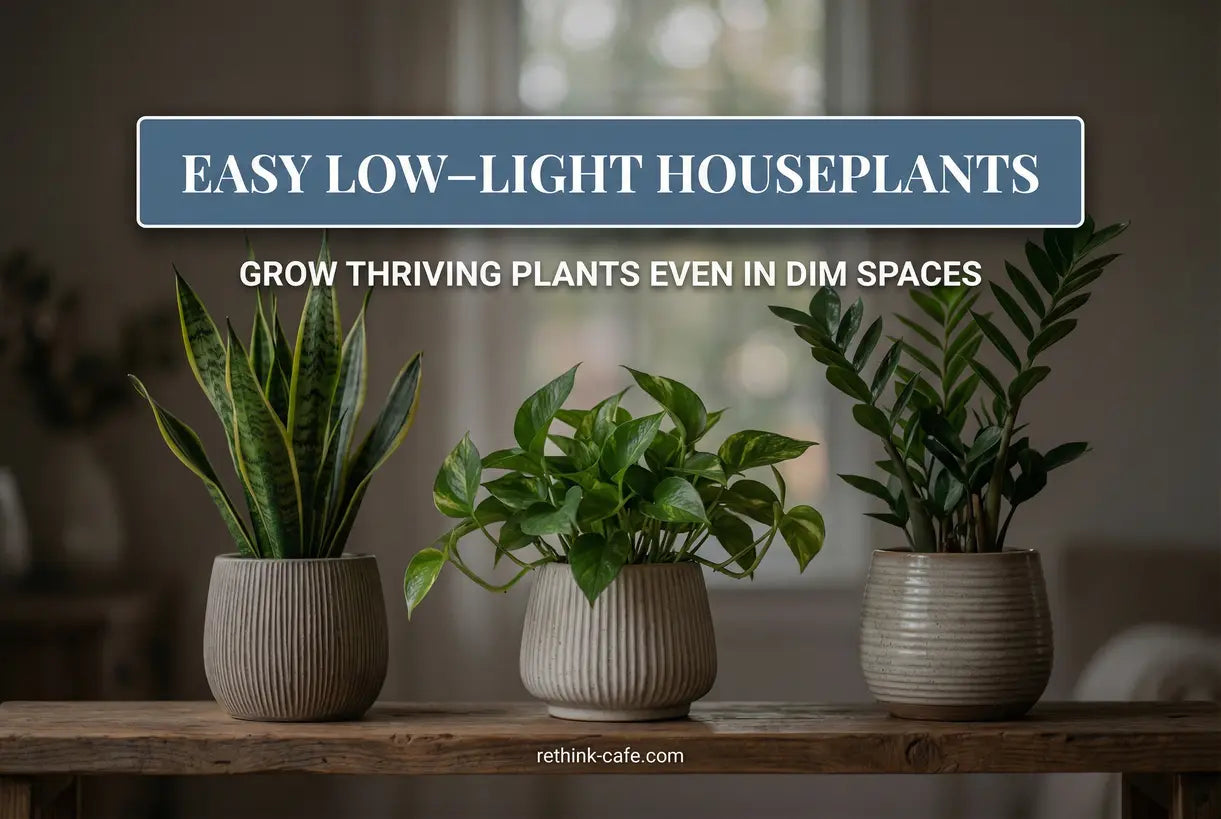
Not every living space is blessed with floor-to-ceiling south-facing windows, and that's perfectly fine. Whether you reside in a north-facing apartment, work in a windowless office, or simply have more artificial light than natural sun, you can still enjoy a thriving indoor jungle. Low-light houseplants offer the perfect solution for bringing life, color, and improved air quality into dimmer corners without demanding constant attention or direct sunlight.
In this guide, we'll explore the best indoor plants for low light that are perfect for beginners and seasoned plant parents alike. You'll discover which varieties are genuinely low maintenance houseplants, plus learn essential care techniques to keep them flourishing. And because even the hardiest plant needs the right foundation, we'll show you how premium planters and well-draining soil can prevent common problems like root rot.

Why Choose Low-Light Houseplants?
Many believe that limited sunlight means limited options, but the reality is quite the opposite. Plants that survive in shade are specifically adapted to forest floors and tropical understories where dense canopies block harsh rays. These species have evolved to photosynthesize efficiently with minimal light, making them ideal candidates for bathrooms, offices with fluorescent lighting, and shaded living rooms.
Beyond their adaptability, office plants low light varieties often require less frequent watering than their sun-loving cousins. Less light means slower growth rates and lower evaporation, which translates to a more forgiving maintenance schedule for busy professionals.
The Best Low-Light Houseplants for Beginners
When selecting best plants for low light, look for species known for their resilience and tolerance to neglect. Here are top performers that thrive even when sunlight is scarce:
- ZZ Plant (Zamioculcas zamiifolia): With its glossy, dark green leaves, this prehistoric-looking plant tolerates dark corners and irregular watering better than almost any other houseplant.
- Snake Plant (Sansevieria): Architectural and striking, snake plants convert minimal light into energy efficiently and can survive weeks without water.
- Pothos (Epipremnum aureum): This trailing beauty cascades elegantly from shelves and tolerates everything from low light to inconsistent watering schedules.
- Peace Lily (Spathiphyllum): Known for its stunning white blooms and air-purifying qualities, it thrives in fluorescent office lighting and signals when it needs water by drooping slightly.
- Chinese Evergreen (Aglaonema): Available in various colors from deep green to pink and silver, these foliage plants are among the most durable low-light houseplants available.

Can Low-Light Plants Survive in Artificial Light?
A common concern is whether natural sunlight is absolutely necessary. The answer is no—many low-light houseplants adapt wonderfully to artificial lighting conditions. LED grow lights and standard fluorescent office bulbs provide sufficient spectrum for photosynthesis, though growth may be slower than in bright indirect light.
For optimal results, position plants within a few feet of light sources, and rotate them monthly to ensure even growth. If relying solely on artificial light, aim for 8-12 hours of daily exposure to mimic natural day cycles.
Essential Watering and Care Guidelines
Mastering care for low light plants requires understanding that less light means less water. Photosynthesis slows in dim conditions, so plants consume moisture more slowly. Overwatering is the single biggest killer of shade-tolerant houseplants.
Watering Frequency
Instead of following a rigid calendar schedule, check soil moisture by inserting your finger about two inches deep. Water only when the top layer feels dry to the touch. In low-light conditions, this might mean watering once every 2-3 weeks rather than weekly.
Humidity and Temperature
Most tropical understory plants prefer moderate humidity (40-60%) and consistent temperatures between 65-75°F. Avoid placing plants near radiators, air conditioning vents, or drafty windows where temperature fluctuations cause stress.
The Right Planters and Soil: Setting Up for Success
Even the hardiest plant will struggle without proper drainage. Low-light plant care tips always emphasize container selection and soil composition because stagnant water quickly leads to root rot in slow-growing plants.
Standard decorative pots often lack drainage holes, trapping moisture against roots. Selecting containers specifically designed for indoor gardening makes a significant difference in plant health and longevity.

The Matte Ceramic Modern Planter - 6 inch solves the drainage dilemma with its sleek design that includes a matching saucer, protecting your furniture while allowing excess water to escape. Its modern aesthetic complements contemporary interiors without compromising functionality.
Complete Your Low-Light Plant Setup
For those seeking maximum convenience, the Self-Watering Fiberstone Pot - 8 inch features a built-in reservoir system that reduces watering frequency while ensuring roots receive consistent moisture without sitting in standing water. Pair it with All-Purpose Indoor Potting Mix - 2 qt, which blends peat, perlite, and compost specifically to prevent waterlogging in indoor environments.
How Do I Prevent Root Rot in Low-Light Conditions?
Root rot occurs when roots suffocate in waterlogged soil, a common issue when caring for low-light houseplants because evaporation rates are lower. Prevention relies on three key factors:
- Drainage: Always select pots with drainage holes and use saucers to protect surfaces. Never let pots sit in standing water for extended periods.
- Soil Aeration: Use chunky, well-draining potting mix rather than dense garden soil. Perlite and orchid bark create air pockets that keep roots healthy.
- Water Discipline: Wait until soil is dry 2-3 inches deep before watering. In winter months, reduce frequency further as growth naturally slows.

Which Houseplants Are Low Maintenance for Beginners?
If you're new to plant parenthood, start with species that forgive neglect. The ZZ Plant and Snake Plant top the list for being nearly indestructible, requiring minimal light and irregular watering. Pothos follows closely, adding trailing beauty with minimal demands.
Beyond plant selection, simplify maintenance by using appropriate tools. Self-watering planters reduce the risk of both over and under-watering, while quality potting mix provides nutrients for months, reducing the need for frequent fertilizing in low-light conditions where plants grow slowly anyway.
Conclusion: Transform Dim Spaces with Greenery
Creating a lush indoor environment doesn't require abundant sunlight or a green thumb. By selecting the right low-light houseplants, understanding their unique watering needs, and providing them with quality containers and soil, you can enjoy thriving plants in any corner of your home or office.
At Rethink Cafe, we believe your space should inspire you—whether that's through the perfect morning espresso or the calming presence of houseplants. Our carefully selected planters and potting supplies provide the foundation your plants need to succeed in challenging light conditions, letting you focus on enjoying their beauty rather than struggling with maintenance.
Frequently Asked Questions about Low-Light Houseplants
The best houseplants for low light include ZZ Plants, Snake Plants, Pothos, Peace Lilies, and Chinese Evergreens. These species naturally thrive in forest understories and have adapted to survive with minimal direct sunlight, making them perfect for north-facing rooms and offices with fluorescent lighting.
Low-light houseplants typically require watering every 2-3 weeks, significantly less frequently than plants in bright light. Always check soil moisture by inserting your finger 2-3 inches deep into the soil—water only when the top layer feels completely dry to prevent overwatering and root rot.
Yes, many low-light plants adapt well to artificial lighting. Species like Snake Plants, ZZ Plants, and Pothos can thrive under standard fluorescent office lights or LED grow lights. Position plants within a few feet of the light source and provide 8-12 hours of daily exposure for best results.
ZZ Plants and Snake Plants are the most low-maintenance options for beginners, tolerating both low light and irregular watering. Pothos and Chinese Evergreens are also excellent choices, offering visual appeal while forgiving occasional neglect and less-than-ideal lighting conditions.
Prevent root rot by using pots with drainage holes, well-draining potting mix containing perlite or bark, and watering only when soil is dry several inches down. Self-watering planters with reservoirs can help maintain consistent moisture without waterlogging, while proper soil composition ensures adequate air circulation around roots.