Skip the coffee shop lines and expensive daily habits. Learning how to make an iced latte with an espresso machine transforms your morning routine into a craft experience that rivals your favorite café. With precise ratios, temperature control, and the right accessories, you can achieve restaurant-quality cold coffee in under five minutes. This guide covers everything from avoiding dilution disasters to creating perfect milk texture—plus the specialized tools that elevate your technique from amateur to artisan.
Why Your Espresso Machine is the Best Tool for Iced Lattes
Can you use an espresso machine to make iced coffee? Absolutely, and it produces superior results compared to cold brew or drip methods. The high-pressure extraction creates concentrated shots with rich crema that maintains its complexity when chilled. Unlike standard coffee poured over ice, espresso provides the bold foundation necessary to balance milk without becoming watery.
The question isn't whether you can make a latte with an espresso machine—it's why you'd use anything else. Espresso machine iced lattes give you complete control over strength, sweetness, and temperature. You decide the roast level, the grind size, and the milk ratio, eliminating the guesswork of bottled alternatives or coffee shop inconsistency.
The Perfect Iced Latte Ratio for Balanced Flavor
What is the ratio for an iced latte? The industry standard sits between 1:3 and 1:4 espresso to milk, though personal preference ultimately guides your measurements. For a standard 16-ounce serving, start with:
- 2 ounces of freshly pulled espresso (a double shot)
- 6-8 ounces of cold milk of choice
- Ice to fill the glass completely
This proportion preserves the coffee's character while allowing milk sweetness to complement rather than overwhelm. Darker roasts can handle more milk, while lighter, floral beans may need less dilution to showcase their nuanced profiles. Experiment within this range to discover your ideal strength.

Step-by-Step Technique to Prevent Dilution
Temperature shock destroys flavor. Pouring scalding espresso directly over ice melts it instantly, creating a watered-down disappointment. Follow this sequence for optimal results:
- Fill your glass entirely with ice—don't skimp, as insufficient ice leads to rapid temperature loss.
- Pull your shot into a separate vessel, not over the ice. This preserves aromatic oils that would flash-cool and dissipate.
- Let the espresso rest 30-60 seconds to drop from brewing temperature (around 200°F) to a more moderate heat.
- Pour the cooled espresso over ice, then slowly add your cold milk.
This method maintains the integrity of your extraction while achieving the rapid chilling that defines an excellent iced drink.

Solving the Pouring Challenge with Precision Equipment
Is an iced latte just espresso with milk? Technically yes, but execution makes the difference between layered perfection and a muddy mix. The pour technique determines whether your drink develops beautiful striations or immediately blends into a uniform beige. Cold milk behaves differently than steamed milk—it lacks the viscosity of microfoam and can splash or sink unevenly.
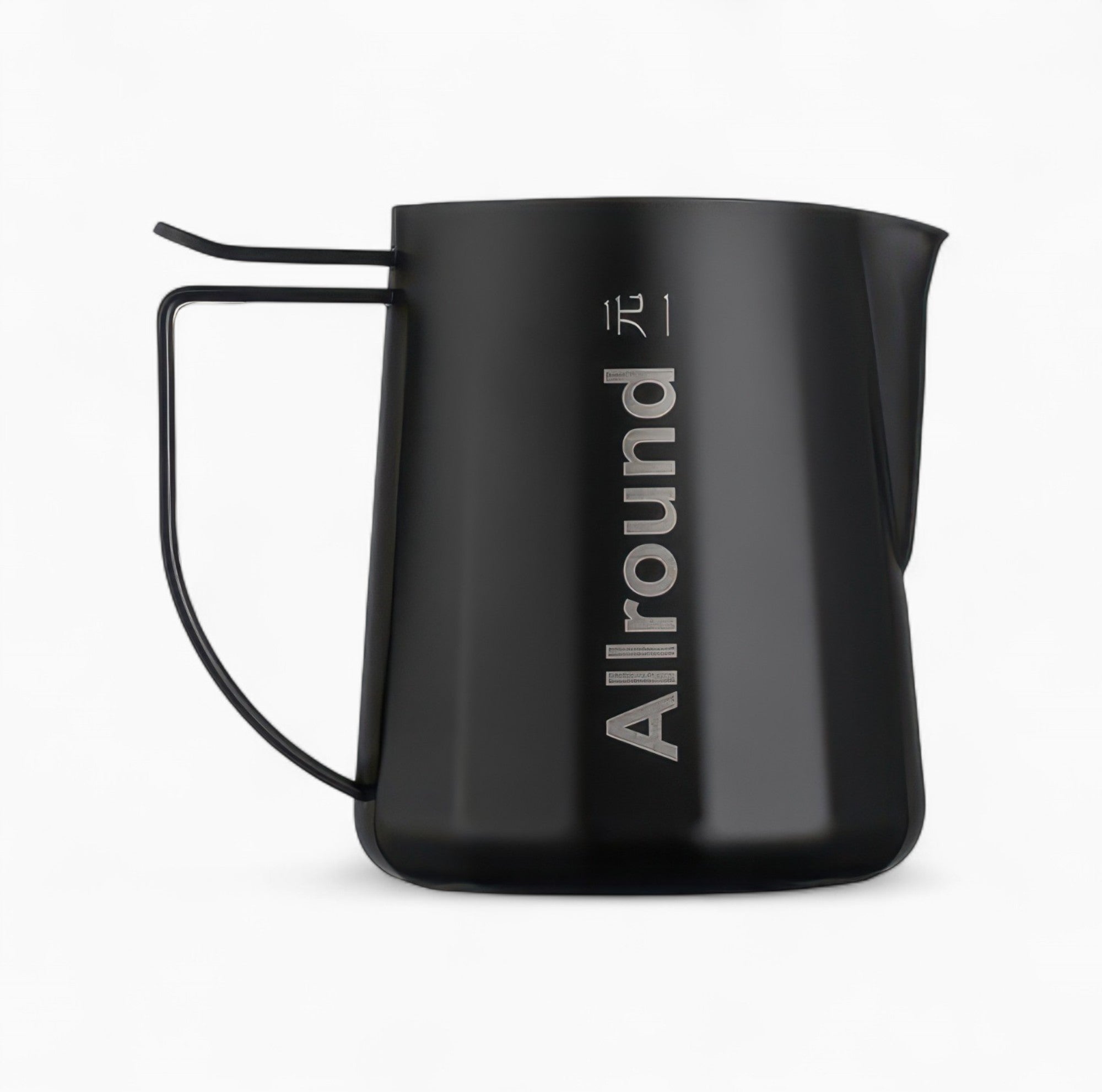
The solution lies in controlled flow rate and spout design. A pitcher engineered specifically for cold milk pouring provides the accuracy needed to create that coveted layered effect where espresso rests atop milk before the final stir.

Competition Grade Milk Frothing Pitcher Stainless Steel
$57.90 $112.00
Upgrade your iced latte preparation with this precision-engineered milk pitcher, featuring an advanced flow spout for controlled cold milk pouring every time.
Explore Product
Creating Premium Cold Foam Without Steam
Coffee shop iced lattes often feature that distinctive velvety cap of cold foam—a texture many assume requires expensive equipment. In reality, you need mechanical action to incorporate air into chilled milk, creating micro-bubbles that float rather than dissolve.
The home barista faces a choice: shake vigorously in a sealed jar (inconsistent and tedious) or employ a specialized tool designed for rapid cold frothing. Modern rechargeable options deliver silky foam in under 30 seconds, transforming ordinary milk into a luxurious topping without the bulk of traditional steam systems.
Elevate Your Iced Latte Setup

USB Rechargeable Handheld Milk Frother Stainless Steel
$19.99
$29.99
Create silky cold foam in under 30 seconds with this USB-C rechargeable frother - the perfect companion for topping your iced lattes without a steam wand. Learn more ➔

Non-Stick Latte Art Milk Pitcher Stainless Steel
$41.90
$58.00
A precision non-stick milk pitcher designed for perfect cold milk pours with its tapered spout and smooth interior that ensures consistent espresso and milk layering. Learn more ➔

Troubleshooting Common Iced Latte Mistakes
Even experienced home baristas encounter these pitfalls when transitioning from hot to cold preparations:
Prevent Dilution: Freeze leftover espresso in ice cube trays. These coffee ice cubes maintain your drink's strength even as they melt, unlike water cubes that weaken the flavor.
Bitter Shots: If your iced latte tastes harsh, your extraction temperature may be too high or your grind too fine. Iced drinks benefit from slightly shorter pulls (1.5-2 ounces) to compensate for the chilling effect on flavor perception.
Separation Issues: When milk sinks immediately instead of creating layers, check your pour height. Pouring from too high disrupts the density gradient. Use the back of a spoon or pour along the glass interior to slow the stream.
Flavor Variations for Every Season
Once you've mastered the basic espresso machine iced latte, expand your repertoire. Add vanilla bean syrup to the bottom of the glass before the espresso for even distribution. For mocha versions, whisk cocoa powder with a tablespoon of warm water before adding your shot to prevent clumping.
Alternative milks behave differently in cold applications. Oat milk creates the creamiest texture, while almond milk separates more easily and may require gentle stirring. Macadamia and coconut milk add subtle tropical notes that complement darker roasts.
Crafting Your Perfect Home Café Experience
Mastering the espresso machine iced latte eliminates daily coffee runs while delivering superior quality at a fraction of the cost. By controlling temperature, ratios, and milk texture, you create a consistent signature drink tailored to your exact preferences.
The journey from curious enthusiast to skilled home barista requires practice—but also the right tools. Precision equipment removes variables that lead to inconsistency, allowing technique to shine. At Rethink Cafe, we engineer accessories specifically for these moments: the perfect pour, the silky foam, the layered presentation that makes your morning coffee feel like a ritual worth savoring.
Frequently Asked Questions about Espresso Machine Iced Lattes
The best espresso machine for iced lattes features consistent temperature control, adequate pressure (9 bars minimum), and quick recovery time between shots. Heat exchanger or dual-boiler machines work excellently, but single-boiler models with PID controllers also produce excellent results. Look for machines with modern temperature stability features that ensure your shots extract properly every time, regardless of whether you're making hot or cold drinks.
Yes, espresso machines create excellent iced coffee when used properly. The key is allowing your espresso shots to cool slightly before pouring them over ice to prevent rapid dilution. You can make iced americanos (espresso + water + ice) or iced lattes (espresso + milk + ice). The concentrated nature of espresso maintains flavor integrity better than drip coffee when chilled.
Fundamentally, yes—an iced latte consists of espresso and cold milk served over ice. However, technique matters significantly. The ratio (typically 1:3 to 1:4 espresso to milk), pour method, and temperature control separate a café-quality iced latte from a simple mixture. Proper layering creates initial visual appeal and allows the drinker to stir to their preferred integration.
Absolutely. Espresso machines are specifically designed for creating the espresso base required for lattes. For hot lattes, you'll steam milk using the machine's steam wand. For iced lattes, simply pour cold milk over your espresso and ice. The defining characteristic of a latte is the espresso-to-milk ratio, not the temperature, so espresso machines work perfectly for both preparations.
The standard ratio for an iced latte is 1 part espresso to 3-4 parts milk, depending on your strength preference. For a typical 16-ounce drink, use 2 ounces of espresso (a double shot) and 6-8 ounces of cold milk over ice. This ratio maintains the coffee's presence while allowing the milk's sweetness to complement the shot. Adjust based on your beans' roast level and your personal taste preferences.