Stepping up to a high end espresso machine represents a significant commitment for any home barista. Whether you're upgrading from entry-level gear or diving straight into premium territory, understanding what justifies the investment can transform your daily coffee ritual from routine to remarkable.
At Rethink Cafe, we've guided thousands of coffee enthusiasts through this exact journey. The difference between a $300 machine and a $3,000 investment isn't just about brand names or shiny finishes—it's about precision engineering, temperature stability, and the ability to extract espresso that rivals your favorite specialty cafe. In this guide, we'll break down exactly what makes these machines worth every dollar, which features actually matter, and how the right accessories can help you unlock your machine's full potential.
What Makes a High-End Espresso Machine Worth the Investment?
The jump to a premium espresso machine isn't just about spending more—it's about gaining control over variables that fundamentally impact your espresso quality. Entry-level machines compromise on consistency, use cheaper materials, and limit your ability to dial in shots with precision.
A true professional espresso machine for home use typically starts around $1,500 and can reach well beyond $10,000 for the most sophisticated setups. These machines are built with commercial-grade components scaled for residential use. We're talking about stainless steel boilers instead of aluminum, commercial-level pumps capable of consistent nine-bar extraction pressure, and sophisticated electronics that maintain stability within fractions of a degree.
The real value proposition comes down to this: a luxury espresso machine eliminates the variables that cause inconsistency, allowing you to focus on perfecting technique rather than fighting equipment limitations. When every shot tastes different because your temperature fluctuated wildly, you can't properly evaluate your grind or tamp pressure. High-end machines remove these frustrations entirely.
Essential Features That Justify Premium Pricing
Not every expensive machine justifies its price tag. Understanding the specific technologies that drive performance will help you identify which expensive espresso machine models offer genuine value versus those simply charging for aesthetics.
Dual Boiler Systems
The hallmark of serious dual boiler espresso machine designs is the separation of brewing and steaming functions. Your espresso extracts through one dedicated boiler heated to around 93°C (200°F), while your milk steamer operates from a second boiler optimized for the 125-130°C range required for velvety microfoam.
This separation eliminates the classic home espresso problem: waiting between shots while your single boiler reheats, or compromising steam pressure because you're still actively brewing. With dual boilers, you can pull consecutive shots while simultaneously frothing milk—a workflow previously reserved for commercial shops.
PID Temperature Control
Pulse Width Modulation technology, commonly called PID, represents the difference between guessing and knowing your brew temperature. A PID controller continuously monitors and adjusts heating elements to maintain your set temperature within 0.5°C or better. This matters because espresso extraction is incredibly sensitive—just a 2°C swing can shift your shot from bright and balanced to harsh and bitter.
E61 Group Heads
The iconic E61 design remains the gold standard for prosumer espresso machine builds. This massive brass group head uses thermal siphoning to maintain stable brewing temperatures. Its weight and thermal mass mean temperature remains consistent throughout your entire extraction, regardless of surrounding conditions. The mechanical pre-infusion built into E61 designs also helps prepare your coffee puck gradually, reducing channeling and improving extraction uniformity.
Flow Profiling and Variable Pressure
The most advanced machines now offer variable pressure control or flow profiling capabilities. Instead of a fixed nine-bar extraction, these systems allow you to manipulate pressure throughout the shot—starting low to bloom the coffee, ramping up during main extraction, then tapering off to finish clean. This level of control was historically only available on commercial equipment costing five figures.

The Critical Role of Puck Preparation
Even the finest most expensive espresso machine cannot compensate for poor puck preparation. Channeling—where water finds paths of least resistance through your coffee bed rather than extracting evenly—remains the single biggest cause of disappointing shots. High-end machines amplify both your successes and your failures, making proper preparation non-negotiable.
This is where investing in quality accessories becomes essential. Professional baristas obsess over distribution, tamp consistency, and grind quality because these factors determine whether your expensive machine delivers on its potential or falls short.

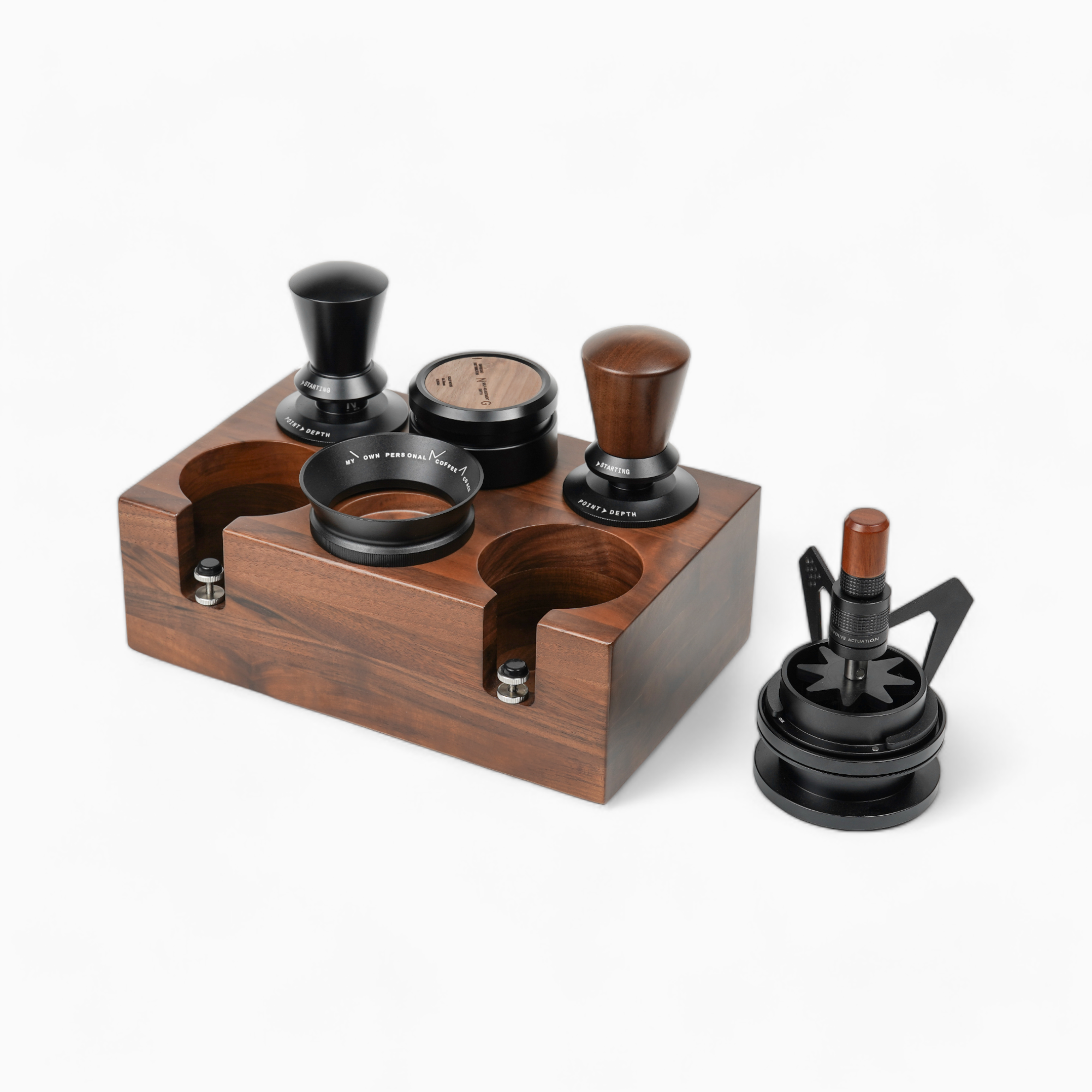
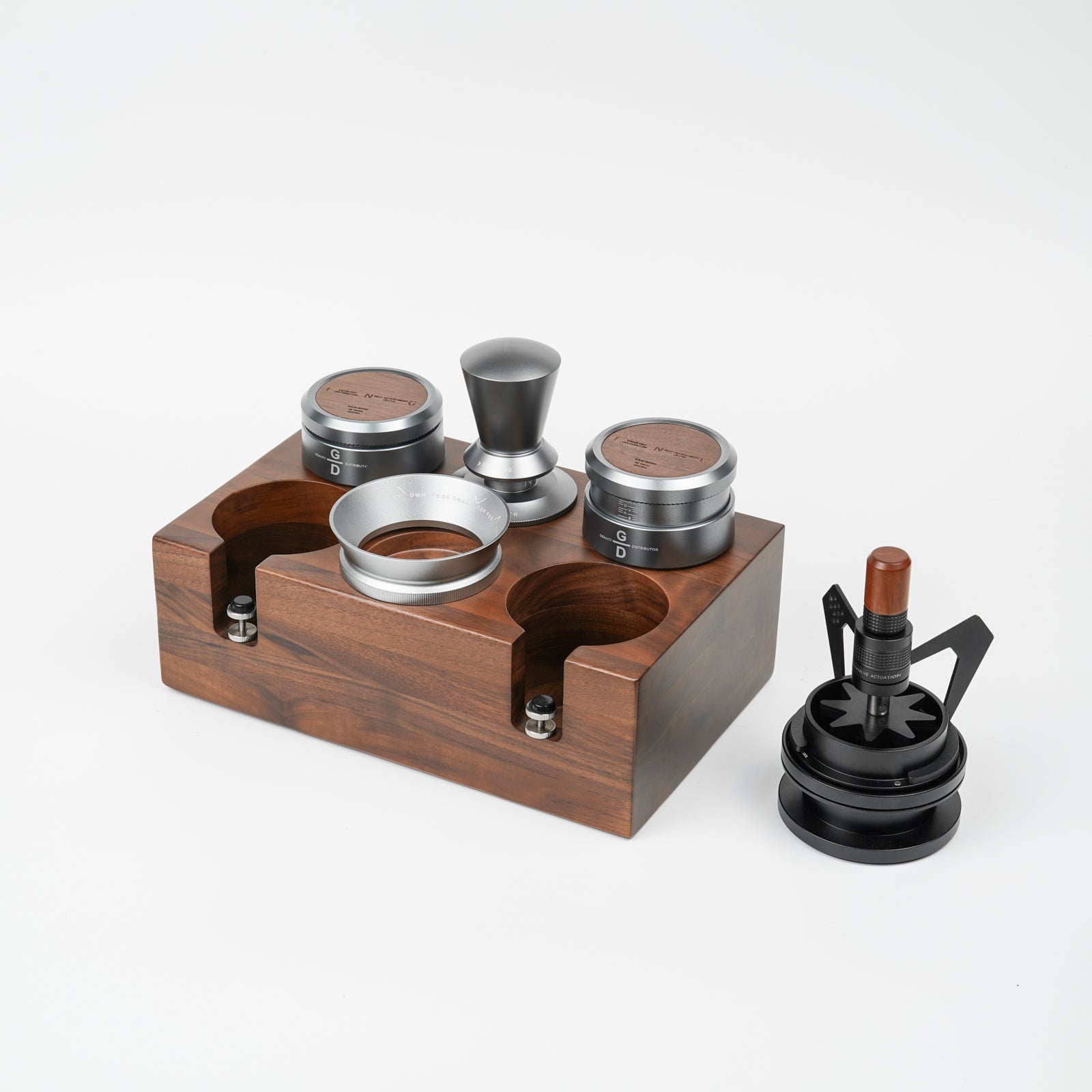
Barista Master Bundle Kit with Tamper and Distributor
$324.90 $382.00
Complete your high-end espresso setup with this premium barista bundle featuring adjustable tampers, gravity distributor, and walnut organizer - everything needed for professional puck preparation.
Explore ProductThe Barista Master Bundle with Tamper and Distributor provides everything needed for professional-grade puck preparation. The adjustable tampers ensure consistent pressure application regardless of dose variations, while the gravity distributor helps achieve perfectly level coffee beds before you even begin to tamp. Investing in tools that match your machine's precision ensures every extraction reaches its full potential.
Understanding Price Tiers: From Prosumer to Professional
The market for high end home espresso machine options spans multiple price categories, each offering distinct capabilities. Understanding these tiers helps align your budget with your actual needs and skill level.
$1,500 - $3,000: Premium Prosumer Entry
This tier represents the gateway to true professional performance. Machines like the Lelit Bianca or Profitec 300 offer dual boilers, PID control, and commercial-quality components at the most accessible price point. You'll gain temperature stability and sufficient steam power, though you may sacrifice some features like plumbed water connections or programmable pressure profiles.
$3,000 - $5,000: Professional Features
The mid-premium tier brings near-commercial capabilities. Expect rotary pumps (quieter than vibratory alternatives, with longer lifespans), sophisticated control interfaces, automatic pre-infusion, and sometimes plumbing capabilities for direct water line connection. Machines in this range typically feature larger boilers for extended steaming sessions and faster recovery times between shots.
$5,000+: The Rolls Royce Category
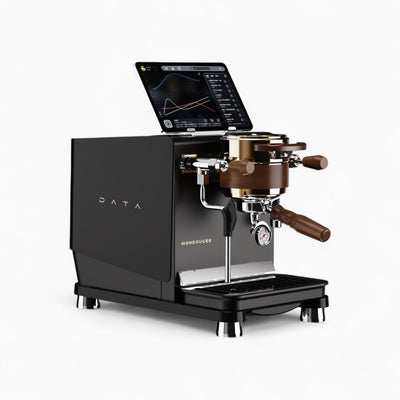
When asking "What is the Rolls Royce of coffee machines?" the answer points here. La Marzocco, Synesso, and Slayer machines that dominate specialty cafes worldwide offer scaled-down home versions in this range. These units feature saturated group heads, programmable flow profiling, multiple PIDs, touchscreen interfaces, and construction using materials built to last decades, not years.

Why La Marzocco Commands Premium Pricing
The question "Why are La Marzocco coffee machines so expensive?" reveals the answer to understanding value in this market. La Marzocco builds every machine by hand using techniques refined over nearly a century. Their stainless steel boilers feature double walls and superior insulation. Every component—from group heads to steam valves—is manufactured to commercial specifications that simply outlast competition.
When you buy La Marzocco (or similarly positioned brands like Synesso), you're investing in decades of reliable performance, exceptionally easy maintenance, and resale value that holds remarkably well. These machines aren't disposable electronics—they're mechanical systems designed to be serviceable indefinitely.
Key Insight: A properly maintained premium espresso machine can serve for 15-20+ years, while budget machines typically last 3-5 years before components fail irreparably. The math shifts dramatically when viewed as cost-per-year rather than upfront investment.
What to Expect: Professional Grade Pricing
When evaluating "How much is a professional grade espresso machine?" the realistic starting point for true professional capability sits around $2,500-$3,500. Entry-level commercial equipment designed for coffee trucks and small cafes typically runs $6,000-$12,000. The highest-end home machines reach $20,000+.
However, the gap between a $3,000 cafe quality espresso machine and a $10,000 unit narrows significantly in terms of actual espresso quality. The additional investment buys convenience, build quality, and advanced features—but the fundamentals (temperature stability and pressure control) become excellent well before reaching the top of the market.

Essential Accessories for Your Investment
Your high end espresso machine deserves accessories that match its quality. After investing thousands in brewing equipment, using subpar tools for grinding, dosing, and preparation undermines the entire system. We've curated bundles that address every critical preparation step.
Complete Your Premium Setup

58mm Espresso Bundle with Bottomless Portafilter Kit
$255.90
$460.00
Elevate your espresso game with this complete 58mm bundle including bottomless portafilter, precision tamper, and distributor - perfect for E61 group head machines. Learn more ➔

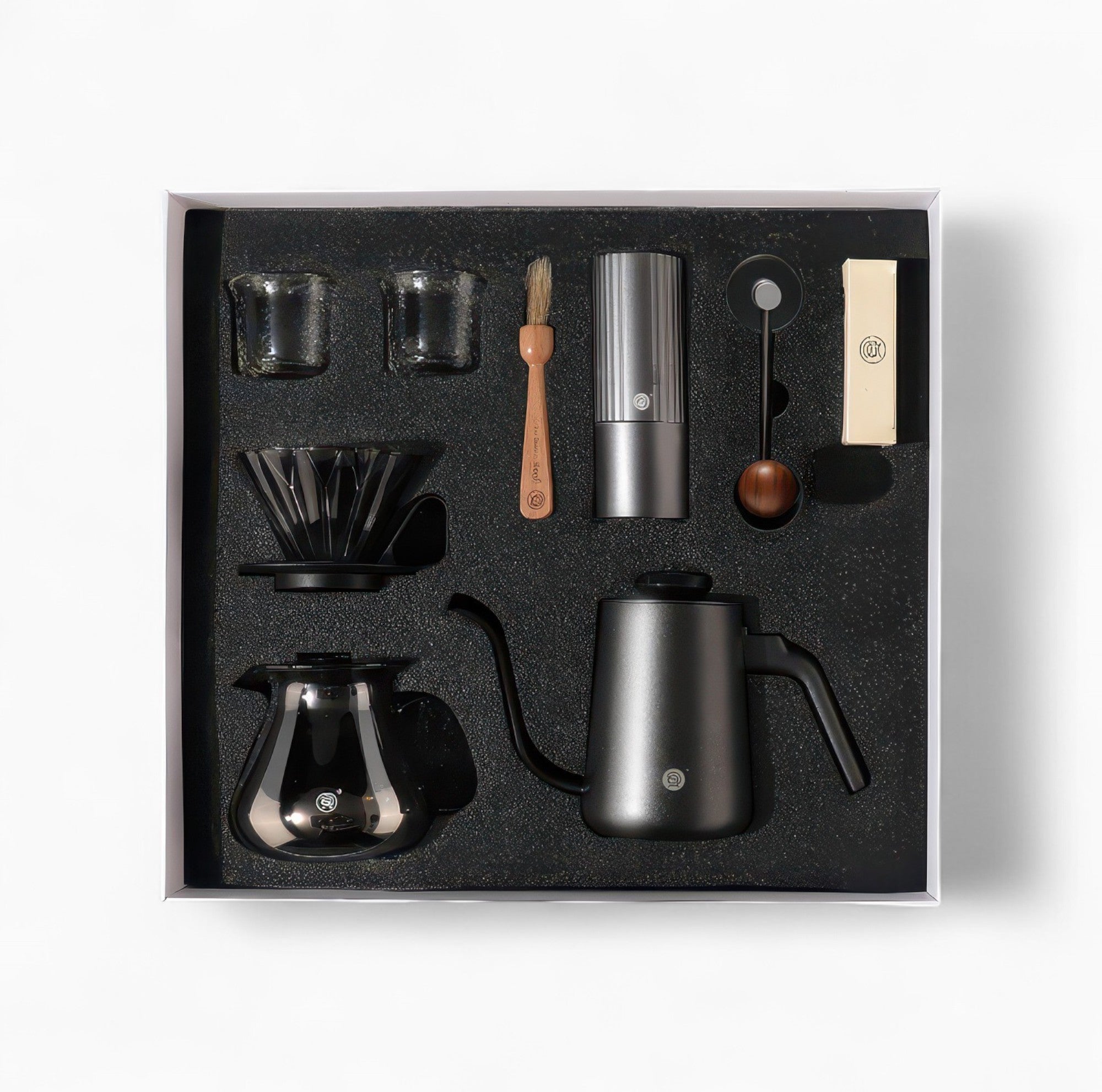
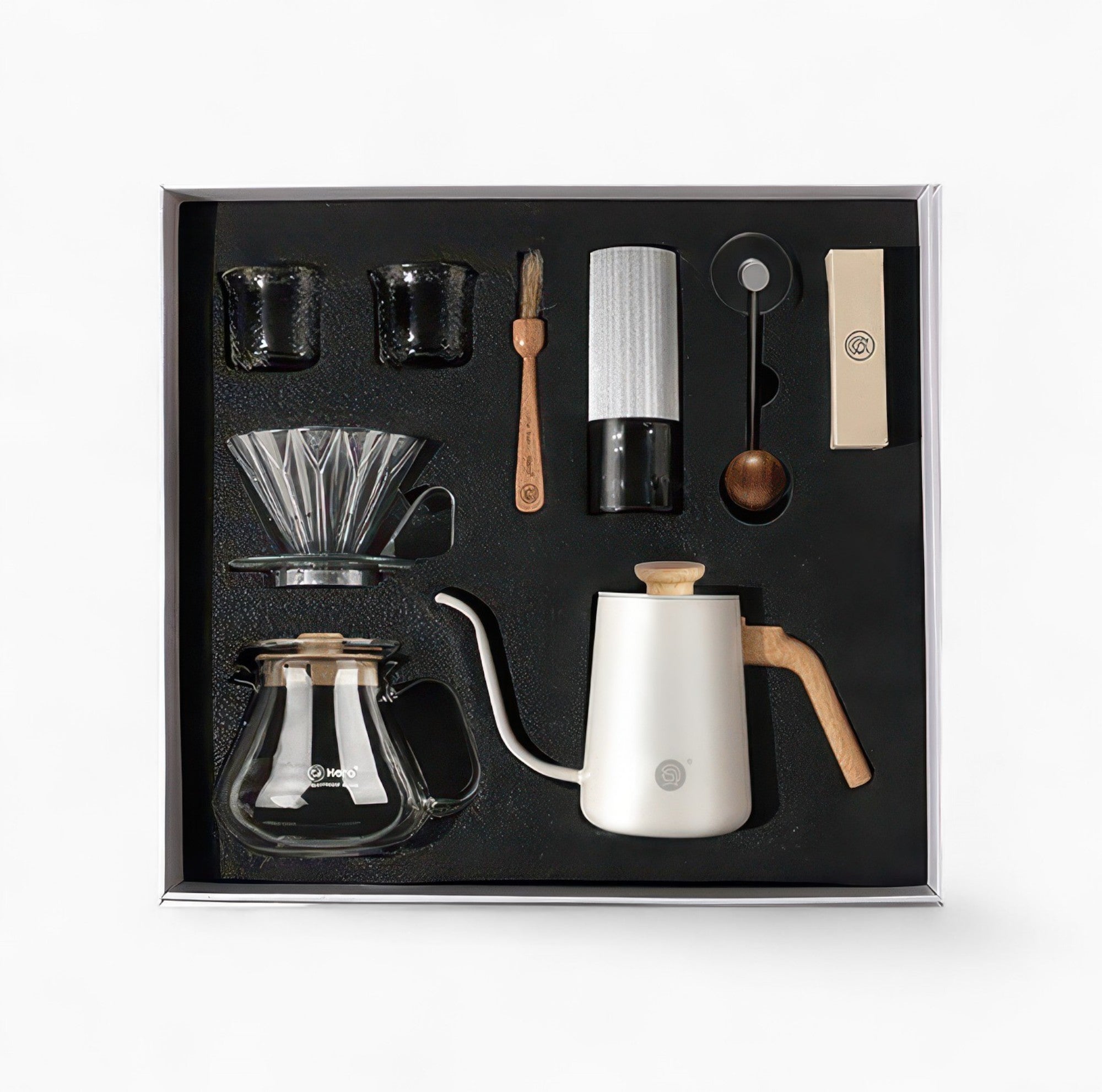
Complete Pour Over Coffee Kit with Grinder and Kettle
$235.90
$360.00
Expand your coffee repertoire with this professional pour over kit featuring temperature control kettle and precision grinder for when you want an alternative to espresso. Learn more ➔
The 58mm Espresso Bundle with Bottomless Portafilter Kit pairs perfectly with premium E61 group head machines. The bottomless portafilter provides immediate visual feedback on extraction quality—any channeling becomes instantly visible as uneven streams or spurting, allowing you to refine your technique. When paired with a high-end machine, this transparency becomes an invaluable teaching tool.
For those moments when you want variety beyond espresso, the Complete Pour Over Coffee Kit with Grinder and Kettle offers precision brewing with the same attention to temperature control and technique that defines quality espresso practice. Temperature control kettles and precision grinders ensure your pour over game matches your espresso standards.
Should You Invest? The Final Verdict
The answer to whether a high end espresso machine is worth the investment depends entirely on your commitment level. If you're content with a quick morning coffee and minimal fuss, even a mid-range machine serves you well. But if you find yourself chasing consistency, frustrated by temperature instability, or aspiring to replicate cafe-quality results at home, premium equipment removes the barriers holding you back.
Consider the long-term economics: A daily $5 specialty coffee habit costs $1,825 annually. A $3,000 machine plus $800 in necessary accessories (grinder, etc.) pays for itself in under two years while delivering superior results. Even better, that same equipment serves you for decades rather than requiring replacement every few years.
What separates good espresso from exceptional espresso often comes down to the elimination of variables. Temperature stability, consistent pressure, and proper preparation tools give you control over the factors that matter. Your machine becomes an extension of your skill rather than a limiting factor—enabling you to focus on dialing in beans, refining techniques, and developing your palate.
At Rethink Cafe, we believe every serious home barista deserves tools that match their ambition. Whether you're researching your first major upgrade or building the ultimate home cafe, investing in both a quality machine and the preparation tools that help it perform should feel like an investment in daily excellence—because that's exactly what it delivers.
Frequently Asked Questions about High-End Espresso Machines
The "best" brand depends on your specific needs and budget. La Marzocco dominates the high-end commercial market and offers exceptional build quality but commands premium pricing. Lelit delivers outstanding value in the prosumer space with the Bianca featuring flow profiling. Rocket and Profitec build reliable dual boiler machines with classic Italian styling. Breville offers the best entry point to premium features at more accessible prices. For pure value, many home baristas recommend Lelit or Profitec machines that match La Marzocco's espresso quality at significantly lower price points.
La Marzocco machines carry premium pricing due to their handmade construction in Florence, Italy, using commercial-grade components scaled for home use. Every machine features double-walled stainless steel boilers, saturated group heads (which maintain exceptional temperature stability), and completely serviceable mechanical designs. The cost reflects engineering heritage dating to 1927, parts that last decades rather than years, and resale values that hold remarkably well. Additionally, La Marzocco's reputation in specialty coffee creates demand that supports premium positioning—when hundreds of championship baristas compete using the same brand, that costs money to maintain.
Professional grade espresso machines for commercial use typically start around $6,000 and can exceed $30,000 for multi-group setups. For home use that delivers professional capabilities, expect to invest $2,500-$6,000. True professional features like dual boilers, rotary pumps, and PID temperature control become available around $1,500-$2,000, while the highest-end home machines with flow profiling, saturated groups, and commercial build quality range from $5,000 to over $20,000. The sweet spot for most serious home baristas sits between $2,500-$4,000, where you'll find machines indistinguishable from cafe quality in terms of espresso output.
The "Rolls Royce" title is most frequently associated with La Marzocco, particularly their Linea Mini and GS3 home machines. Synesso and Slayer also compete in this ultra-premium tier. La Marzocco earned this reputation through decades of championship use in specialty coffee competitions, handmade Italian construction, and engineering that prioritizes longevity over planned obsolescence. The Linea Mini ($5,900+) offers saturated group heads and dual boilers in a compact footprint. The GS3 ($9,000+) adds programmable pre-infusion and commercial-grade digital controls. These machines represent the pinnacle of what's achievable for dedicated home baristas who refuse to compromise.
Prioritize these features when evaluating a high end espresso machine: (1) Dual boilers for simultaneous brewing and steaming without temperature compromise. (2) PID temperature control maintaining stability within 0.5°C for consistent extraction. (3) E61 group head or saturated group for thermal mass and pre-infusion. (4) Rotary pump for quieter operation and longer lifespan than vibratory pumps. (5) Pressure profiling or flow control for advanced extraction manipulation. (6) Plumbing capability so you can connect directly to water lines rather than filling reservoirs. (7) Build quality including stainless steel construction and serviceable components. A machine lacking PID and dual boiler functionality probably doesn'tjustify premium pricing regardless of aesthetics.