
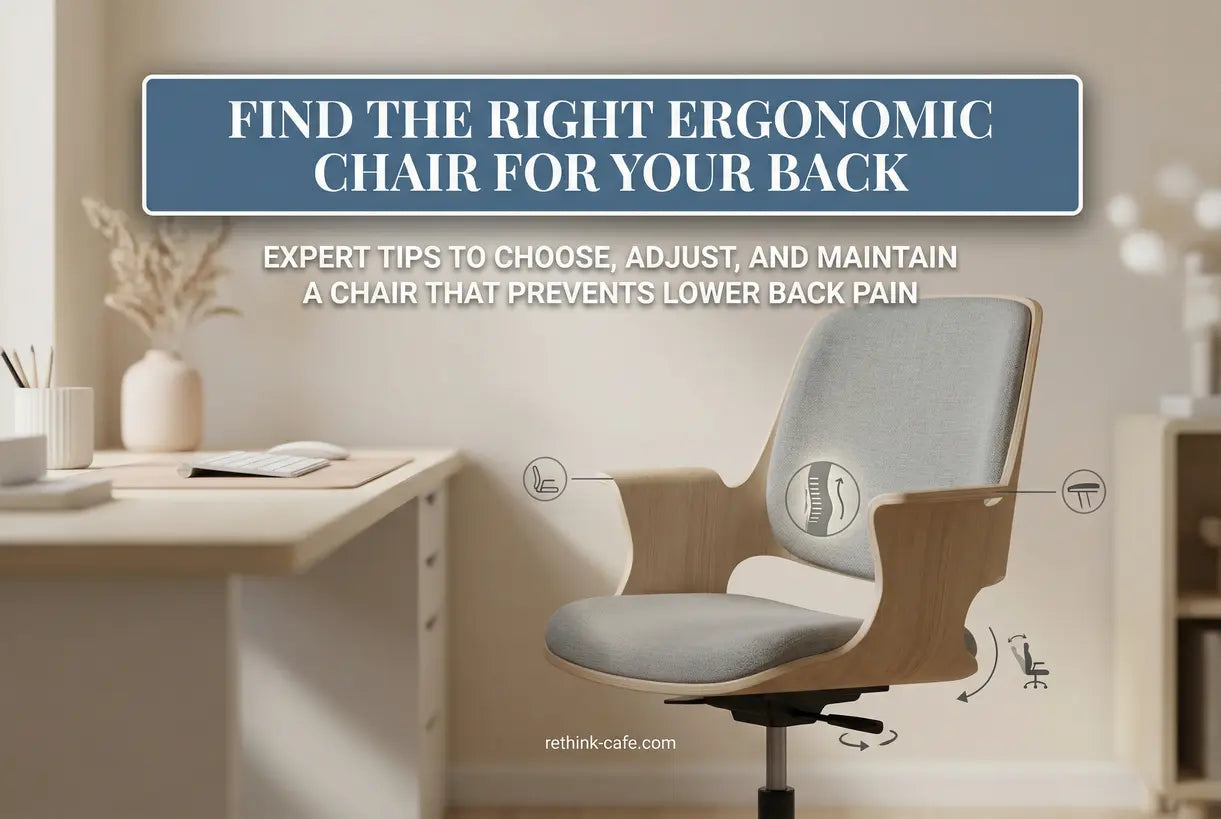
Spending eight or more hours tethered to a desk creates a silent strain on your body that compounds over months and years. If you have ever stood up from a marathon work session with a stiff lower back, tight hips, or radiating discomfort, your chair is likely the primary culprit. Selecting the best ergonomic office chair for lower back pain involves more than just choosing a sleek design; it requires understanding how specific engineering features interact with spinal anatomy to provide genuine relief. When your workstation supports your natural posture, concentration improves, fatigue diminishes, and that chronic afternoon ache finally disappears.

The modern marketplace floods consumers with furniture tagged as "ergonomic," yet many of these models lack the adjustability required to fit individual body mechanics. True ergonomic design accounts for lumbar support, seat depth, arm positioning, and tilt mechanisms that move with you rather than against you. As work-from-home arrangements become permanent for many professionals, the investment in a properly fitted task chair with lumbar support transitions from luxury to absolute necessity for maintaining spinal health and productive energy levels throughout the day.
Why Lumbar Support Makes the Difference
The lumbar region comprises the five vertebrae in your lower back, bearing the weight of your entire upper body. When seated in a standard flat-back chair, this natural inward curve collapses, transferring pressure onto spinal discs and surrounding muscle tissue. An adjustable lumbar support system actively maintains this curve, engaging your core muscles to share the load rather than letting your spine compress under its own weight.
High-quality ergonomic chairs utilize dynamic lumbar pads that move vertically and horizontally to match your specific spinal curvature. Unlike static pads molded into the frame, adjustable components adapt whether you are 5'2" or 6'4", ensuring the support hits precisely at your L4-L5 vertebrae. This precision explains why many users report immediate relief when switching from generic seating to a purpose-built mesh ergonomic chair with dedicated lower back technology.

Furthermore, material selection impacts how effectively support translates to comfort. Breathable mesh allows air circulation while flexing to match your spine's shape, whereas memory foam distributes pressure across a broader surface area. The ideal choice depends on whether you prioritize rigid structure or cushioned give, but both options significantly outperform standard upholstery found in basic adjustable ergonomic chairs that claim support yet lack engineering depth.
Critical Adjustability Features That Reduce Strain
When evaluating which specific traits alleviate discomfort, prioritize mechanisms that customize the relationship between your body and the seat pan. Seat depth adjustment proves particularly crucial for tall users or those with longer femurs, allowing two to three fingers' width of space between the seat edge and your calves. Without this clearance, circulation cuts off behind the knees, forcing you to slouch and negating any lumbar benefits.
Armrest adjustability also plays a surprising role in spinal health. Arms hanging unsupported pull the shoulders forward, creating a chain reaction that rounds the upper back and increases pressure on the lumbar region. Look for 4-way adjustable arms that move up, down, forward, backward, and pivot inward to cradle your forearms while typing, keeping your shoulders neutral and your spine stacked vertically.
Key Insight: Synchro-tilt mechanisms that recline the backrest while slightly raising the seat front maintain optimal hip angle and prevent the "hamstring drag" that pulls the pelvis into a slouched position.
Recline tension controls matter equally, especially for individuals who vary between intense focus and phone meetings throughout the day. The ability to lock positions or float freely allows micro-movements that keep spinal discs hydrated and prevent static loading on any single vertebral level. These subtle engineering differences separate the best office chair for back pain from models that merely look comfortable.
Investment Ranges and Longevity Expectations
Quality ergonomic seating represents a significant investment in your physiological health, with genuine therapeutic models typically ranging between three hundred to eight hundred dollars. While budget options under two hundred dollars exist, they often utilize cheaper foam that degrades within months and plastic adjustment components that strip under daily use. When calculating value, consider that premium chairs last between ten and fifteen years with minimal maintenance, amortizing to mere pennies per day compared to weekly physiotherapy visits necessitated by poor seating.
High-end chairs featuring reinforced aluminum frames, steel spring coils, and commercial-grade mesh fabrics command higher prices but deliver exceptional durability. These office chairs for lower back support typically include decade-long warranties on mechanical parts, indicating manufacturer confidence in their longevity. Remember that replacing a three-hundred-dollar chair every two years ultimately costs more than maintaining a single seven-hundred-dollar model built to last a decade.
Curated Solutions for Every Workspace
Finding the perfect seating solution requires matching your specific pain points and spatial constraints with targeted engineering. For compact apartments or shared workstations, streamlined profiles deliver essential support without overwhelming the room. Meanwhile, professionals managing existing disc issues require maximum adjustability to fine-tune relief during flare-ups. The following selections represent distinct approaches to solving lower back discomfort, each engineered to address different aspects of the ergonomic equation.
Specialized Support Systems

While the Lumina Mesh Task Chair excels in smaller footprints with its responsive synchro-tilt and firm support, the SustainFoam Executive Chair provides comprehensive cushioning for professionals preferring traditional cushioning over mesh tension. Both models substantially outperform generic seating, yet neither fully addresses the demands of users requiring multi-point customization for chronic conditions.
Maintaining Spinal Health Beyond the Chair
Even the best chairs for posture cannot counteract eight hours of static sitting without movement integration. Healthcare professionals recommend standing every thirty minutes to unload spinal compression, regardless of seat quality. Additionally, positioning your monitor at eye level and placing feet flat on the floor or a dedicated footrest maintains the neutral pelvis position your lumbar support cradles.

Consider your chair one component of a holistic ergonomic ecosystem that includes keyboard placement, lighting to prevent forward craning, and regular mobility breaks. When these elements align, the adjustable lumbar support in your seat works synergistically with your body's natural proprioception to maintain alignment effortlessly rather than fighting against accumulated muscle tension.
The Ultimate Solution for Chronic Discomfort
For individuals where back pain has already disrupted sleep patterns or limited exercise capacity, maximum adjustability becomes non-negotiable. Standard chairs force adaptation to their fixed dimensions, whereas advanced therapeutic seating adapts to your unique anthropometrics and changing postural needs throughout painful flare-ups versus pain-free days.
The ContourPro Adjustable Ergonomic Chair stands apart through its multi-tilt mechanism and variable lumbar positioning, allowing you to dial in exact resistance and support angles that evolve with your recovery or work demands. Unlike chairs that feel too rigid during afternoon energy crashes or too loose during focused morning sessions, this level of customization maintains consistent spinal neutrality regardless of your work rhythm.
Remember: No chair instantly repairs existing disc damage or muscle imbalances, but proper ergonomic support removes the environmental stressors that prevent natural healing while stopping further postural degeneration.
Conclusion
Relieving lower back pain starts with eliminating the mechanical compromises forced by inadequate furniture. By prioritizing adjustable lumbar support, seat depth customization, and dynamic arm positioning, you transform your workspace from a source of daily agony into a foundation for sustained comfort and productivity. Whether you select a compact mesh task chair for its breathability or an executive model for its plush cushioning, verify that adjustability—not just padding—defines the ergonomic promise.
At Rethink Cafe, we understand that wellness extends beyond what you consume to how you work and live. Our curated selection of seating solutions addresses the specific needs of professionals committed to maintaining their spinal health without sacrificing aesthetic sophistication. Explore our complete ergonomic collection to discover how the right chair finally ends your battle with lower back pain.
Frequently Asked Questions about Ergonomic Office Chairs
The best ergonomic office chair for lower back pain combines adjustable lumbar support that moves vertically and horizontally, seat depth customization, and multi-tilt mechanisms. Models like the ContourPro Adjustable Ergonomic Chair excel because they adapt to individual spinal curvatures rather than providing static one-size-fits-all padding.
Expect to invest between three hundred and eight hundred dollars for a therapeutic-quality ergonomic chair. While budget options exist, chairs in this premium range feature commercial-grade mechanisms and durable materials that maintain support for ten to fifteen years, ultimately costing less than replacing cheaper models every two years.
Key pain-reducing features include adjustable lumbar support maintaining natural spinal curve, seat depth adjustment ensuring clearance behind knees, synchro-tilt mechanisms preserving hip angle during recline, and 4-way adjustable armrests preventing shoulder strain that cascades to the lower back. Breathable mesh backs or high-density memory foam also distribute pressure evenly.
An ergonomic chair supports proper posture but cannot instantly repair existing muscle imbalances or structural issues. However, by removing mechanical stressors and supporting natural spinal alignment, it creates the environment necessary for physical therapy and stretching routines to effectively address postural dysfunction while preventing further degeneration.
High-quality ergonomic chairs last between ten and fifteen years with daily commercial use, often accompanied by manufacturer warranties matching that timeframe. Premium models utilize reinforced aluminum frames, steel mechanisms, and industrial-grade mesh or foam that resists compression set and material fatigue far longer than standard consumer seating.